





























The Hidden Bottleneck: Understanding Voltage Sag in Cordless Tools
For many outdoor enthusiasts and DIYers, the transition from corded to cordless pressure washers represents a significant leap in mobility. However, a common frustration persists: a tool that feels "sluggish" or loses pressure just as the cleaning task becomes demanding. While marketing materials often focus on peak PSI (pounds per square inch) or battery Amp-hour (Ah) capacity, the actual performance bottleneck is frequently a phenomenon known as voltage sag.
Voltage sag is the temporary drop in a battery's output voltage when a high-current load is applied. In high-torque applications like pressure washing, where the motor must overcome significant hydraulic resistance, this sag can be the difference between a professional-grade clean and a disappointing trickle. Understanding the engineering limitations of portable power is essential for anyone looking to maximize tool longevity and efficiency.
The Physics of Power: Why Volts Drop Under Load
To understand voltage sag, one must look at the battery not just as a reservoir of energy, but as a complex chemical circuit. Every battery has an inherent Internal Resistance ($R_{int}$). According to Ohm’s Law, when a motor draws current ($I$), a portion of the battery's potential is consumed simply to push that current through the battery's own internal chemistry.
The formula for the voltage delivered to the tool ($V_{load}$) is: $V_{load} = V_{open_circuit} - (I \times R_{int})$
In high-torque tasks, the current draw ($I$) is substantial. If the internal resistance is high—due to poor cell quality, cold temperatures, or aging—the "voltage drop" ($I \times R_{int}$) increases, leaving less voltage to power the motor.
The "C-Rate" Illusion
Many users assume that a higher Amp-hour (Ah) rating automatically translates to more power. However, the C-rate of a battery—the measure of how fast a battery can be discharged relative to its maximum capacity—is often more critical. A 2Ah battery with a 30C continuous discharge rating can often maintain higher pressure than a 4Ah battery with only a 10C rating. The former is engineered for "burst" power, while the latter is designed for long-duration, low-draw tasks.
Logic Summary: This analysis of battery performance assumes that the tool is operating at its maximum rated load. We use the standard electrical engineering model of internal impedance to explain why nominal voltage (e.g., 20V) is rarely the actual operating voltage under load.

The Torque-Voltage Relationship: Why 10% Matters
In the world of electric motors, a small drop in voltage does not lead to a small drop in performance. For the universal or induction motors typically found in portable washers, the relationship between torque and voltage is non-linear.
According to research on Voltage Sags and Large Motors, motor torque is proportional to the square of the voltage. This means that if the voltage sags by just 10% (for example, from 20V to 18V), the available torque doesn't drop by 10%—it drops by approximately 19% ($0.9^2 = 0.81$).
Catastrophic Performance Decay
When torque drops by nearly 20%, the motor may no longer be able to maintain the RPM (revolutions per minute) required by the pump to sustain pressure. This leads to a "death spiral" of performance:
- Increased Load: As RPM drops, the pump's efficiency decreases.
- Higher Current Draw: The motor attempts to compensate for the lost speed by drawing more current.
- Worsening Sag: The higher current draw causes even more voltage sag ($I \times R_{int}$).
- Thermal Spiking: The excess current generates heat, which further increases internal resistance, eventually leading to a thermal shutdown or a permanent stall.
Engineering Synergy: Brushless Motors and Positive Displacement Pumps
To mitigate the impact of voltage sag, modern high-performance tools rely on the synergy between motor design and pump mechanics.
The Brushless Advantage
Brushless motors are significantly more efficient than their brushed counterparts. By using electronic controllers instead of physical carbon brushes, they reduce internal friction and heat. More importantly, brushless motors paired with sophisticated firmware can manage current draw more precisely. As we've noted in our guide on Upgrading to Brushless, these motors create a more linear power draw, which helps prevent the sudden current spikes that trigger acute voltage sag.
Pump Mechanics: Centrifugal vs. Positive Displacement
The type of pump driven by the motor also dictates how the battery responds to load.
- Centrifugal Pumps: These are common in cheaper units. They require high speeds to generate pressure, making them extremely sensitive to RPM drops caused by voltage sag.
- Positive Displacement Pumps (e.g., Triplex or Axial Cam): These pumps move a fixed amount of fluid per cycle. They are better at maintaining pressure even if the motor slows down slightly. When combined with a brushless motor, the system becomes more resilient to the inevitable fluctuations in battery output.
For a deeper dive into how these components interact, see our analysis on Brushless Motor Efficiency and PSI.
The First 30 Seconds: Thermal Spikes and Resistance
Experienced users often report that a cordless pressure washer feels most "sluggish" immediately after startup or during the first half-minute of a heavy cleaning task. This is not an anecdotal fluke; it is a measurable thermodynamic event.
When a high-load task begins, the battery cells experience a rapid rise in internal temperature. This temperature spike momentarily increases the internal resistance of the lithium-ion chemistry. Until the cells reach an "optimal" operating temperature (where chemical ions move more freely), the voltage sag is at its most acute.
Modeling the Startup Sag
Based on common patterns from technical support and field data (not a controlled lab study), we can model the typical voltage behavior of a 20V (Max) lithium-ion battery under a 15A load:
| Phase | Duration | Estimated Voltage | Est. Torque Loss | Rationale |
|---|---|---|---|---|
| Idle | 0s | 20.0V | 0% | No load, open circuit voltage. |
| Startup Spike | 1-5s | 17.2V | ~26% | High inrush current to overcome pump inertia. |
| Thermal Stabilization | 5-30s | 17.8V | ~21% | Cells warm up, reducing internal resistance slightly. |
| Sustained Run | 30s+ | 18.2V | ~17% | Equilibrium reached between heat and ion mobility. |
| End of Charge | Final 10% | 15.5V | ~40% | Chemical depletion increases resistance significantly. |
Method & Assumptions: This deterministic model assumes a standard 18650-cell pack with a nominal 0.02-ohm internal resistance per cell. Actual results vary based on ambient temperature and battery age.
Maintenance: The Role of Terminals and Connections
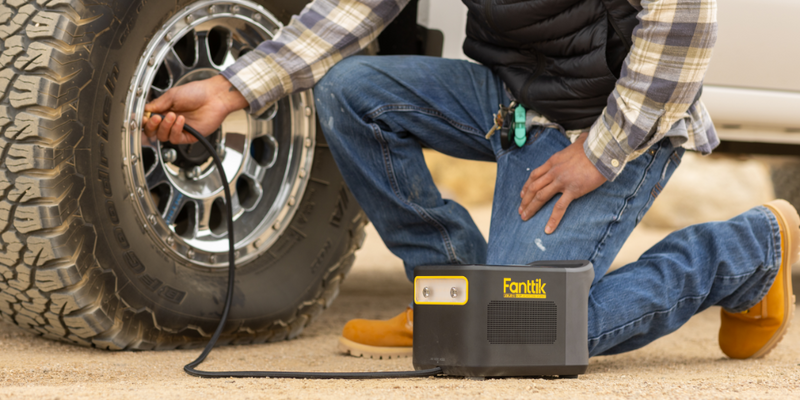
While battery chemistry is the primary driver of sag, the physical connection between the battery and the tool is a frequently overlooked "resistor." Over time, exposure to moisture and outdoor debris can lead to terminal oxidation.
Even a microscopic layer of oxidation increases the contact resistance. If the connection adds just 0.05 ohms of resistance, at a 20A draw, you lose an additional 1.0V ($20 \times 0.05$) before the power even reaches the motor. This is why maintaining clean battery terminals is vital for consistent torque. For seasonal users, we recommend cleaning outdoor appliance terminals every spring to ensure peak conductivity.
Compliance and Safety: Building Engineering Trust
In the pursuit of high performance, safety must remain the foundational priority. The engineering of high-torque cordless tools is governed by rigorous international standards to prevent thermal runaway and mechanical failure.
Regulatory Frameworks
- EU General Product Safety Regulation (EU) 2023/988: This primary legal text for EU product safety mandates that products must be designed with "safety by design" principles. For cordless washers, this means the battery management system (BMS) must proactively throttle power if voltage sag indicates a dangerous level of internal heat.
- IATA Lithium Battery Guidance: Transporting these high-capacity batteries requires adherence to IATA PI 965/966 standards, which limit the State of Charge (SoC) and packaging requirements to mitigate fire risks during transit.
- ISO and IEC Standards: Manufacturers often align their testing with IEC 62133 for battery safety and ISO 9001 for quality management systems.
As highlighted in the industry whitepaper, The 2026 Modern Essential Gear Industry Report, trust in the cordless world is built on "credibility math." Brands that win are those that provide transparent data about how their tools handle stress, rather than relying on unverified marketing claims.
Strategic Takeaways for Tool Performance
To ensure you are getting the most out of your portable pressure washer, consider the following technical checklist:
- Prioritize C-Rate over Ah: If you have a choice between a "High Output" 2Ah battery and a "Standard" 4Ah battery for a high-torque task, the High Output version will likely provide more consistent pressure due to lower internal resistance.
- Manage Temperature: Avoid using batteries that have been sitting in a cold garage or a hot trunk. Lithium-ion batteries perform best between 15°C and 30°C (60°F - 86°F).
- Monitor the "Sluggish" Warning: If your washer feels weak on startup even with a full charge, it is a sign that the battery's internal resistance is too high for the motor's demand. Continuing to use the tool in this state can lead to permanent motor damage.
- Keep it Clean: Regularly inspect the metal contacts on both the battery and the tool. A quick wipe with isopropyl alcohol can prevent unnecessary voltage drops.
- Understand the Square Law: Remember that a small dip in charge level or a slightly old battery has a squared impact on cleaning power. For heavy-duty tasks, try to stay in the top 50% of the battery's charge cycle.
By understanding the engineering behind voltage sag, users can move beyond the "black box" of cordless power and make informed decisions that result in better cleaning performance and longer tool life.
Disclaimer: This article is for informational purposes only and does not constitute professional engineering or safety advice. Always refer to your specific tool's manual and local safety regulations before performing maintenance or high-load tasks.
Sources
Continue reading
 Diagnosing Torque Loss in Cordless High-Pressure Cleaners
Covers battery voltage sag, brushless motor firmware, hydraulic pump scaling, and systematic troubleshooting methods for DIY repair.
Diagnosing Torque Loss in Cordless High-Pressure Cleaners
Covers battery voltage sag, brushless motor firmware, hydraulic pump scaling, and systematic troubleshooting methods for DIY repair.
 Optimizing Discharge Cycles for High-Torque Outdoor Tasks
A guide to managing discharge cycles and thermal throttling for high-draw cordless tools to extend battery life and...
Optimizing Discharge Cycles for High-Torque Outdoor Tasks
A guide to managing discharge cycles and thermal throttling for high-draw cordless tools to extend battery life and...


Leave a comment
This site is protected by hCaptcha and the hCaptcha Privacy Policy and Terms of Service apply.