








































Don't assume a high-velocity electric air duster is approved for your camera gear. The camera makers' guidance we looked at does not approve powered dusters for camera cleaning. Sony tells owners not to use an air duster at all, and Nikon's advice to use a "blower" is not the same as approving a powered one.
How much risk you take depends on where you point the air. The body exterior, the lens glass, and the area around the image sensor each come with different instructions. The sensor is where the warnings are strongest.

Is an Electric Air Duster Safe for Camera Gear?
No source gives a blanket yes or no for every camera, lens, and duster. The guidance that exists points away from treating an electric duster as a camera cleaning tool. Sony's camera-cleaning guidance says not to use an air duster or compressed air, because it may damage the image sensor or cause a malfunction.
The Nikon Z fc cleaning instructions take a different route. They tell owners to use a blower on some surfaces. They also warn against strong blower air on the sensor. That manual never mentions electric dusters, so its "blower" wording doesn't cover a powered camera air duster. None of these sources gives a safe speed, distance, or setting either. Any number you see elsewhere is not a manufacturer figure. A powered duster is a fit for your camera only if your own camera or lens maker explicitly says so for the area you want to clean.
What the Manuals Say About Camera Bodies and Lens Surfaces
Both makers give gentle methods for outside surfaces, but neither names an electric duster as one of them. Each method below applies only to the source that describes it.
Camera Body Exterior
For the Nikon Z fc body, the manual says to use a blower to gently remove dust and lint. Sony's guide takes a different approach for loose dust on the body and describes sweeping it away with a brush. Both methods are low-force. If a camera air duster is what you have on hand, neither instruction tells you it is acceptable. On a Nikon Z fc, use a gentle blower. On a camera covered by Sony's guide, use a brush.
Exposed Lens Surfaces
Lens glass gets its own caution in the Nikon Z fc manual. It says the lens and viewfinder glass are easily damaged and that dust and lint should be removed with a blower. Sony's guide separates two jobs. Loose dust comes off with a blower. A particularly dirty lens can be wiped with a soft cloth dampened with lens cleaner solution. Put the solution on the cloth, never directly on the lens. Sony's warning against air dusters and compressed air sits in the same guidance, and nothing in it exempts the lens. Blow away loose dust. Wipe smudges with the dampened cloth, because air won't move oils or fingerprints anyway.
How to Handle Dust Near the Sensor
Don't point a high-velocity electric duster at an image sensor. Neither maker's guidance supports it, and both explicitly warn against strong air in this area. Specifically, the Nikon Z fc manual cautions that the sensor must never be exposed to powerful air currents from a blower, which directly rules out high-velocity devices.
For manual sensor cleaning, the Nikon Z fc sensor-cleaning instructions recommend that only a Nikon-authorized service representative do the job. When the manual does describe the step, it calls for a blower and says not to use a blower-brush. Dirt that a blower can't remove has to go to Nikon-authorized service. That route applies to the Z fc. It is not a rule for every camera.
Sony's guidance handles the sensor separately. Use the camera's built-in sensor cleaning function where your model has one, and keep air dusters and compressed air away. If spots are still there afterward, contact the camera maker's support or service instead of trying a powered duster.
What to Do When the Instructions Don't Cover Your Duster
If your manuals say nothing about powered air, treat the duster as unapproved for that spot. Then pick a method the manual does document. Use this sequence before any cleaning session:
- Name the exact equipment and area. Write down the camera or lens model and the spot you plan to clean: body exterior, front or rear lens glass, viewfinder, or the sensor area behind the lens mount.
- Look for explicit powered-air language. Read the camera or lens maker's cleaning section and your duster's official instructions. You want a line that allows an electric or powered air duster on that area. A generic mention of a "blower" doesn't count.
- Stop if the answer is "no." If either source prohibits air dusters or compressed air for that area, don't use the duster there.
- Switch methods if the answer is silence. Use the brush, blower, cloth, built-in cleaning function, or service route that the equipment maker documents for that model.

Your duster may still be the right tool for other jobs, like clearing dust from power tools or broader bench tasks that require delicate handling, similar to standard home electronics repair.
Before cleaning your camera, verify your manufacturer's designated blower procedure, and if the manual does not approve powered airflow, stop and switch to a manual bulb blower or authorized service representative.
FAQs
Does "use a blower" in my camera manual include electric dusters?
Not unless the manual says so. The Nikon Z fc manual tells owners to use a blower on the body and lens glass, but it never mentions powered dusters. It also warns against powerful blower air on the sensor. Read "blower" as the gentle tool the manual describes, not as approval for a high-velocity device.
Can I use an air duster on a Sony camera if I keep it away from the sensor?
Sony's guidance doesn't carve out that exception. It says not to use an air duster or compressed air and gives other methods: a brush for loose body dust, a blower for delicate parts, and a dampened soft cloth for a dirty lens. Stick with those tools on a camera covered by that guide.
Should I clean a Nikon Z fc sensor myself?
Nikon recommends against it. The Z fc manual recommends that manual sensor cleaning be done only by a Nikon-authorized service representative. It also says dirt a blower can't remove can only be removed by authorized service personnel. If dust stays after the manual's blower step, send the camera to authorized service.
Is there a safe distance or speed setting for using a duster on camera gear?
None of the camera maker guidance covered here gives one. Nikon and Sony don't list any distance, speed, or airflow figure for powered dusters on camera equipment. Without a figure from your own camera or lens maker, there's no documented safe setting to follow.
Continue reading
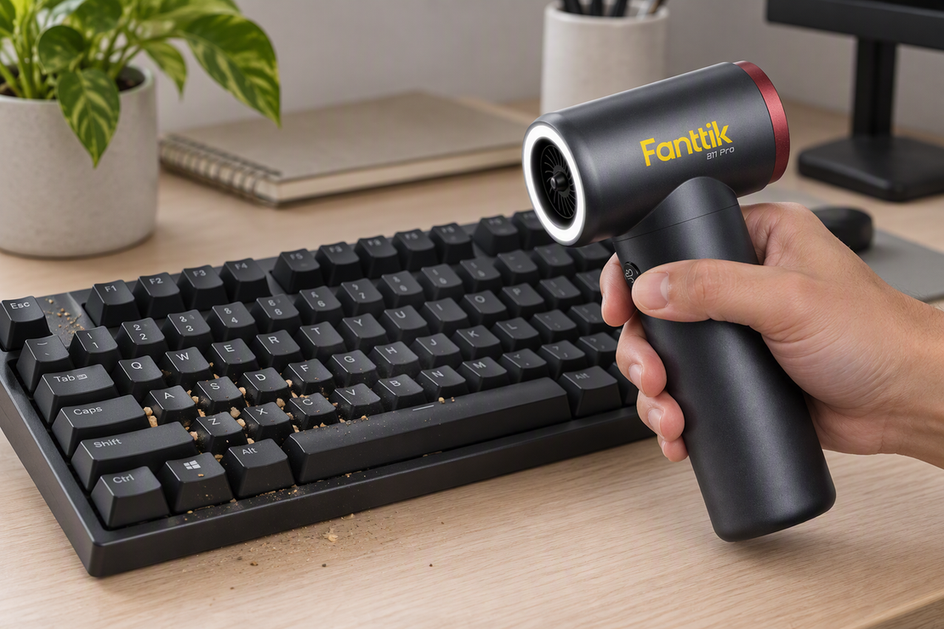 How to Clean a Mechanical Keyboard and PC Fans with an Electric Air Duster
A practical keyboard and PC fan cleaning plan that separates canned-air advice from electric duster use and shows...
How to Clean a Mechanical Keyboard and PC Fans with an Electric Air Duster
A practical keyboard and PC fan cleaning plan that separates canned-air advice from electric duster use and shows...
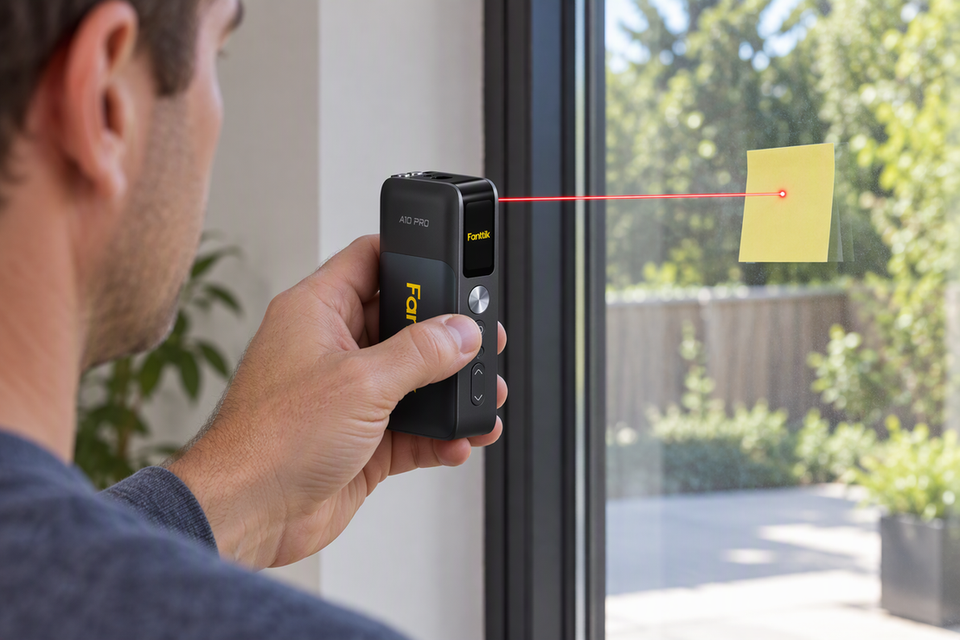 Measuring Glossy and Glass Surfaces with a Laser Measure: How to Fix Refraction Errors
A practical troubleshooting guide for glass, mirror, and glossy-surface readings, with a clear rule for when not to...
Measuring Glossy and Glass Surfaces with a Laser Measure: How to Fix Refraction Errors
A practical troubleshooting guide for glass, mirror, and glossy-surface readings, with a clear rule for when not to...
Leave a comment
This site is protected by hCaptcha and the hCaptcha Privacy Policy and Terms of Service apply.