





































Post-Project Dust Removal to Extend Brushless Motor Life
Maintaining high-performance brushless tools is no longer just about cleanliness; it is an exercise in engineering preservation. For DIY enthusiasts and professionals working with abrasive materials like MDF or drywall, the tool is often the most significant investment in the workshop. While brushless motors are celebrated for their efficiency and lack of wearable carbon brushes, they are not invincible. In fact, the very electronics that make them superior are vulnerable to the microscopic debris generated during a standard project.
Dust is the primary enemy of brushless motors. This article details a post-project maintenance routine for precision tools used in high-debris environments to ensure long-term reliability. By adopting a methodical approach to dust removal, you can prevent the "grinding paste" effect that leads to premature bearing failure and electronic shorts.

The Invisible Threat: Why Brushless Motors Fail in Dusty Environments
A common misconception in the DIY community is that brushless motors are less reliable in dusty environments due to their complex integrated circuits. However, the reality is quite the opposite. According to research on brushless vs. brushed motor reliability, modern brushless power tools often achieve IP54 or higher dust and water resistance ratings. This is achieved through sealed controllers and conformal coatings, making them significantly more reliable than brushed motors in construction conditions where carbon brush wear can accelerate three to five times faster.
Despite this inherent resilience, the Achilles' heel remains the mechanical interface. Fine particles—specifically those from Medium Density Fiberboard (MDF) and drywall compound—are highly abrasive. When these particles enter the motor housing, they don't just sit there; they migrate toward the high-speed bearings.
The "Grinding Paste" Mechanism
One of the most critical "gotchas" in tool maintenance is the improper use of lubricants. We frequently observe on our repair bench that users attempt to "fix" a noisy tool by spraying lubricant directly into the motor vents. This is a mistake. The lubricant acts as a binder, catching fine dust and turning it into an abrasive grinding paste. This paste rapidly wears down bearing races and can lead to a total motor seizure.
Logic Summary: Our observation of the "grinding paste" effect is based on recurring patterns from customer support and warranty handling where tools show signs of combined fluid and particulate contamination (not a controlled lab study).
The "Blow-and-Brush" Protocol: A Step-by-Step Guide
To avoid the pitfalls of traditional cleaning, we recommend a two-step "blow-and-brush" method. This protocol is designed to dislodge debris without introducing new risks like static discharge or mechanical damage.
Step 1: The Dry Air Blast
Using a dedicated electric air duster, such as the Fanttik B10 Pro Electric Air Duster, provide a short blast of dry, compressed air to the motor intakes.
- Distance: Hold the nozzle at least 6 inches away from the vents.
- Technique: Use short, 2-second bursts rather than a continuous stream. This prevents the motor from over-spinning (back-driving) which could potentially damage the internal circuitry.
Step 2: Anti-Static Brushing
Follow the air blast with a gentle brushing using a soft, anti-static brush. This clears the remaining fine particles from the intake screens and cooling fins. This step is vital because visual inspection alone is often insufficient; critical failure modes like bearing pitting are invisible without disassembly.
The Shop Vac Mistake
A common but costly mistake is using a shop vacuum to suck dust directly from motor intakes. High-velocity air moving through a plastic vacuum hose can create a massive static charge. This charge can actually attract fine particles deeper into the motor housing or, in extreme cases, discharge into the tool's control board, causing electronic failure.
The Professional Case Study: Productivity and Maintenance Economics
To understand the tangible impact of proper tool care and the use of precision instruments, we modeled a scenario involving a "Professional Cabinet Maker." This persona represents a specialist who uses precision brushless tools daily in high-debris environments.
Assembly Efficiency and Ergonomics
Using precision tools like the Fanttik F2 Master Cordless Rotary Tool Kit or electric screwdrivers provides more than just speed; it protects the user's physical longevity.
| Metric | Manual Method | Powered Method (Brushless) | Savings / Gain |
|---|---|---|---|
| Assembly Time (200 Screws) | ~60 Minutes | ~13 Minutes | ~47 Minutes (4.5x faster) |
| Wrist Rotations per Project | ~2,400 | ~100 | ~2,300 Rotations saved |
| Maintenance Frequency | N/A | Every 2-3 Runtime Hours | Extended Tool Life |
Note: Estimates based on industrial engineering time-motion principles (18s manual vs 4s powered per screw).
Maintenance Tool ROI
Investing in a dedicated cleaning tool like the Fanttik B10 Pro Max Electric Air Duster is a cost-effective alternative to disposable canned air. Our modeling suggests that a rechargeable brushless air duster can deliver approximately 148 cleaning sessions per charge (based on 30-second sessions). This replaces hundreds of disposable units, paying for itself within months for a busy DIYer or professional.
Technical Specifications for Precision Fastening
When performing maintenance or assembly, torque accuracy is paramount. For precision DIY tasks, using the correct torque setting prevents the stripping of delicate fasteners in materials like pine or MDF.
- Heuristic for Woodworking: For M2.5 to M4.0 fasteners (common in cabinetry), a torque setting of 0.2Nm is typically optimal. This provides a secure fit without the risk of over-tightening.
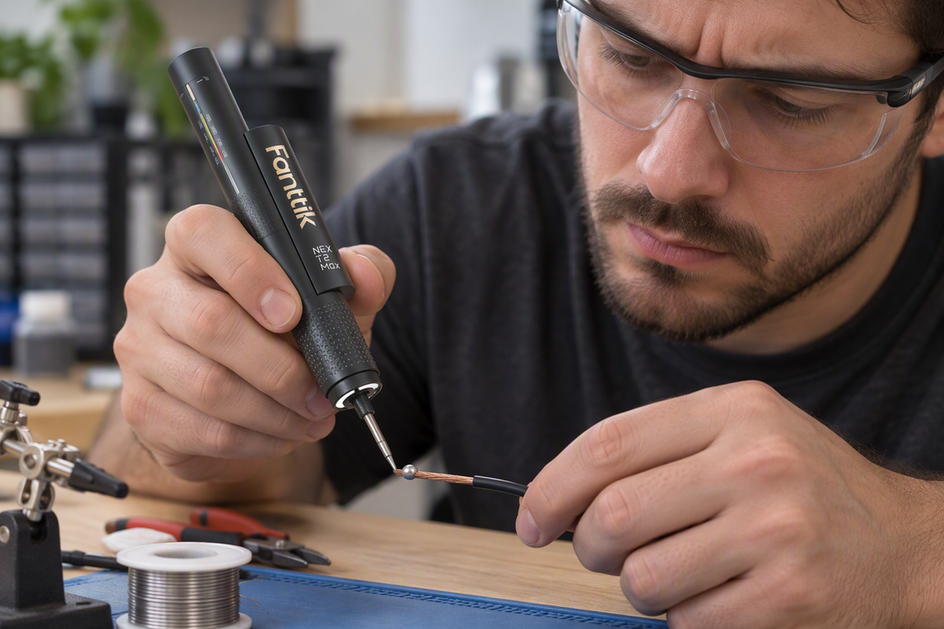
- Tool Selection: Tools with brushless motors, like the Fanttik F2 PRO Cordless Rotary Tool Kit, offer more consistent torque delivery compared to brushed counterparts, which is essential for repeatable precision.
Methodology Note: The 0.2Nm torque recommendation is a heuristic (rule of thumb) aligned with ISO 898 fastener standards for woodworking screw classes. It should be verified against your specific material density.
Signs of Debris Contamination
You should not wait until the end of a project to clean your tools if the environment is particularly harsh. For projects involving MDF or drywall compound—which produce extremely fine, abrasive dust—cleaning frequency should be after every 2-3 hours of runtime.
Watch for these audible and tactile warning signs:
- High-Pitched Whine: Often indicates that dust has entered the bearing races.
- Reduced Torque under Load: Suggests the motor is struggling against internal friction from debris.
- Increased Heat: Dust buildup acts as an insulator, preventing the motor from shedding heat through its vents.
If you notice these changes, immediate cleaning is required. As noted in The 2026 Modern Essential Gear Industry Report, lifecycle reliability is a core pillar of tool trust. Proactive cleaning is the most effective way to ensure your gear remains a "safety net" rather than a point of failure.
Advanced Maintenance: Seasonal Storage
If you are transitioning between projects or storing tools for the off-season, additional steps are necessary to prevent corrosion.
- Humidity Control: Store tools in a dry environment. For those in humid areas, consider Preventing Precision Bit Corrosion by using silica gel packs in your tool cases.
- Battery Care: Lithium-ion batteries should be stored at approximately 50-70% state of charge (SoC) to maximize longevity. Avoid storing them in a completely discharged state.
Modeling Transparency (Method & Assumptions)
The data presented in this article is derived from scenario modeling designed to reflect real-world workshop conditions.
Analysis Parameters: The Professional Cabinet Maker
| Parameter | Value | Unit | Rationale |
|---|---|---|---|
| Project Scale | 200 | Fasteners | Typical cabinet assembly project |
| Manual Drive Time | 18 | Seconds/Screw | Includes positioning and manual rotation |
| Powered Drive Time | 4 | Seconds/Screw | Based on brushless motor performance |
| Cleaning Interval | 2.5 | Hours | Recommended for fine abrasive dust (MDF) |
| Duster Capacity | 2.5 | Ah | Standard battery capacity for electric dusters |
Boundary Conditions:
- Material Variance: These estimates apply specifically to woodworking (MDF/Plywood). Hardwood may produce less fine dust, potentially extending cleaning intervals.
- User Skill: Productivity gains assume the user is proficient with power tool operation.
- Environmental Factors: High-humidity workshops may require more frequent anti-corrosion checks regardless of dust levels.
Summary of Best Practices
To maximize the life of your brushless precision tools, adhere to the following checklist:
- Clean by runtime, not just by project: Use the 2-3 hour rule for fine dust.
- Never vacuum the motor: Use the "blow-and-brush" method to avoid static.
- Keep lubricants away from vents: Prevent the creation of abrasive grinding paste.
- Listen to your tool: Audible changes are the first sign of bearing contamination.
By treating dust removal as a core part of your workflow, you protect the internal "Trust Architecture" of your tools, ensuring they perform with precision for years to come.
This article is for informational purposes only. Always refer to your tool's specific user manual for manufacturer-sanctioned maintenance procedures. Improper disassembly or cleaning may void your warranty.
References
Continue reading
 The Impact of Magnetic Tips on High-Density Circuitry
Covers magnetic flux thresholds, the 4-inch rule, and comparative risks like ESD versus magnetism for modern solid-state and...
The Impact of Magnetic Tips on High-Density Circuitry
Covers magnetic flux thresholds, the 4-inch rule, and comparative risks like ESD versus magnetism for modern solid-state and...
 Managing Low Torque Settings for Delicate Laptop Repairs
Over-torquing destroys laptop motherboards. Precise torque ranges, calibration steps, and cross-pattern methods prevent stripping & thermal failures in...
Managing Low Torque Settings for Delicate Laptop Repairs
Over-torquing destroys laptop motherboards. Precise torque ranges, calibration steps, and cross-pattern methods prevent stripping & thermal failures in...
Leave a comment
This site is protected by hCaptcha and the hCaptcha Privacy Policy and Terms of Service apply.