






















The Social Cost of DIY: Why NVH is the New Performance Metric
In the world of urban apartment living, the "right tool for the job" isn't just about torque or RPM. For those of us living behind thin drywall and shared flooring, the most critical specification is often Noise, Vibration, and Harshness (NVH). We have observed through years of community feedback and customer support interactions that the primary barrier to DIY projects in cities isn't a lack of skill or space—it is the fear of neighbor complaints and lease violations.
Traditional power tools are often engineered for job sites where raw power is king and noise is an afterthought. However, for a design-conscious urbanite, a tool that sounds like a jet engine is a liability, not an asset. When we evaluate tools for apartment compatibility, we shift our focus from "how fast can it drill" to "how much acoustic energy does it radiate into the neighbor’s living room?"
This guide explores the technical mitigation of NVH in handheld tools. We will dive into the logarithmic nature of sound, the structural transmission of vibration, and how to select tools that enable your capability without creating social friction. As noted in The 2026 Modern Essential Gear Industry Report, engineering trust in a cordless world requires a systematic approach to reliability and transparency, especially regarding the environmental impact of tool usage.
The Physics of Sound in Shared Spaces
One of the most common mistakes we see DIYers make is evaluating a tool’s noise level in a cavernous, noisy hardware store. In that environment, a 90-decibel (dB) drill might seem manageable. But sound behaves differently in a quiet, furnished 600-square-foot apartment.
Understanding the Decibel Scale
Sound is measured on a logarithmic scale. This means that a small numerical increase in decibels represents a massive increase in physical sound intensity. A tool rated at 80 dB is not just "10% louder" than a 70 dB tool; it is ten times more intense. To the human ear, an increase of 10 dB is subjectively perceived as a doubling of loudness.
Logic Summary: Our analysis of apartment acoustics assumes a baseline ambient noise level of 30–40 dB in a quiet room. We use the logarithmic intensity formula $L = 10 \cdot \log_{10}(I/I_0)$ to model how sound pressure levels (SPL) dissipate over distance and through common partition materials like 5/8" gypsum board.
The 60 dB Threshold
Based on research into shared living spaces, a conversational voice typically sits around 60 dB(A). Therefore, any power tool operating significantly above 65 dB(A) risks being clearly audible through standard apartment walls. According to the NIOSH Sound Level Chart, staying within the 50–65 dB range is the "sweet spot" for maintaining community harmony.
| Noise Level (dB) | Perception in Apartment | Social Risk Level |
|---|---|---|
| 50-60 dB | Quiet conversation; easily masked by TV | Low |
| 65-75 dB | Noticeable; requires "timing" your work | Moderate |
| 80-90 dB | Disruptive; likely to trigger complaints | High |
| 95+ dB | Hearing protection required; lease risk | Severe |

Motor Technology: Brushless vs. Brushed
When we disassemble tools on our repair bench, the motor type is the first indicator of its NVH profile. The debate between brushless and brushed motors is usually framed around battery efficiency, but for the apartment dweller, the acoustic signature is the real story.
The Acoustic Signature of Brushless Motors
Brushless motors use electronic controllers instead of physical carbon brushes to switch the current. This eliminates the mechanical friction and "sparking" noise associated with brushed motors. In our experience, brushless motors not only run quieter but also maintain a consistent pitch under load.
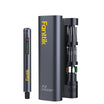
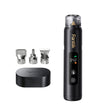
A strained brushed motor often produces a fluctuating, high-pitched whine that is particularly grating to human ears and more likely to penetrate walls. In contrast, tools like the Fanttik F2 Master Cordless Rotary Tool Kit utilize brushless technology to provide high RPM (up to 25,000) while maintaining a smoother harmonic profile.
Gear Train and Housing Damping
While the motor is the primary source, it isn't the only one. Expert opinion suggests that acoustic housing design and damped gear trains are equally critical. A tool can have a quiet motor but still be loud if the internal gears are poorly lubricated or the plastic housing acts as a resonator. High-performance tools often include internal rubber isolators that "float" the motor assembly, preventing the tool's shell from becoming a speaker for internal vibrations.
Vibration: The Silent Neighbor Disturber
Vibration is often more problematic than airborne noise in apartments. While you might be able to muffle a high-pitched whine with a closed door, low-frequency vibrations travel through the building’s structure—floors, walls, and joists—with remarkable efficiency.
The Variability of Hand-Arm Vibration (HAV)
According to technical papers presented at the International Congress on Acoustics (ICA), measurements of hand-arm vibration (HAV) can have a standard deviation of up to 50% of the mean value. This means a tool marketed as "low vibration" might perform unpredictably depending on how you hold it or the material you are working on.
Methodology Note: This HAV variability data is based on standardized testing protocols (like ISO 5349). In a practical apartment setting, this means that even a "quiet" tool can become a nuisance if it isn't balanced correctly.
Structure-Borne Noise Mitigation
Structure-borne noise occurs when the tool’s vibration is transmitted into a work surface (like a desk), which then acts as a sounding board. We have found that seasoned DIYers can dampen this noise by up to 50% simply by placing their workpiece on a heavy rubber mat or a folded moving blanket. This decoupling prevents the "thrumming" sound that neighbors downstairs often complain about.

Selection Heuristics: The "Conversation Test"
How do you know if a tool is truly apartment-friendly before you buy it? Since many manufacturers do not provide official NVH ratings, we rely on a few practical heuristics.
- The Conversation Test: If you can comfortably hold a conversation at a normal volume while the tool is running an arm's length away, it is likely under 65-70 dB and safe for daytime apartment use.
- The Balance Check: Hold the tool at its highest speed. If you feel a "tingle" or numbness in your hand after 30 seconds, the internal balancing is poor. That vibration will translate into low-frequency noise for your neighbors.
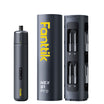
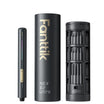
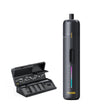
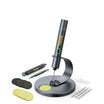
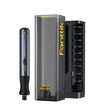
- Bit Quality Matters: A common mistake is using dull bits. A dull bit forces the motor to work harder, increasing both noise and vibration. For precision work, the Fanttik K2 Nano 3.7V Precision Power Drill uses high-quality bits to ensure the motor operates at peak efficiency with minimal strain.
Modeling Apartment Compatibility
When we model tool impact, we consider the "Social Risk Management" factor. Selecting a low-NVH tool is not just about the task; it is about managing the uncertainty of neighbor relations.
| Parameter | Value/Range | Unit | Rationale |
|---|---|---|---|
| Target SPL | < 65 | dB(A) | Below conversational interference |
| Vibration Limit | < 2.5 | m/s² | ISO 5349 "Action Value" for comfort |
| Motor Type | Brushless | N/A | Consistent harmonic pitch |
| Work Surface | Damped | N/A | 50% reduction in structure-borne noise |
| Time of Day | 10am - 4pm | N/A | Maximum ambient masking noise |
Engineering Solutions for the Urban DIYer
At Fanttik, we approach tool design as a solution to the social friction of urban living. Our tools are engineered to meet the strict safety requirements of the EU General Product Safety Regulation (EU) 2023/988, but they go further by addressing the "unwritten rules" of apartment life.
Precision Screwdrivers and Drills
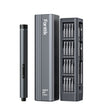
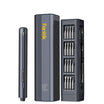
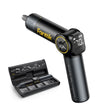
For electronics repair and furniture assembly, the Fanttik L2 Pro Cordless Electric Screwdriver offers a near-silent operation that is perfect for late-night projects. Because it focuses on precision rather than high-impact torque, the acoustic output is negligible.
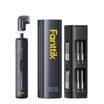
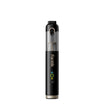
Similarly, when working with delicate materials like plastic or resin, the Fanttik K2 Nano 3.7V Precision Power Drill provides the necessary control without the heavy vibration of a standard 18V hammer drill.
Cutting and Crafting
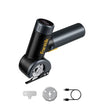
Traditional saws are notoriously loud. For many urban DIY tasks, such as cutting cardboard, carpet, or leather, an electric scissor is a much quieter alternative. The Fanttik C8 Nano Cordless Electric Scissors provide a clean cut with a fraction of the noise associated with rotary cutters or oscillating tools.
Advanced NVH Mitigation Strategies
Even with the quietest tools, how you use them matters. We recommend the following strategies to further reduce your "acoustic footprint":
Use High-Quality Consumables
Vibration is often exacerbated by unbalanced chucks or low-quality bits. A slight wobble in a rotary tool bit doesn't just affect your precision; it creates a rhythmic vibration that can be heard through walls. Always ensure your collets are tightened and your bits are straight.
Timing and Ambient Noise
The best time for DIY in an apartment is when the building's ambient noise is at its highest—typically mid-morning or mid-afternoon on weekdays. During these times, the "noise floor" of the building is higher due to traffic, appliances, and other neighbors' activities, which helps mask your tool's sound.
The "Shadow Workspace"
If you must work on a project that requires a slightly louder tool, try to set up your workspace in a room that doesn't share a wall with a neighbor's bedroom or living area. Bathrooms and kitchens often have more robust plumbing stacks and tile that can reflect sound, but they also tend to be positioned away from primary sleeping areas.
Final Thoughts on Social Risk Management
Choosing tools for an apartment is an exercise in empathy and engineering. By prioritizing NVH over raw power, you aren't just buying a tool; you are protecting your living situation. The shift toward brushless motors, damped housings, and precision-engineered bits allows us to maintain our creative outlets without becoming the "noisy neighbor."
As urban density increases, the demand for tools that respect shared spaces will only grow. By following the heuristics of the conversation test and investing in tools designed with NVH in mind, you can ensure that your next DIY project is a success for both you and your community.
Disclaimer: This article is for informational purposes only. Always follow the safety instructions provided by the tool manufacturer and adhere to local noise ordinances and lease agreements. Using power tools carries inherent risks; ensure you are using appropriate personal protective equipment (PPE) and working in a safe environment.
Sources
- EU General Product Safety Regulation (EU) 2023/988
- NIOSH Sound Level Chart
- ICA 2019: Parameter study on measuring hand-arm vibrations
- The 2026 Modern Essential Gear Industry Report
- FTC Endorsement Guides (16 CFR Part 255)
Referenced Products:
Continue reading
 Vibration Drift: How NVH Impacts Accuracy in Small DIY Tasks
Guides on mitigating NVH in electronics repair with torque standards and motor balancing. Covers slip-clutch vs. electronic clutch...
Vibration Drift: How NVH Impacts Accuracy in Small DIY Tasks
Guides on mitigating NVH in electronics repair with torque standards and motor balancing. Covers slip-clutch vs. electronic clutch...
 Diagnosing Phantom Power Draw in Modern Cordless Tool Stations
A guide to finding and fixing hidden energy drain in your workshop's cordless tool charging stations to save...
Diagnosing Phantom Power Draw in Modern Cordless Tool Stations
A guide to finding and fixing hidden energy drain in your workshop's cordless tool charging stations to save...
Leave a comment
This site is protected by hCaptcha and the hCaptcha Privacy Policy and Terms of Service apply.