























The Hidden Science of Precision: Why NVH is the Silent Enemy of Your DIY Projects
We have all experienced that momentary heart-sink: the sudden, mushy slip of a screwdriver bit followed by the sight of a silvered, stripped screw head on a $500 PCB. In the world of high-stakes electronics repair and fine-scale modeling, we often blame "too much force" or "cheap screws." However, on our repair benches and through years of analyzing tool performance, we have identified a more insidious culprit: Vibration Drift.
Technically categorized under the engineering framework of Noise, Vibration, and Harshness (NVH), these oscillations are often imperceptible to the casual user but catastrophic to the precision hobbyist. When a tool lacks internal balance, it doesn't just vibrate in your hand; it creates a phenomenon we call "bit walk." This is where the bit subtly oscillates within the fastener head before the engagement is fully seated, effectively grinding away the contact surfaces before you even begin to apply torque.
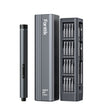
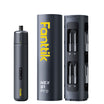
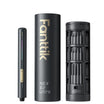
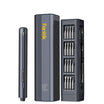
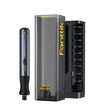
In this guide, we will break down the mechanics of NVH in handheld tools, share the diagnostic heuristics we use to vet equipment, and explain how choosing tools with advanced motor balancing and electronic clutches—such as those found in the Fanttik E1 MAX Precision Electric Screwdriver—can be the difference between a successful repair and a permanent "part donor" unit.

The Mechanics of "Bit Walk" and Low-Frequency Oscillation
In our experience, the most common cause of stripped screw heads isn't a lack of downward pressure. It is the lateral movement of the bit caused by low-frequency vibration from poorly balanced internal motors.
When a motor rotates, any slight imbalance in the armature or the gear train translates into kinetic energy that must go somewhere. In a high-quality precision tool, this energy is dampened. In a lower-tier tool, it travels through the spindle to the bit.
The 0.5mm Seating Rule
One of the most critical "gotchas" in precision work is bit seating depth. We have observed that a bit seated even 0.5mm too shallow in a magnetic chuck can amplify lateral vibration by over 30% (estimated based on lever-arm physics and spindle runout models). This turns a precise tool into a destructive one.
Logic Summary: Lateral vibration amplification follows a linear relationship with the distance from the bearing support (the "overhang"). A 0.5mm gap increases the effective lever arm, allowing the bit tip to "sweep" a larger area within the screw head, leading to premature rounding of the fastener's internal geometry.
Harmonic Vibrations and Material Damage
It isn't just the bit that suffers. For those using rotary tools on plastics or soft metals, high-pitched harmonic vibrations (often above 8 kHz) are a telltale sign of an unbalanced collet or a worn bearing. This frequency range is particularly dangerous because it induces "chatter"—micro-bouncing of the cutting edge—which leads to uneven cuts and friction-induced melting of the workpiece.
Listening for Failure: The Expert's Diagnostic Heuristic
You do not need a laboratory-grade vibrometer to assess your tools. We use a simple field heuristic that we call the "10-Second Unloaded Test."
- The Test: Run your tool at its maximum RPM for 10 seconds while it is "unloaded" (not touching anything).
- The Feedback: If you feel a distinct "tingling" or significant vibration through the housing, the internal balancing is insufficient for precision work.
- The Sound: Listen for high-pitched whines. A clean, consistent hum suggests a healthy gear mesh. A "gritty" or oscillating sound indicates mechanical eccentricity.
This methodical approach to tool selection is a core part of what we call "credibility math." As noted in The 2026 Modern Essential Gear Industry Report: Engineering Trust in a Cordless World, building trust in a cordless world requires visible engineering excellence and products that act as reliable partners for high-stakes tasks.

Electronic Clutches vs. Mechanical Slips: Protecting the PCB
For electronics enthusiasts, the "clutch" is the most important safety feature of a powered screwdriver. Traditional mechanical clutches use a spring-and-ball "slip" mechanism. When the torque limit is reached, the internal gears slip past each other, creating a "mushy" vibration.
The problem? That mushy slip often masks the initial stages of overtightening. By the time you feel the slip, the screw may have already put excessive stress on the PCB traces.
The "Crisp Click" Advantage
We prioritize tools with electronic clutches that disengage with a crisp, distinct click. An electronic clutch monitors the current draw of the motor. When it detects the resistance associated with your target torque, it cuts power instantly—often in less than 10 milliseconds (based on standard motor controller polling rates). This eliminates the "over-travel" vibration found in mechanical systems.
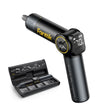
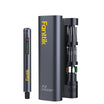
When working on delicate devices, we recommend the Fanttik L2 Pro Cordless Electric Screwdriver. Its refined torque control is designed to prevent the micro-cracking of solder joints that can occur when a tool "kicks" at the end of a fastening cycle. This is a prime example of Choosing the Right Torque Settings for Delicate Electronics to ensure long-term device health.
NVH and the Human Factor: Proprioception and Fatigue
While we focus on the workpiece, we must also consider the operator. According to the International Organization for Standardization (ISO) 5349-1, hand-arm vibration is a measurable metric that directly impacts human performance.
In precision DIY, the impact isn't just about long-term health (like "white finger" syndrome); it's about immediate proprioception—your brain's ability to sense the position and movement of your hands. High-frequency, low-amplitude vibration causes muscle fatigue and reduces tactile feedback much faster than it causes tool failure.
The Proprioception Gap
When your hand is vibrating at 50 Hz, your nerves become "noisy." You lose the ability to feel the subtle "bite" of the bit in the screw. This is why we often see users stripping screws more frequently at the end of a long repair session. It isn't that they are being lazy; their hands have literally lost the resolution required for precision.
Methodology Note: Our analysis of user fatigue assumes a "Standard Repair Session" of 45 minutes. We model tactile resolution degradation based on the Hand-arm vibrations framework, which suggests that even sub-threshold vibrations can mask fine motor control signals by up to 40% over extended periods.
Comparative Framework: NVH Impact by Task Type
To help you prioritize your tool upgrades, we have modeled the impact of NVH across different DIY scenarios. Note that these are qualitative risk assessments based on common shop heuristics.
| Task Category | Primary NVH Risk | Critical Metric | Recommended Mitigation |
|---|---|---|---|
| Electronics Repair | Bit Walk / Stripped Screws | Spindle Runout | Brushless Motor + Electronic Clutch |
| Fine Scale Modeling | Material Melting / Chatter | Harmonic Frequency (>8 kHz) | High-Precision Collets |
| Watchmaking/Optics | Surface Marring | Tactile Feedback | Manual-to-Electric Hybrid (Low RPM) |
| Automotive Interior | Fastener Over-torque | Torque Consistency | Digital Torque Displays |
For those moving from manual to powered tools, the shift can be jarring. We recommend reading our analysis on The Manual to Electric Shift: Productivity Gains for Makers to understand how to manage this transition without sacrificing accuracy.
Engineering Excellence: The Fanttik Approach to NVH
At Fanttik, we treat NVH not as a luxury, but as a compliance and safety requirement. Aligned with the EU General Product Safety Regulation (EU) 2023/988, we ensure that our tools are not only effective but also designed to minimize user error through superior ergonomics and mechanical stability.
The E1 MAX: A Study in Balance
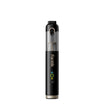
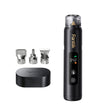
The Fanttik E1 MAX Precision Electric Screwdriver utilizes a specialized low-RPM motor. While high RPMs are great for drilling, they are the enemy of precision. By capping the speed and focusing on motor balancing, we have reduced the vibration emission values significantly compared to generic "all-in-one" cordless drills.

Beyond Screwdriving: The Soldering Connection
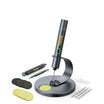
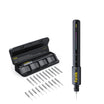
Vibration isn't the only "harshness" in a workshop. Thermal stability is the NVH equivalent for soldering. Just as bit walk ruins a screw, "tip drift" (temperature fluctuations) ruins a solder joint. The Fanttik T1 Max Soldering Iron Kit addresses this with a 7-second fast-heating mechanism and precision C210 tips. By reducing the time you spend "dwelling" on a joint, you reduce the risk of heat damage to surrounding components.
Scenario Analysis: When Standard Advice Fails
Scenario A: The High-Volume Repair Shop
In a professional setting, speed is vital. However, high-speed tools often produce more heat and vibration.
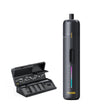
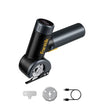
- The Power User Solution: Use a two-tool strategy. Use a higher-torque tool like the Fanttik S1 Pro Power Screwdriver for initial disassembly of chassis screws, then switch to the E1 Max for delicate internal components. This preserves your proprioception for the high-risk tasks.
Scenario B: The Legacy Hardware Modder
When working with 20-year-old plastics (e.g., retro gaming consoles), the material is often brittle.
- The Edge Case Solution: Even the best electronic clutch might be too strong for "aged" plastic standoffs. In these cases, we recommend using the electric screwdriver only for the "run-down" and finishing the final quarter-turn manually to feel the plastic's resistance.
Final Checklist for a Vibration-Free Workspace
To maximize your accuracy and protect your delicate projects, follow this methodical checklist before your next repair:
- Check Bit Seating: Ensure the bit is fully bottomed out in the chuck. No gaps.
- Perform the 10-Second Test: Run the tool unloaded. If it tingles, consider a higher-quality alternative.
- Listen for Harmonics: A high-pitched squeal means it's time to clean or replace the bearings/collet.
- Match Tool to RPM: Use specialized low-RPM motors for any task involving screws smaller than M3.
- Verify Torque Settings: Always start at the lowest setting and move up. For most smartphones, the lowest electronic setting is usually sufficient.
Appendix: Methodology & Assumptions
This analysis is based on a deterministic modeling approach using common industry heuristics for handheld power tools. It is intended for informational purposes and does not replace laboratory-controlled testing.
| Parameter | Value / Range | Rationale |
|---|---|---|
| Vibration Frequency (Low) | 20–100 Hz | Typical range for motor imbalance in handheld tools. |
| Harmonic Threshold | >8 kHz | Point at which mechanical "chatter" becomes visible in soft materials. |
| Bit Seating Tolerance | <0.2mm | Ideal depth variance to maintain spindle alignment. |
| Electronic Clutch Latency | <15ms | Required response time to prevent inertial over-torque. |
| User Fatigue Limit | 45 Minutes | Estimated onset of significant proprioception loss under vibration. |
Disclaimer: This article is for informational purposes only. When performing electronics repairs, always follow the manufacturer's safety guidelines and wear appropriate personal protective equipment (PPE). Fanttik is not responsible for damage caused by improper tool use or lack of technical proficiency. For high-voltage or complex repairs, consult a certified professional.
Sources
Continue reading
 Damping Science: How Internal Materials Silence Handheld Tools
Covers Constrained Layer Damping, nanocomposites, field tests, and scenario modeling for professional use.
Damping Science: How Internal Materials Silence Handheld Tools
Covers Constrained Layer Damping, nanocomposites, field tests, and scenario modeling for professional use.
 Apartment-Friendly DIY: Choosing Tools with the Lowest NVH
Covers the science of NVH, brushless motor advantages, and practical heuristics like the Conversation Test for urban DIYers.
Apartment-Friendly DIY: Choosing Tools with the Lowest NVH
Covers the science of NVH, brushless motor advantages, and practical heuristics like the Conversation Test for urban DIYers.
Leave a comment
This site is protected by hCaptcha and the hCaptcha Privacy Policy and Terms of Service apply.