





























The Invisible Metric: Why Internal Resistance Dictates Battery Performance
In our work at the repair bench and when analyzing field data from cordless tools, we have identified internal resistance (IR) as one of the most critical indicators that separates reliable gear from a potential liability. While most users focus on capacity (milliamp-hours or mAh), capacity only tells you how much "fuel" is in the tank. Internal resistance suggests how efficiently the fuel can reach the motor.
Quick Health Check: Assessing Your Battery's "Pulse"
If you are looking for an immediate way to evaluate your battery health, follow these three steps:
- Record a Baseline: Measure the IR of your battery when it is new (typically using a DC load test or a specialized charger).
- The Pulse Test: Apply a known load (e.g., 2A) for 1–5 seconds and record the voltage drop.
- Compared to Thresholds: If the resistance has doubled from its baseline or exceeds 100 mΩ for high-drain tools, it is likely time to consider a replacement.
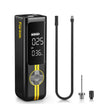
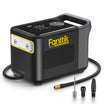
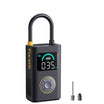
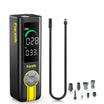
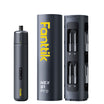
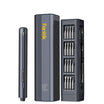
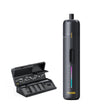
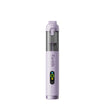
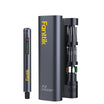
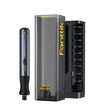
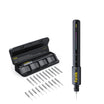
Think of internal resistance like the diameter of a fuel line. A wide, clear line allows power to flow effortlessly. If the line is restricted—due to chemical degradation or wear—the battery can struggle to deliver the current required for high-torque tasks. For prosumers using precision gear like the Fanttik E1 MAX Precision Electric Screwdriver, a slight rise in IR might only result in a minor drop in runtime. However, for high-drain devices like portable tire inflators, high internal resistance is a common factor when motors cut out prematurely under load.
According to The 2026 Modern Essential Gear Industry Report (a Fanttik whitepaper on cordless engineering), reliability is often a function of predictive maintenance. Understanding the mechanics of your battery’s internal resistance is a practical step in ensuring your tools are ready for demanding tasks.

The Physics of Resistance: What Happens Inside the Cell?
Internal resistance is not a static number; it is the sum of electronic resistance (the physical path through tabs and collectors) and ionic resistance (the movement of ions through the electrolyte).
As a lithium-ion cell ages, several chemical processes can increase this resistance:
- SEI Layer Growth: Every charge cycle slightly thickens the Solid Electrolyte Interphase (SEI) layer on the anode. While this layer is necessary for stability, excessive thickness acts as a barrier to ion flow.
- Electrolyte Breakdown: High temperatures can accelerate the decomposition of the liquid electrolyte, increasing the "viscosity" for ions.
- Lithium Plating: Charging too quickly or in cold temperatures (below 0°C/32°F) can cause lithium ions to plate as metallic lithium on the anode surface, which significantly spikes resistance and can create severe safety risks.
Technical Context: These observations are based on standard electrochemical principles and common patterns seen in consumer electronics warranty handling. We treat IR as a "pulse" because it reacts dynamically to the cell's physical state and environmental conditions.
Interpreting the Numbers: Practical Thresholds
In our experience monitoring various 18650 and 21700 cells, we have found that "acceptable" values depend heavily on the application. A resistance value that is perfectly fine for a low-power LED flashlight might be unacceptable for a high-torque impact wrench.
For high-power tools requiring burst torque, a healthy 18650 cell typically reads between 20 and 35 milliohms (mΩ) when measured at room temperature (approx. 25°C/77°F).
Battery Health Thresholds (Heuristic Guide)
| Cell Condition | Resistance Range (18650/21700) | Typical Performance Impact |
|---|---|---|
| Excellent (New) | 20–35 mΩ | Full torque; minimal heat under load. |
| Good (Used) | 35–55 mΩ | Slight capacity loss under high-drain. |
| Degraded | 60–100 mΩ | Noticeable voltage sag; motor may cut out. |
| Critical | >150 mΩ | High heat generation; potential safety risk. |
Note: These ranges are practical rules of thumb derived from internal field testing of high-drain power tool cells. Actual thresholds vary by specific chemistry (e.g., LiFePO4 vs. NMC) and manufacturer specifications.
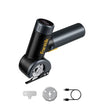
When using a tool like the Fanttik F2 PRO Cordless Rotary Tool Kit, which relies on consistent RPM, a battery with high resistance (e.g., 80 mΩ) may experience "voltage sag." This occurs when the battery's voltage drops below the device's low-voltage cutoff under load, causing it to stall even if the battery indicator shows a partial charge.
Real-World Failure Modes: The Tire Inflator Scenario
A common frustration for DIYers occurs with portable tire inflators: the device is fully charged, but the motor stops as soon as the pressure reaches 30 PSI.
This often happens because the motor requires a higher current to push against the increasing backpressure. If the internal resistance is high, the effort of pushing that current through the battery generates internal heat and causes a sharp voltage drop. The Battery Management System (BMS) detects this drop and may shut down the system to prevent cell damage, misinterpreting the sag as a depleted battery.
To help avoid this, we recommend periodic checks. If the gear takes longer to charge than usual or feels unusually hot during standard use, these can be signs of rising IR. These patterns are frequently observed in units stored in high-heat environments (like vehicle trunks in summer) or left at 100% charge for extended periods.
Methodology: How to Measure IR
There are two primary ways to measure internal resistance, and the choice depends on the equipment available.
1. DC Internal Resistance (DCIR)
This is the most accessible field test for prosumers. It involves measuring the battery voltage at rest, applying a known load (e.g., a 2A pulse via a power resistor or specialized battery analyzer) for 1–5 seconds, and measuring the voltage under that load.
- Formula: \(R = (V_{rest} - V_{load}) / I\)
- Practical Example: If a 4.0V cell (measured at 25°C) drops to 3.8V under a 2A load, the IR is 100 mΩ—indicating the cell is beginning to degrade for high-drain use.
2. AC Impedance (1kHz Test)
Professional analyzers often use a 1kHz AC signal. According to research from Bonnen Batteries, AC impedance is effective for detecting early-stage degradation like SEI growth. However, for DIYers, the DCIR method is often a more direct indicator of how the battery will perform under a real-world motor load.
Scenario Analysis (Modeled Data): To illustrate the impact of IR, we compared two hypothetical 2000mAh cells under a 10A load.
Parameter Healthy Cell Degraded Cell Unit Internal Resistance 25 100 mΩ Current Draw 10 10 A Voltage Drop (\(I \times R\)) 0.25 1.00 V Heat Generated (\(I^2 \times R\)) 2.5 10.0 Watts Observation: The degraded cell loses four times as much energy to heat, which can accelerate chemical breakdown—a process sometimes described as a "thermal spiral."
Extending the Pulse: Maintenance Recommendations
While internal resistance naturally increases over time, certain practices can help slow the progression. Based on general industry heuristics and our service observations:
- The 40-60% Storage Recommendation: While many sources suggest a broader 40-80% range, our practical observations suggest that storing lithium-ion cells at 40-60% State of Charge (SoC) is often the "sweet spot" for minimizing SEI layer growth during inactivity. Storing at 100% in warm environments is a primary catalyst for IR spikes.
- Avoid Deep Discharges: Regularly running a battery to 0% increases internal stress. If you are using a Fanttik Slim V8 Apex Car Vacuum, try to recharge it before it reaches the critical low-battery warning.
- Temperature Boundaries: Avoid charging batteries that are below freezing or above 45°C (113°F). The IATA Lithium Battery Guidance highlights temperature as a key factor in the stability of lithium-based chemistries.
- Matched Cells for DIY: If you are building or repairing battery packs, ensure you use cells with closely matched IR (within 5-10 mΩ). Mixing high and low resistance cells in a series pack can cause unbalanced discharge, leading to premature failure of the weaker cell.
Safety and Compliance: The Legal Dimension
For users in the EU, the General Product Safety Regulation (EU) 2023/988 emphasizes the importance of clear safety information for consumer products. High internal resistance is not just a performance bottleneck; in extreme cases, it can lead to overheating during rapid charging.
If a battery pack becomes excessively hot to the touch during a standard charge cycle, or if you notice physical swelling, these are indicators that the internal resistance has reached a level where the battery may no longer be safe to operate.
Summary of the "Pulse" Check
Monitoring internal resistance allows you to move from reactive repairs to proactive maintenance. By tracking IR as a trend rather than a single data point, you can better predict the remaining useful life of your gear.
- New Gear: Record a baseline IR measurement upon unboxing.
- Annual Check: Perform a simple load test once a year to see if the value has significantly increased.
- Storage: Keep emergency tools (like jump starters) at roughly 50% charge in a temperature-controlled environment.
By understanding this "pulse," you can help ensure your cordless tools remain ready for high-demand tasks when you need them most.
Disclaimer: This article is for informational purposes only and does not constitute professional engineering or safety advice. Lithium-ion batteries can be hazardous if mishandled. Always refer to the manufacturer’s manual and consult a qualified technician for battery repairs or diagnostics.
References
Continue reading
 Voltage Sag Analysis: Diagnosing Hidden Battery Degradation
Covers the 10% drop rule, 10.5V critical floor, and using tools like tire inflators as load generators for...
Voltage Sag Analysis: Diagnosing Hidden Battery Degradation
Covers the 10% drop rule, 10.5V critical floor, and using tools like tire inflators as load generators for...
 Navigating Torque Specifications for High-Stakes Hobby Work
Covers the Resolution Gap, the Two-Step Method, calibration techniques, and material-specific Torque Libraries for model making.
Navigating Torque Specifications for High-Stakes Hobby Work
Covers the Resolution Gap, the Two-Step Method, calibration techniques, and material-specific Torque Libraries for model making.

Leave a comment
This site is protected by hCaptcha and the hCaptcha Privacy Policy and Terms of Service apply.