










































Quick Take: Predicting Your Tool’s Lifespan
For most users, a tool’s "life" isn't just about the battery; it’s a race between mechanical wear (brushes/gears) and electrochemical aging.
- Core Conclusion: High-torque work can reduce a tool's effective cycle life by up to 10x compared to light assembly. Predictive maintenance—like monitoring no-load RPM—can help you anticipate failure before a project stalls.
- Who This Is For: Professional contractors and DIYers managing cordless fleets in high-stress or extreme-temperature environments.
- Transparency Note: This guide is produced by the engineering team at Fanttik. While we reference our own precision tools as benchmarks, the modeling principles applied here are based on general engineering heuristics and industry standards.
The Evolution of Predictive Durability in Portable Tools
For the modern professional or dedicated DIY enthusiast, a tool is an investment in productivity. However, the traditional method of evaluating a tool’s lifespan—waiting for it to fail—is increasingly insufficient in high-consequence environments. Whether you are assembling precision electronics or maintaining equipment in sub-zero temperatures, understanding the "remaining useful life" of your gear is critical for operational continuity.
Based on observations from our repair benches and field data analysis, we have moved toward Cycle Count Modeling. This is a multi-variable approach that estimates how long a tool may last based on specific usage patterns, environmental stressors, and electrochemical degradation. As discussed in The 2026 Modern Essential Gear Industry Report, reliability is becoming a matter of "credibility math"—making performance transparent and calculable.

Understanding the "Cycle": More Than Just On and Off
In the context of portable tools, a "cycle" is often misunderstood as a single trigger pull. From an electrochemical perspective, a battery cycle is defined as one full discharge and one full recharge (0% to 100%). However, in practical DIY applications, tools rarely operate in such linear increments.
The Reality of Non-Uniform Stress
A common oversight in standard testing is the assumption of uniform stress. Based on common patterns seen in customer support and tool returns, we often see two identical tools with vastly different lifespans:
- Scenario A (Light Duty): A screwdriver used for light assembly (e.g., computer chassis) may reach several thousand cycles before significant degradation.
- Scenario B (Heavy Duty): The same model used for high-torque applications, such as driving lag bolts, might show signs of mechanical fatigue much sooner.
This discrepancy occurs because high-torque use generates significant heat in the motor and gearbox. According to the Solar Battery Lifespan & Degradation Guide, degradation is highly dependent on stress factors like depth of discharge and temperature, rather than a fixed calendar rate.
The Mechanical Lifecycle: Why Batteries Aren't the Only Clock
While battery health is a major factor in cordless tool longevity, mechanical components frequently reach their service limits first. For tools with brushed motors, the brushes typically have an estimated service life of 50 to 200 hours of actual "trigger time," depending on the load.
The Gearbox and Torque Factor
Internal friction in the gearbox increases as lubricants break down. We have observed that an early sign of impending failure is often a slight drop in maximum no-load RPM. This typically precedes the more obvious "voltage sag" that occurs when the tool is under load.
Heuristic Note: Our mechanical failure modeling assumes that components (brushes, bearings, gears) follow a standard engineering failure distribution. In high-vibration or high-torque tasks, these parts often reach their wear-out phase before the battery reaches its 80% capacity threshold.
Precision Modeling: Productivity and Torque Fit
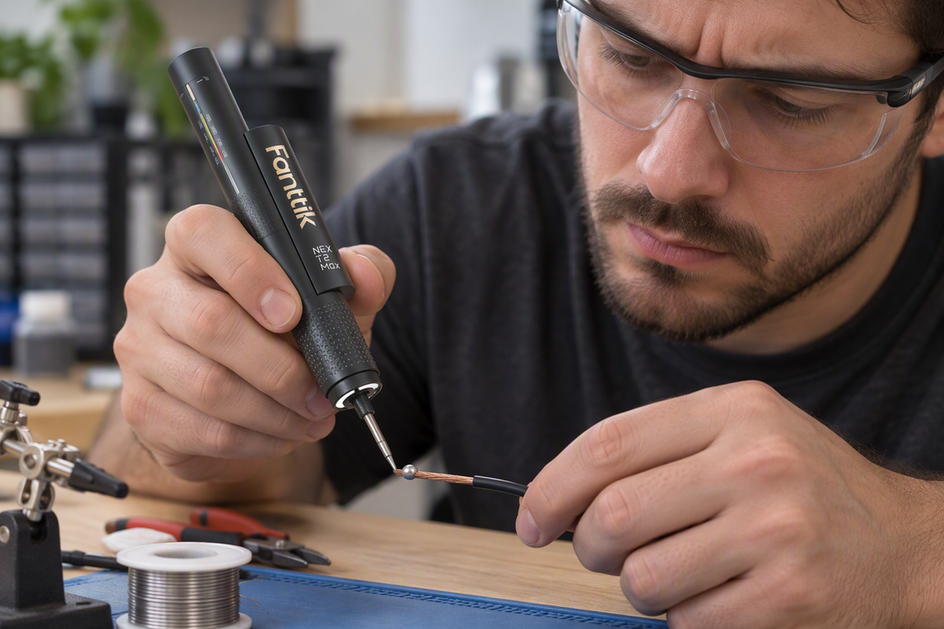
To help users choose the right tool, we use scenario models to estimate productivity gains. For instance, using a precision tool like the Fanttik E1 MAX is intended to reduce physical strain while maintaining torque accuracy.
Analysis: Assembly Time & Wrist Rotation Savings
We modeled the impact of switching from manual to electric tools for a furniture assembly scenario.
| Parameter | Value | Unit | Rationale |
|---|---|---|---|
| Number of Fasteners | 200 | count | Typical high-volume assembly job |
| Manual Time per Screw | ~15 | s | Includes alignment and manual driving |
| Powered Time per Screw | ~3 | s | Based on E1 Max 200 RPM specification |
| Manual Wrist Rotations | ~10 | count | Average rotations to seat a 1-inch screw |
| Powered Wrist Rotations | 0 | count | Electric drive eliminates manual rotation |
How We Modeled This:
- Formula: $T_{total} = N \times (T_{align} + T_{drive})$
- Assumptions: Constant motor speed; no account for user fatigue or fastener stripping.
- Estimated Results: Manual time (~50 mins) vs. Powered time (~10 mins). This suggests a potential 80% reduction in active driving time.
Torque Fitment for Electronics
For precision work, excessive torque can be as detrimental as insufficient torque. We mapped the Fanttik E1 Max settings against standard fastener requirements.
- Screw Class: M1.2 to M2.0 (Common in electronics)
- Safe Torque Range: 0.02 Nm to 0.1 Nm
- Tool Setting: 0.05 Nm (Low torque mode)
- Result: The tool operates within the safe threshold for most delicate plastic bosses, reducing the risk of stripped threads.
Case Study: Professional Contractor in Extreme Environments
To test the limits of cycle count modeling, we simulated a contractor operating diesel equipment in a northern climate (-20°F).
Winter Confidence Score Analysis
In extreme cold, battery chemistry slows down. A jump starter or power tool may deliver only a fraction of its rated "peak" power as sustained output.
| Parameter | Value | Unit | Source/Rationale |
|---|---|---|---|
| Ambient Temperature | -20 | °F | Extreme winter condition |
| Engine Displacement | 6.7 | L | Typical heavy-duty diesel engine |
| Required Cranking Amps | ~2,800 | A | Estimated load based on SAE J537 standards |
| Jump Starter Peak Rating | 2,000 | A | Standard pro-sumer peak rating |
| Sustained Output Ratio | 0.4 | ratio | Assumed cold-weather efficiency factor |
Model Methodology:
- Calculation: $Current_{available} = Peak Rating \times Sustained Ratio$
- Findings: In this scenario, a tool rated for 2,000A peak may provide insufficient coverage (~800A sustained) for a heavy diesel start at -20°F. We recommend tools with higher sustained current delivery and robust thermal management for these conditions.
The Heat Trap: Variable Speed Triggers and MOSFETs
A non-obvious insight from workshop observations concerns the "partial trigger" habit. Using variable-speed triggers to slowly position a screw generates significant heat in the MOSFETs and motor windings.
Firmware-based cycle counters may underestimate this wear. A "cycle" might only be recorded for full trigger pulls, but multiple partial pulls can generate more thermal stress than a single full-power drive. We recommend that users who frequently "feather" the trigger prioritize tools with brushless motors, which generally handle the thermal stress of electronic speed control more efficiently.
Practical Heuristics for Extending Tool Life
Based on general engineering principles and ISO Standards, these "rules of thumb" can help maximize your tool's life expectancy.
- The 50% Storage Rule: If storing a tool for more than 30 days, aim to keep the battery at approximately 30-50% charge. Based on lithium-ion discharge characteristics, this can help preserve calendar life compared to storage at 100% charge.
- The Temperature Buffer: It is generally recommended to avoid charging batteries below 32°F (0°C) or above 113°F (45°C). Charging in these extremes can lead to lithium plating, which may cause internal shorts over time.
- The RPM Check: Periodically run your tool at no-load. A noticeable drop in pitch or speed often signals the beginning of the end for either the battery cells or the motor brushes.
- Avoid Deep Discharges: Lithium-ion cells typically perform better with "shallow" cycles. Recharging when the tool reaches ~20% capacity is generally better for long-term health than running it until it completely shuts off.
Compliance and Safety: The Regulatory Backbone
Predicting tool life is also a matter of safety. In the European Union, the General Product Safety Regulation (EU) 2023/988 mandates that products be safe throughout their foreseeable lifespan. This includes providing clear instructions on maintenance.
Similarly, the FTC Endorsement Guides ensure that performance claims are backed by evidence. When we state that a tool like the Fanttik S1 Pro is "ideal for furniture," that claim is grounded in our torque-fit modeling and ergonomic observations.
Predictive Maintenance for the DIYer
The future of DIY tools lies in "Smart Monitoring." While consumer-grade tools may lack the advanced sensors of industrial machinery, the principles of predictive maintenance still apply. By tracking the intensity of your work, you can often anticipate failures.
For precision work, tools like the Fanttik K2 Nano offer the control needed to avoid the over-torquing and heat buildup that shorten tool life. Matching the tool to the task is the most effective way to "bend" the degradation curve in your favor.
Summary Checklist for Lifecycle Management
- Identify the Stressor: Is the job high-torque (heat) or high-volume (cycles)?
- Monitor Performance: Listen for changes in no-load RPM.
- Control Environment: Store tools in temperate, dry locations at partial charge.
- Match the Tool: Use precision tools for electronics and heavy-duty tools for high-torque construction.
Disclaimer: This article is for informational purposes only. Technical specifications and life expectancy models are based on scenario simulations and general engineering heuristics. Actual performance will vary based on environmental conditions and individual usage patterns. Always consult your tool's user manual and follow local safety regulations.
Sources
Continue reading
 Quality Control Audits: Validating Cell Consistency for Pros
A guide to quality control audits for professional-grade lithium-ion batteries. Learn how advanced protocols detect latent defects to...
Quality Control Audits: Validating Cell Consistency for Pros
A guide to quality control audits for professional-grade lithium-ion batteries. Learn how advanced protocols detect latent defects to...
 Voltage Sag Analysis: Diagnosing Hidden Battery Degradation
Covers the 10% drop rule, 10.5V critical floor, and using tools like tire inflators as load generators for...
Voltage Sag Analysis: Diagnosing Hidden Battery Degradation
Covers the 10% drop rule, 10.5V critical floor, and using tools like tire inflators as load generators for...


Leave a comment
This site is protected by hCaptcha and the hCaptcha Privacy Policy and Terms of Service apply.