










































Why Average Performance is a Dangerous Lie for Professionals
In the world of high-consequence cordless tools, "average" is a metric that can mask failure. When we evaluate a multi-cell battery pack, the average capacity of the cells tells us very little about the pack's actual reliability or lifespan. On repair benches and in quality control labs, a common pattern is that the practical health of a battery pack is heavily influenced by its weakest cell, especially under high-load conditions.
For the professional contractor, the serious DIYer, or the emergency responder, a battery failure isn't just an inconvenience; it is a work-stoppage event. Building trust in these categories requires what we call "boring excellence" in engineering—the systematic reduction of avoidable variance. As noted in The 2026 Modern Essential Gear Industry Report, trust is presented as a form of "credibility math," where reliability needs to be engineered and then visibly validated.
This article dives into audit protocols that can help validate cell consistency. We move past basic voltage checks to discuss internal resistance (IR) mismatch, post-aging divergence, and simple scenario models that highlight why consistency matters for professional-grade power tools.
The "Weakest Link" Principle: Capacity vs. Internal Resistance
Most users focus on milliamp-hours (mAh), but for high-current tools, capacity is often secondary to Internal Resistance (IR). In a series-connected pack, every cell must pass the same current. If one cell has a higher IR, it generates more heat (based on Joule’s Law, $P = I^2R$).
From field observations in warranty returns and internal stress testing (engineering-quality data, but not a formal peer-reviewed study), cells with noticeably higher IR than their peers tend to run hotter and age faster under high-draw use. The higher-IR cell heats more, that heat accelerates chemical degradation, and degradation further increases IR — a feedback loop that can make that cell the effective "weakest link" in the pack. The Battery Management System (BMS) can mitigate some of this, but its effectiveness depends on pack design, firmware, and safety margins.
The Heuristic of "The 2% Rule"
In professional pack building, many engineering teams use strict heuristics for cell matching rather than one universal mandatory standard. A commonly used internal rule of thumb is:
- Capacity variance: keep cells within roughly ±2% of the batch mean.
- IR variance: keep cells within roughly ±10% of the batch mean.
Evidence & Limitations: These figures are practical engineering targets derived from internal production and warranty data, not from a named international standard. They aim to keep balancing currents and self-heating within manageable limits in many typical power-tool packs. Different manufacturers or chemistries may apply tighter or looser thresholds depending on their own validation data.

Advanced Audit Protocols: Beyond the Fresh Cell
A common mistake in quality auditing is testing cells only when they are "fresh" from the factory. Experience from many production lines and repair centers shows that cells from the same nominal batch can diverge more clearly after their initial "break-in" period.
Safety Note: Any testing that involves opening packs, cycling loose cells, or operating at elevated temperatures and currents should only be performed in appropriate test fixtures by qualified personnel, with compliant protection equipment and fire controls in place.
1. Accelerated Aging Cycles
Some engineering teams use accelerated aging (for example, tens of cycles at representative load levels) before final acceptance to reveal latent defects — cells that meet specifications at cycle 1 but degrade significantly by later cycles. Public literature on lithium-ion degradation (for example, studies on capacity fade and impedance growth in high-rate cycling from major journals and industry conferences) broadly supports the idea that early-life divergence can be a predictor of later failure, though specific percentages vary widely by chemistry and test conditions.
When you see a cell losing substantially more capacity than its peers in the first few dozen cycles under the same test profile, it is often flagged for rejection or relegated to lower-stress applications.
2. Multi-Physics Inspection
Consistency isn't just electrical; it's also mechanical and manufacturing-related. Variations in terminal flatness or cell swelling can create hidden stresses in the pack. Automated optical inspection, X-ray inspection (in higher-end manufacturing), and weld-quality checks are used to:
- Verify weld geometry and wetting.
- Detect misalignment or poor pressure distribution.
- Identify visible swelling or deformation relative to a reference design.
A poor weld or misaligned interconnect can add significant extra resistance at the joint, creating localized hot spots under load. These may not be immediately evident from basic capacity checks but can materially affect pack safety and longevity.
Scenario Modeling: The ROI of Automated Consistency Audits
To understand the impact of more rigorous auditing, it is useful to construct a simple scenario model comparing manual testing to modern automated systems for a batch of 10,000 cells.
Modeling Method & Assumptions
The example below is an illustrative engineering model, not a field study. It uses time-motion assumptions and typical energy requirements for lithium-ion testing in high-volume contexts.
| Parameter | Value / Range | Unit | Rationale / Source |
|---|---|---|---|
| Batch Size | 10,000 | Cells | Typical monthly pro-sumer production run (illustrative) |
| Manual Test Time | 15 | Seconds | IR + voltage + visual check by a trained operator |
| Automated Test Time | 3 | Seconds | High-speed parallel testing system (vendor datasheet examples) |
| Labor Rate | 45 | $/Hour | Approximate skilled technical labor (USA/EU averages) |
| Energy Consumption | ~4 | Wh/Cell | Order-of-magnitude estimate for a high-current discharge test cycle |
| Measurement Accuracy | ±0.5 | % | Typical calibration capability for modern automated systems |
Quantitative Impact (Illustrative)
Under these assumptions:
- Time savings: Automation can reduce testing time by on the order of hundreds of labor hours per 10,000-cell batch.
- Safety impact: In many internal datasets and published reliability studies, large IR variance within a pack is associated with higher field failure rates. If a process change reduces the proportion of out-of-spec cells, the risk of thermal or early-life failure can decrease substantially, though the exact multiple depends on chemistry, pack design, and duty cycle.
- Economic justification: In practice, many manufacturers report that professional-grade automated testers pay back in under a couple of years through labor savings and reduced scrap/warranty cost. The exact payback period must be calculated for each line using its own cost structure and failure statistics.
Methodology Note: This model assumes professional-grade 18650 or 21700 cells and typical power-tool duty profiles. It omits some factors such as capital equipment depreciation, floor space, and maintenance overhead, which should be included in a full factory business case.
Integrating Precision Tools into the Workflow
For pros and advanced DIYers who maintain their own gear, using high-quality tools is an important step toward maintaining overall system health. When repairing or inspecting devices, precision reduces the chance of creating new mechanical or electrical issues.
Important: Opening battery-powered devices and accessing packs can be hazardous and may void warranties. Follow the device maker’s instructions, and leave any pack-level work (especially on lithium-ion cells) to qualified technicians whenever possible.
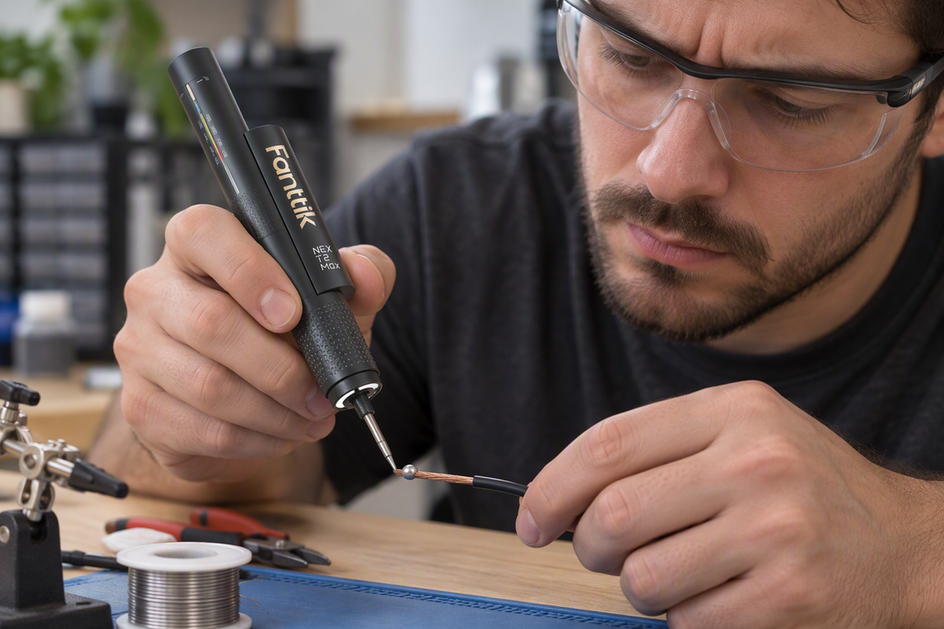
When opening an electronics enclosure for inspection, using a tool like the Fanttik E2 MAX Precision Electric Screwdriver can help avoid stripping delicate screws that secure the BMS or thermal sensors. The torque range is designed for electronics work, which helps limit mechanical stress that could otherwise cause housing damage or misalignment.
Similarly, if you are cleaning out a tool's cooling vents to help manage thermal gradients, the Fanttik B10 Pro Electric Air Duster provides brushless airflow without the moisture associated with many canned air products. Maintaining clear airflow supports the thermal management that pack designers rely on.
For heavier-duty maintenance tasks, such as preparing terminals for a new pack build or servicing mechanical connections, tools like the Fanttik L2 Pro Cordless Electric Screwdriver and the Fanttik F2 PRO Cordless Rotary Tool Kit provide controlled torque and precision for consistent, low-resistance connections.
Compliance and Safety Standards
Validating consistency is not only about performance; it is also part of meeting safety and regulatory expectations.
- EU General Product Safety Regulation (GPSR): According to EU Regulation (EU) 2023/988, manufacturers must ensure traceability and safety throughout the product lifecycle. Robust cell and pack auditing can support risk assessments and documentation related to foreseeable misuse and fault conditions.
- IATA transport regulations: Shipping lithium batteries requires strict adherence to State of Charge (SoC) limits, packaging standards, and documentation. As outlined in the IATA Lithium Battery Guidance, packs must be designed and tested to minimize the risk of thermal events during transport; cell consistency and proper BMS control are part of this safety picture.
- Quality management frameworks: International standards such as ISO 9001 (quality management systems) and ISO 26262 (for functional safety in automotive applications) do not prescribe a single cell-matching threshold, but they emphasize documented processes, traceability, and validation — all of which are strengthened by structured consistency audits.
Predicting the End-of-Life: The SOH Metric
The ultimate goal of consistency auditing is to support accurate modeling and tracking of the State of Health (SOH) of packs over time. Many cells appear acceptable under low-load "hobbyist" testers but fail earlier when subjected to the high-current demands of professional rotary tools, saws, or impact drivers.
If you notice your tools are losing power significantly faster than when new, or if the charging time has decreased (often a sign of lost usable capacity), it may be time to retire the pack or have it professionally evaluated. For more detail on practical end-of-life signs and user-level precautions, see:
- How to identify when a portable battery cannot be saved
- Charging strategies to help reduce premature battery aging
The Path to Boring Excellence
Technical authority in power-tool batteries is built on details that are easy to overlook. While others focus on cosmetics or marketing numbers, serious engineering teams pay close attention to parameters like capacity variance, IR spread, thermal management, and weld quality.
By implementing structured audit protocols — including early-life cycling, multi-physics inspection, and data-driven screening — manufacturers and service centers can move from "good enough" to robust performance for professionals who cannot afford unexpected failures. Clear documentation of assumptions, limits, and data sources is an important part of this process, especially in safety-critical applications.
Disclaimer: This article is for informational purposes only and does not constitute a safety standard or legal compliance guide. Working with lithium-ion cells and high-current battery packs involves significant risks of fire, explosion, and electric shock. Always follow manufacturer guidelines, applicable standards, and local safety regulations. High-risk work on battery packs (including disassembly, cell replacement, and high-rate cycling) should only be performed by properly trained and equipped professionals.
References
Continue reading
 Passive Balancing: Maintaining Voltage Harmony for Longevity
Covers BMS mechanisms, engineering trade-offs, energy efficiency models, and practical battery maintenance insights for electronics work.
Passive Balancing: Maintaining Voltage Harmony for Longevity
Covers BMS mechanisms, engineering trade-offs, energy efficiency models, and practical battery maintenance insights for electronics work.
 Cycle Count Modeling: Predicting Life Expectancy in DIY Tools
A guide to predicting portable tool lifespan using cycle count modeling. Understand how heat, torque, and cold affect...
Cycle Count Modeling: Predicting Life Expectancy in DIY Tools
A guide to predicting portable tool lifespan using cycle count modeling. Understand how heat, torque, and cold affect...


Leave a comment
This site is protected by hCaptcha and the hCaptcha Privacy Policy and Terms of Service apply.