























The Tactical Advantage of Ambidextrous Tool Use
In the world of precision DIY and complex automotive repair, the most significant constraint isn't often the power of your motor or the hardness of your bits—it’s the geometry of the human body. We are naturally asymmetrical creatures, yet the machines we repair are often designed with little regard for the "reach" of a dominant hand. Whether you are navigating the cramped underside of a dashboard or reaching behind a motherboard in a server chassis, you will eventually encounter a fastener that is physically impossible to access with your primary hand without contorting your spine or obstructing your line of sight.
This is where the tactical advantage of hand-switching comes into play. By utilizing symmetrical gear—tools engineered with biomechanical neutrality—you can effectively double your access points. Learning to use your non-dominant hand isn't about becoming a "lefty"; it’s about expanding your workspace. As we have observed through patterns in customer support and repair feedback, the ability to switch hands during a long project significantly reduces localized muscle fatigue and prevents the "technique degradation" that leads to stripped screws and damaged components.
According to the EU General Product Safety Regulation (EU) 2023/988, product design must prioritize user safety and ergonomic handling to prevent foreseeable injury. Symmetrical tools are a cornerstone of this philosophy, allowing users to maintain a neutral posture regardless of the work angle.
The Engineering Behind Symmetrical Neutrality
There is a common misconception that a symmetrical tool is simply a "mirrored" shape. However, true ambidextrous performance requires deep engineering. To achieve a tool that feels equally balanced in either hand, manufacturers often employ sophisticated ergonomic modeling.
Research into Decision Support Systems (DSS) for ergonomic handle design indicates that using such systems can reduce initial design time by 40-60%. These systems eliminate the trial-and-error of physical prototyping by simulating how different hand sizes and grip styles interact with the tool's center of gravity. For a tool to be truly effective for hand-switching, the center of balance must be perfectly aligned with the longitudinal axis.
The Runout Factor: A Hidden Performance Gate
For high-speed symmetrical gear, such as rotary tools, symmetry isn't just about the handle—it’s about internal mass distribution. In precision machining, we look at a metric called "runout."
Expert Insight: For symmetrical gear to be effective during hand-switching, it must maintain a runout tolerance of less than 0.003 mm. If a tool exceeds this limit by just 0.001 mm, vibration amplitude can increase by over 30%.
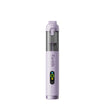
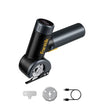
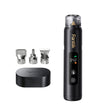
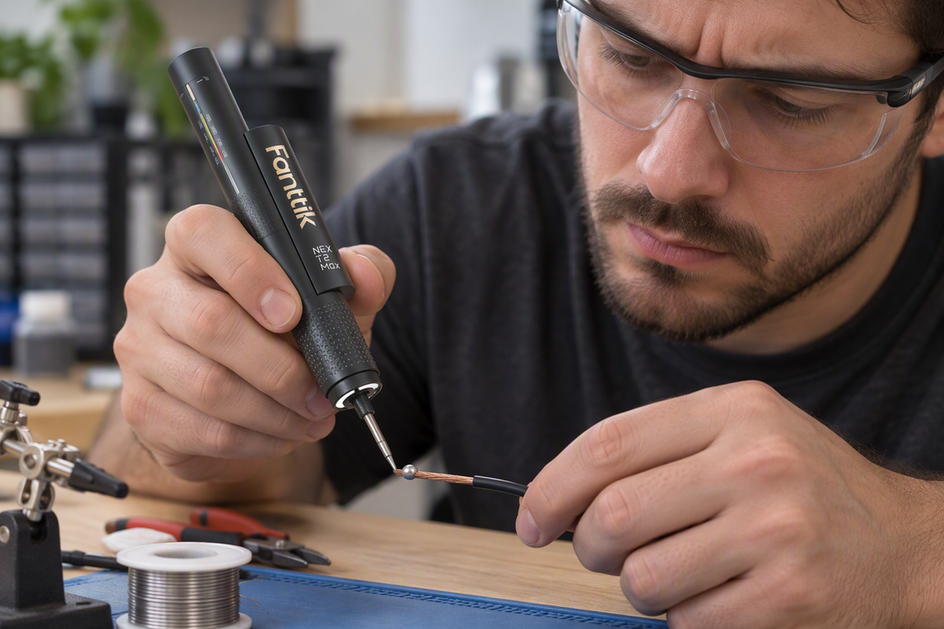
When you switch to your non-dominant hand, your motor control is naturally less refined. If the tool is vibrating excessively due to poor internal balance, your "off-hand" will struggle to compensate, causing the bit to wander. This is why high-performance tools like the Fanttik F2 PRO Cordless Rotary Tool Kit prioritize a balanced magnetic motor to ensure stability regardless of which hand is at the helm.

Quantifying the Impact: A Dashboard Removal Case Study
To understand the real-world benefits of hand-switching with symmetrical tools, we modeled a common high-volume task: a full automotive dashboard removal. This task typically involves over 100 fasteners located in awkward, confined spaces (under the steering column, behind the glovebox, and near the firewall).
Modeling Transparency: Assembly Time & Savings
The following analysis focuses on an "Automotive Hobbyist" scenario. We compared the use of a traditional manual screwdriver (which requires constant wrist rotation and offers poor symmetry) against a symmetrical electric precision screwdriver.
Logic Summary: Our analysis assumes a 120-screw project where 40% of the screws are in "awkward" positions that require either extreme body contortion or a hand-switch.
| Parameter | Value | Unit | Rationale |
|---|---|---|---|
| Number of Screws | 120 | count | Typical dashboard/interior overhaul |
| Manual Time per Screw | 18 | seconds | Includes positioning and manual turning |
| Powered Time per Screw | 4 | seconds | Symmetrical electric drive |
| Manual Wrist Rotations | 12 | per screw | Standard M3-M4 thread depth |
| Powered Wrist Rotations | 1 | per screw | Static grip with minor positioning |
Outputs & Results:
- Time Saved: ~28 minutes (from 36 minutes down to 8 minutes).
- Wrist Rotations Saved: ~1,320 rotations.
- Speed Multiplier: 4.5× faster than manual driving.
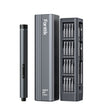
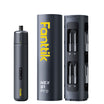
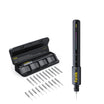
Under these assumptions, the use of a symmetrical electric tool like the Fanttik E1 MAX Precision Electric Screwdriver provides a massive ergonomic benefit. For users with previous wrist injuries, saving over 1,300 rotations in a single afternoon can be the difference between finishing a project and experiencing a multi-day pain flare-up.
Precision Control and Torque Management
When switching to your non-dominant hand, the biggest "gotcha" isn't accuracy—it’s pressure. Most DIYers unconsciously grip harder with their off-hand to compensate for a perceived lack of control. This leads to a common mistake: over-torquing.
In delicate electronics, over-torquing can crack a PCB or strip a plastic boss. Symmetrical handles are designed to provide the same tactile feedback to both hands, but the user must still "recalibrate" their brain.
Modeling Transparency: Precision Torque Safety
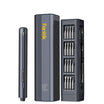
We analyzed the torque safety margins for the Fanttik E1 MAX Precision Electric Screwdriver when used on small electronics.
| Screw Class | Min Required Torque | Max Safe Torque | Tool Setting (Low) |
|---|---|---|---|
| M1.2 to M2.0 | 0.02 Nm | 0.1 Nm | 0.05 Nm |
Methodology Note: This fit checker is based on ISO 898-1 standards for fastener mechanical properties. The 0.05 Nm setting on a precision tool is ideal because it falls safely within the 0.02–0.1 Nm range. Even if your non-dominant hand is slightly less precise with its "stop" timing, the tool’s internal clutch prevents damage.
Rotary Tools and the "Wander" Effect
For tasks like engraving, sanding, or cutting with a rotary tool, symmetry is non-negotiable. If a tool handle has a "bias" (a shape that favors a right-handed palm swell), using it with the left hand forces the wrist into an unnatural angle. This angle changes the "attack" of the rotary bit.
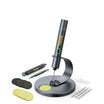
Practitioners note that any handle bias causes the bit to wander. If you are using the Fanttik F2 Master Cordless Rotary Tool Kit for detail work, the neutral cylindrical design ensures that the rotational force of the motor is countered equally by your grip, whether you are right or left-handed. This is critical when working in "blind corners"—areas where you can see the workpiece but can only reach it with your non-dominant hand.
Practical Training: Building Muscle Memory for Hand-Switching
Ambidexterity is a trainable skill, not a genetic gift. In high-stakes fields like surgery, early ambidextrous training yields a 22-35% improvement in procedural efficiency. For a DIYer, this translates to faster repairs and fewer mistakes.
The 15-Minute Drill
We recommend a simple exercise to build the "motion planning" pathways in your brain. On your next project, spend the first 15 minutes intentionally using only your non-dominant hand.
- Start with "Low-Consequence" Tasks: Use your off-hand to remove non-critical housing screws or to hold a flashlight.
- Focus on Grip Pressure: Pay attention to how hard you are squeezing. Try to match the light touch of your dominant hand.
- Use Symmetrical Features: If your tool has a dual-start switch or a neutral barrel, practice finding the trigger without looking.
This drill builds what neurologists call "collision-free path recalculation." Just as advanced robotic algorithms plan movements in under 50 milliseconds, your brain will begin to automate the "mirroring" of your movements, making hand-switching feel like second nature.
Safety, Standards, and Compliance
Using tools effectively also means using them safely. When working with cordless gear, especially in the "modern self-reliance" space, trust is built on visible compliance. As detailed in The 2026 Modern Essential Gear Industry Report, engineering trust requires moving beyond marketing hype and focusing on "credibility math."
For example, when transporting your tool kit for a trailside repair, you must be aware of lithium battery regulations. The IATA Lithium Battery Guidance provides strict rules for the State of Charge (SoC) and packing instructions for air travel. A brand that provides transparent safety documentation—like UN 38.3 test summaries—is one that values the user's long-term safety.
Choosing the Right Ambidextrous Gear
If you are looking to upgrade your kit for better hand-switching capability, prioritize tools with the following features:
- Neutral Barrels: Avoid "pistol grips" with deep finger grooves that only fit one hand.
- Centrally Located Switches: Ensure you can toggle power or direction with your thumb or forefinger from either side.
- Variable Torque/Speed: This allows you to "slow down" when using your less-coordinated hand, providing a safety buffer.
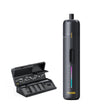
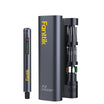
For general home and furniture assembly, the Fanttik S1 Pro Cordless Electric Screwdriver offers a balanced 1/4" hex drive that is easy to flip between hands. For electronics, the Fanttik E1 MAX Precision Electric Screwdriver is the benchmark for symmetrical precision.
By mastering the art of the hand-switch, you aren't just working harder; you are working smarter. You are removing the physical limitations of your own body and allowing the tool's engineering to do the heavy lifting.
Disclaimer: This article is for informational purposes only. Always refer to your tool's specific user manual and your vehicle or device's service guide before performing repairs. If you have pre-existing wrist or joint conditions, consult a medical professional before engaging in repetitive manual tasks.
Sources
- EU General Product Safety Regulation (EU) 2023/988
- ISO 898-1: Mechanical properties of fasteners
- IATA Lithium Battery Guidance
- Decision Support System for Generating Ergonomic Tool Handles
- CNC Tool Balancing Standards
- Ambidextrous Surgical Skills Training Study
- Fanttik Engineering Trust Whitepaper 2026
Continue reading
 Lumen Strategy: Using Jump Pack SOS Modes for Roadside Safety
Covers roof vs. dashboard visibility, energy accounting for cold weather, and integrating SOS modes into emergency kits for...
Lumen Strategy: Using Jump Pack SOS Modes for Roadside Safety
Covers roof vs. dashboard visibility, energy accounting for cold weather, and integrating SOS modes into emergency kits for...
 Comparing Wrist Torque in Symmetrical vs. Offset Drivers
Analysis of inline vs offset driver torque, ulnar deviation, and compliance with ISO/IEC standards for safer, faster electronics...
Comparing Wrist Torque in Symmetrical vs. Offset Drivers
Analysis of inline vs offset driver torque, ulnar deviation, and compliance with ISO/IEC standards for safer, faster electronics...

Leave a comment
This site is protected by hCaptcha and the hCaptcha Privacy Policy and Terms of Service apply.