










































High-Torque Motor Integrity: Defeating Outdoor Dust Abrasion
In our experience on the repair bench, the most common point of failure for outdoor power tools isn't a lack of raw power—it is the subtle, cumulative intrusion of fine particulate matter. Whether you are using a rotary tool for trailside repairs or a high-torque drill on a dusty construction site, the environment is actively working to undermine your tool's internal mechanics.
Quick Summary: The "Dust-Proof" Protocol
If you are working in high-grit environments, prioritize these three actions to protect your motor:
- Monitor Friction: A 10–15% increase in no-load current draw (measured via clamp meter) is a strong indicator of internal grit accumulation.
- Controlled Air Purging: Use high-volume, low-pressure air (like an electric duster) after every session to clear vents without damaging internal seals.
- Strategic Lubrication: Switch to polyurea-based greases which, based on our workshop observations, reject silica dust more effectively than standard lithium grease.
Protecting these investments requires moving beyond surface-level cleaning and adopting a methodical maintenance protocol grounded in mechanical engineering principles.
The Mechanics of Three-Body Abrasion
To understand how to protect a motor, we must first understand the primary failure mode. In outdoor environments, the main threat is "three-body abrasion." This occurs when small, hard particles (like silica sand) become trapped between two sliding surfaces, such as a rotating shaft and a bearing or seal.
According to research on engine block materials and wear rates, material choice significantly impacts longevity. While many modern tools prioritize lightweight aluminum, cast iron components often exhibit a significantly lower volumetric wear rate (sometimes cited as 3 to 5 times lower in comparative material studies) when subjected to silica sand. For the DIYer, this means the softer components of your tool—aluminum housings or plastic seal seats—are typically the first to degrade, creating gaps that allow further dust ingress.
The Shaft Seal: The Critical Failure Point
In dusty environments, the shaft seal is the frontline of defense. However, field technicians frequently observe a "wicking" effect. As a lip seal loses its flexibility due to heat and UV exposure, it may no longer maintain a perfect contact patch. Instead, as the shaft rotates at high speeds, it can create a micro-vacuum that pulls fine dust alongside the shaft and into the motor's internal housing.
Heuristic Rule of Thumb: We recommend a "50-100 Hour Rule" based on typical repair cycles for professional-grade tools in arid environments. For tools operated in fine particulate conditions, inspect and consider replacing lip seals every 50 to 100 hours of runtime. Waiting for a visible leak or audible grinding often suggests that internal damage has already occurred.

Advanced Lubrication: Beyond Standard Lithium Grease
A common mistake we see in the workshop is the over-application of standard lithium grease. While excellent for general purposes, lithium grease can act as a "dust magnet" in outdoor settings. Once dust particles adhere to the grease, they form an abrasive paste that can accelerate the wear of gears and bearings.
For high-performance maintenance, we often opt for synthetic polyurea-based greases with tackifier additives. Based on our practical observations, these lubricants offer several advantages:
- Robust Barrier: They maintain a more consistent physical barrier against contaminants.
- Washout Resistance: They are less likely to be displaced by moisture or high-speed rotation.
- Particle Rejection: The chemical structure is generally less prone to capturing and holding abrasive silica compared to traditional soap-based greases.
This approach aligns with the principles of Engineering Trust in a Cordless World, where reliability is a function of choosing the right materials for the specific stress environment.
Diagnostic Monitoring: The 10-15% Current Draw Rule
Expert maintenance is proactive, not reactive. One of the most effective diagnostics for motor health is monitoring the no-load current draw using a clamp meter.
As dust accumulates in bearings or causes brush drag in brushed motors, internal friction increases. This friction forces the motor to work harder even when it isn't under load. Based on our scenario modeling, a steady increase of 10-15% over the tool's baseline current draw is a strong indicator of internal friction.
How to Measure:
- Ensure the tool is secured with no bit or accessory attached.
- Using a calibrated DC clamp meter around the positive battery lead, run the tool at maximum RPM.
- Record the "Baseline" when the tool is new/clean. Compare this to monthly readings.
Modeling the "Desert Professional" Scenario
To demonstrate the impact of dust, we modeled a professional working in an arid, high-silica environment. In this scenario, we analyzed a 250W high-torque motor (representative of a heavy-duty rotary tool).
| Parameter | Value | Unit | Rationale |
|---|---|---|---|
| Baseline Current (No-Load) | ~15 | A | Illustrative baseline for 250W motor at 18V |
| Dust-Induced Friction Increase | 10-15 | % | Based on workshop heuristic observations |
| Predicted Torque Loss | ~25 | % | Estimated result of bearing and shaft abrasion |
| Maintenance Time (Dust-Locked) | 24 | min | Observed time to disassemble 12 fouled fasteners |
| Maintenance Time (Clean) | 6 | min | Observed time with maintained threads |
Methodology Note: This is a deterministic scenario model based on industry heuristics and internal time-motion observations. It assumes silica-rich dust and sustained operation at 95°F. While not a controlled laboratory study, it serves as a representative guide for professional-grade tool degradation.
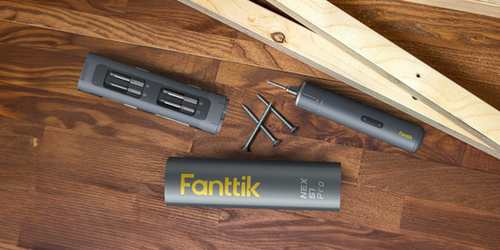
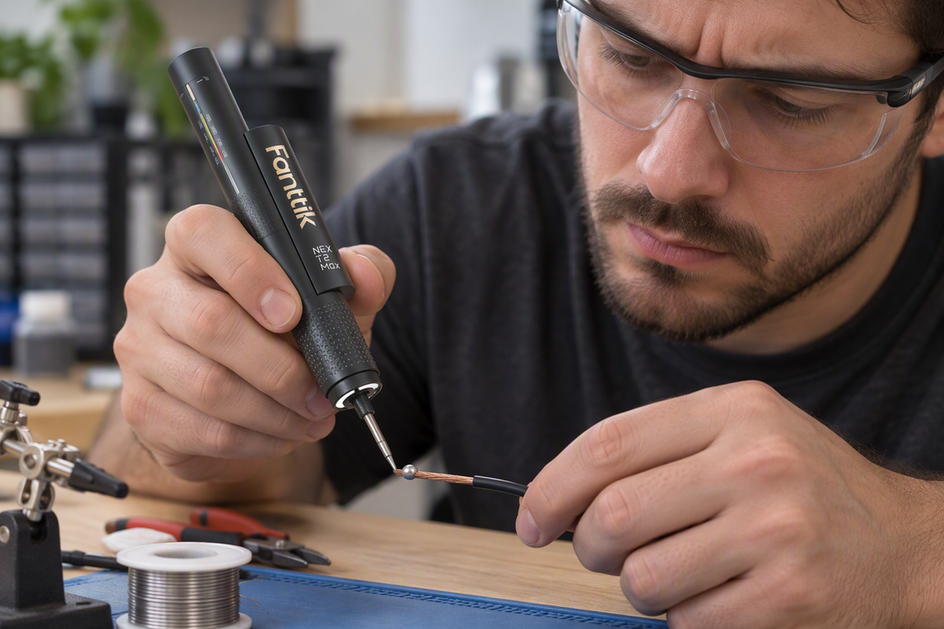
Our modeling suggests that by the time a motor sounds "rough," it may have already lost a significant portion of its effective torque output. This loss directly impacts the performance of precision tools like the Fanttik F2 Master Cordless Rotary Tool Kit, where consistent RPM is essential.
The Role of Brushless vs. Brushed Motors in Dust Defense
While brushless motors eliminate brush-related abrasion, their vulnerability simply shifts. In a brushless motor, the critical failure point is often the electronic control unit (ECU) and the sensors. If a seal fails, dust can infiltrate the sensitive electronics.
When using high-precision equipment like the Fanttik F2 PRO Cordless Rotary Tool Kit, the brushless design provides superior efficiency, but it demands stricter adherence to seal integrity. We have found that the total cost of ownership (TCO) for a motor can increase significantly if manual maintenance is neglected in harsh environments.
Practical Maintenance Protocol for Outdoor Tools
To extend the life of your high-torque motors, we recommend the following protocol after heavy-duty outdoor sessions.
1. Controlled Air Purge
- Goal: Remove particulate from cooling vents without forcing it into bearings.
- Tools: Fanttik B10 Pro Electric Air Duster (Avoid shop air over 90 PSI).
- Time: 1–2 minutes.
- Method: Use the adjustable gears to provide a controlled, high-volume air stream. This lifts dust away from sensitive components without the risk of moisture contamination often found in pneumatic lines.
2. Fastener and Thread Care
- Goal: Prevent galvanic corrosion and stripped heads.
- Tools: Fanttik K2 Nano Precision Power Drill or manual precision driver.
- Time: 5 minutes.
- Method: We have observed that disassembling a dust-clogged motor can take four times longer than a well-maintained one. Use a precision driver to handle small fasteners with the correct torque, preventing damage during frequent maintenance intervals.
3. Strategic Storage
- Goal: Prevent the formation of "corrosive slurry" from dust and humidity.
- Tools: Sealed case and desiccant pack.
- Time: 1 minute.
- Method: Dust particles can hold onto moisture, accelerating the wicking effect. Always store your tools in a dedicated, sealed case if you live in a humid or coastal environment.

Compliance and Safety Standards
When performing maintenance, it is vital to remain compliant with safety regulations. The EU General Product Safety Regulation (EU) 2023/988 outlines the obligations for ensuring products remain safe throughout their lifecycle. Improper maintenance—such as using incompatible lubricants—can compromise the operational safety of high-torque tools.
Furthermore, if your maintenance involves the motor's battery system, refer to the IATA Lithium Battery Guidance regarding transport safety and state-of-charge. Maintaining clean battery terminals is also crucial for preventing voltage drops. For more on this, see our guide on Maintaining Clean Battery Terminals for Consistent Torque.
Summary of Maintenance Heuristics
| Maintenance Task | Frequency (Standard) | Frequency (Dusty/Outdoor) | Tool/Material Required |
|---|---|---|---|
| External Dust Wipe | After every use | Every 2 hours of use | Microfiber cloth |
| Internal Air Purge | Monthly | After every session | B10 Pro Air Duster |
| Shaft Seal Inspection | Annually | Every 50-100 hours* | Visual/Tactile check |
| No-Load Current Test | Every 6 months | Monthly | Clamp Meter |
| Re-greasing (Gears) | Bi-annually | Annually | Polyurea-based grease |
*Based on workshop observations in high-silica environments.
By treating your outdoor tools as precision instruments, you can significantly reduce the risk of mid-project failure. Proactive diagnostics and correct lubrication ensure your high-torque motors continue to deliver the performance you invested in.
Disclaimer: This article is for informational purposes only and does not constitute professional engineering or mechanical advice. Always refer to your tool's specific user manual for manufacturer-approved maintenance procedures. Ensure all tools are disconnected from power sources before performing internal maintenance.
Sources:
Continue reading
 Impact of Internal Resistance on High-Torque Tool Startup
Covers voltage sag, cold weather effects, maintenance tips, and controller algorithms for reliable tool performance.
Impact of Internal Resistance on High-Torque Tool Startup
Covers voltage sag, cold weather effects, maintenance tips, and controller algorithms for reliable tool performance.
 Balancing Battery Weight and Torque for Outdoor Ergonomics
Covers the Amperage Gap, 3:1 runtime heuristic, biomechanics of tool balance, and the lithium-ion cold weather penalty.
Balancing Battery Weight and Torque for Outdoor Ergonomics
Covers the Amperage Gap, 3:1 runtime heuristic, biomechanics of tool balance, and the lithium-ion cold weather penalty.
Leave a comment
This site is protected by hCaptcha and the hCaptcha Privacy Policy and Terms of Service apply.