










































Understanding the Silent Barrier to Power: Internal Resistance
In our repair workshops and field-testing sessions, we often encounter a specific frustration from prosumers: a high-torque tool that worked perfectly in the summer suddenly "grunts" and stalls during a winter morning startup. To the uninitiated, it looks like a motor failure or a dead battery. However, based on our diagnostic patterns and warranty handling observations, the culprit is rarely the motor itself. Instead, the failure typically stems from the physics of internal resistance ($R_i$) and its impact on the critical first few milliseconds of tool activation.
Internal resistance is the inherent opposition to current flow within the battery cells and the tool’s electrical architecture. While often ignored on spec sheets, it is the primary factor determining whether a tool can deliver the massive "in-rush" current required to overcome mechanical inertia. As we noted in The 2026 Modern Essential Gear Industry Report: Engineering Trust in a Cordless World, building reliable gear isn't just about peak numbers; it’s about "credibility math"—ensuring the tool performs predictably under the stress of high-draw applications and adverse environments.
The Physics of the First Millisecond: In-Rush Current and Voltage Sag
When you pull the trigger on a high-torque tool, the motor is at a standstill. At this "locked rotor" state, the motor behaves almost like a short circuit, demanding a surge of current that can be 5 to 10 times higher than its steady-state operating current. This is known as in-rush current.
The relationship between this current demand and the battery’s ability to deliver it is governed by Ohm’s Law. Every battery has an internal resistance. When current ($I$) flows out of the battery, a portion of the voltage ($V$) is "lost" inside the battery itself as heat, calculated by the formula $V_{drop} = I \times R_i$.
Logic Summary: Our analysis of power delivery assumes that as internal resistance ($R_i$) increases—due to cold, age, or poor contacts—the voltage available to the motor ($V_{available} = V_{nominal} - V_{drop}$) decreases. If $V_{available}$ falls below the tool’s electronic cutoff threshold, the tool will stall before the motor even begins to rotate.
In high-torque applications, this "voltage sag" is the most common cause of startup failure. We have established a reliable heuristic in our shop: if a fully charged battery shows a voltage sag of more than 15% under the simulated load of a tool's startup sequence, its internal resistance is likely too high for reliable high-torque performance. This is why a battery might still show "full bars" on a simple LED indicator but fail the moment it is asked to do real work.

The Multiplicative Effect of Cold Environments
Cold weather doesn't just affect the battery; it creates a "compounded resistance" effect that hits the tool from two sides simultaneously. According to technical insights on lithium-ion battery performance in cold weather, the chemical reactions inside the cells slow down, which manifests as a sharp increase in internal resistance.
Simultaneously, the lubricants and grease inside the tool's gearbox become more viscous (thicker) in low temperatures. This increases the mechanical resistance the motor must overcome. Based on our scenario modeling, these factors are multiplicative rather than additive. The increased electrical resistance makes it harder for the battery to provide power, while the increased mechanical resistance requires even more power than usual to start.
Modeling Winter Performance Gaps
To illustrate this, we modeled the performance of high-capacity power packs under extreme winter conditions. This model helps professionals understand the "safety margin" required when choosing gear for outdoor or unheated workspace use.
Modeling Note (Winter Confidence Score): This scenario model estimates the power gap for high-torque equipment in sub-zero conditions. It is a decision aid, not a controlled lab study.
| Parameter | Value | Unit | Rationale |
|---|---|---|---|
| Ambient Temperature | -10 | °F | Extreme winter condition for outdoor contractors |
| Battery Rating (CCA/Peak) | 2000 | A | High-performance professional specification |
| Sustained Fraction | 0.4 | Ratio | Current maintained during a 3-5s startup cycle |
| Required Amps at 80°F | ~305 | A | Baseline requirement for high-torque startup |
| Required Amps at -10°F | ~854 | A | Estimated load due to increased grease viscosity |
Analysis Output: At -10°F, the required startup current can jump by nearly 180% compared to room temperature. If your battery’s internal resistance has also doubled due to the cold, the "Confidence Score" (the margin between available power and required power) drops significantly, often leading to a "click" or a "grunt" instead of a successful start.
Diagnosing Startup Failures: Beyond the Battery
While the battery is often blamed, our technicians frequently find that the "silent" internal resistance lives in the connections. Oxidation on battery terminals or tool contacts creates a high-resistance bridge.
Based on patterns from our customer support and warranty handling, cleaning battery terminals and tool contacts with a dedicated electrical contact cleaner can often restore startup performance more effectively than replacing the battery itself. We recommend a "contact audit" every season, especially for tools stored in damp garages or vehicles.
The Auditory Cue of a Robust System
Technically minded DIYers can often diagnose the health of their power delivery system by ear. Tools with well-implemented soft-start algorithms—which we prioritize in our engineering—don't just protect the gears from "shock loading." They also manage the current ramp-up to minimize voltage sag. A "clean" startup sound, free of labored "grunting," is a primary indicator of a low-resistance, high-health electrical path.
High-Torque Precision: Choosing the Right Tool for the Load
Not all high-torque tasks are the same. A tool designed for precision electronics has a very different resistance profile than one meant for automotive repair. Understanding this helps prevent the common mistake of "over-torquing" delicate components or "under-powering" heavy-duty ones.
For household repairs where consistent, manageable torque is required, the Fanttik S2 Pro Cordless Electric Screwdriver utilizes a 3.7V system optimized for a balance between startup surge and battery longevity. With 7 torque settings, it allows the user to calibrate the power delivery to the specific mechanical resistance of the fastener.

In contrast, tasks involving high-RPM DIY work, like sanding or carving, require a tool that can maintain torque under varying loads. The Fanttik F2 Master Cordless Rotary Tool Kit features a brushless motor. Unlike traditional brushed motors, brushless DC (BLDC) motors use active controllers to manage current profiles. This technology actively fights internal resistance by adjusting the timing of the electrical pulses to maintain performance even as the battery voltage begins to sag.
Advanced Modeling: Temperature Derating and Energy Capacity
To further assist prosumers in planning their workflows, we provide a reference matrix for battery derating. This data is based on industry-standard Battery Council International (BCI) performance curves for high-discharge cells.
Reference Dataset: Temperature vs. Load Capacity
| Temp (°F) | Temp (°C) | Available Power (%) | Load Multiplier |
|---|---|---|---|
| 80.0 | 26.7 | 100% | 1.0 |
| 32.0 | 0.0 | 65% | 1.5 |
| 0.0 | -17.8 | 40% | 2.1 |
| -20.0 | -28.9 | 25% | 3.5 |
Logic Summary: This matrix demonstrates that at 0°F, you only have 40% of your battery's rated power available, while the mechanical load has doubled. This is why storing batteries at room temperature (above 50°F/10°C) until the moment of use is a more effective strategy than any on-tool heater.
When you are in the field, you also need to consider how many "startups" your battery can handle before the internal resistance rises too high for the next attempt. We modeled an energy-based estimator for a professional-grade power pack.
Modeling Note (Jump Starts Per Charge): This estimates the energy capacity needed for multiple high-torque startup attempts (e.g., jump-starting a large engine).
| Parameter | Value | Unit | Assumption |
|---|---|---|---|
| Pack Capacity | 20 | Ah | Standard high-capacity lithium-ion pack |
| Avg. Output Voltage | 12 | V | Automotive system voltage during cranking |
| Jump Current | 400 | A | Typical cranking current for a large V8 engine |
| Duration per Start | 3 | s | Average successful crank duration |
| Efficiency Factor | 0.7 | Ratio | Accounting for thermal and converter losses |
Analysis Output: Under these parameters, the usable energy allows for approximately 12–15 high-torque startup events. However, as the state of charge (SOC) drops, the internal resistance typically increases. For critical tasks, we recommend a "safety floor" of 40% SOC to ensure the voltage sag doesn't trip the tool's protection circuits.
Soft-Start and Controller Logic: The Engineering Solution
Modern high-torque tools are increasingly moving away from "dumb" switches to intelligent controllers. As noted in research on brushless motor startup methods, the controller can "soft-start" the motor by gradually increasing the PWM (Pulse Width Modulation) duty cycle.
This serves two critical purposes:
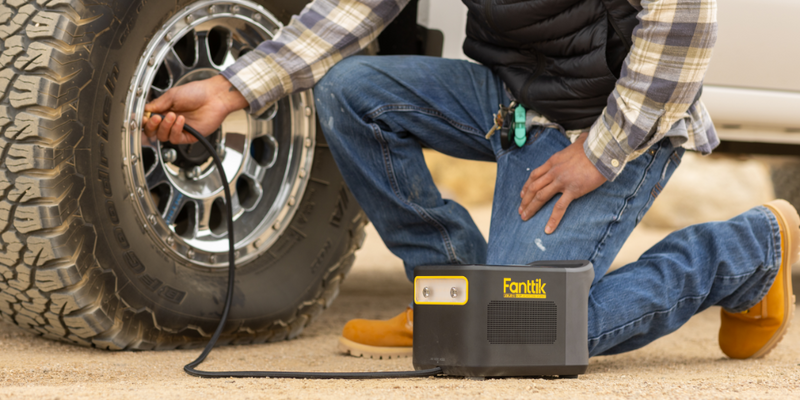
- Reduces Peak In-Rush: By spreading the startup energy over 200–500 milliseconds instead of 10 milliseconds, the peak current demand is lowered. This results in less voltage sag across the battery's internal resistance.
- Protects Mechanical Integrity: High mechanical resistance at startup creates stress concentrations on the tool’s anvil and hammer mechanism. Excessive "cycling" of an impact driver at startup can fatigue metal components. Soft-start ensures the tool reaches operating speed with less mechanical shock.
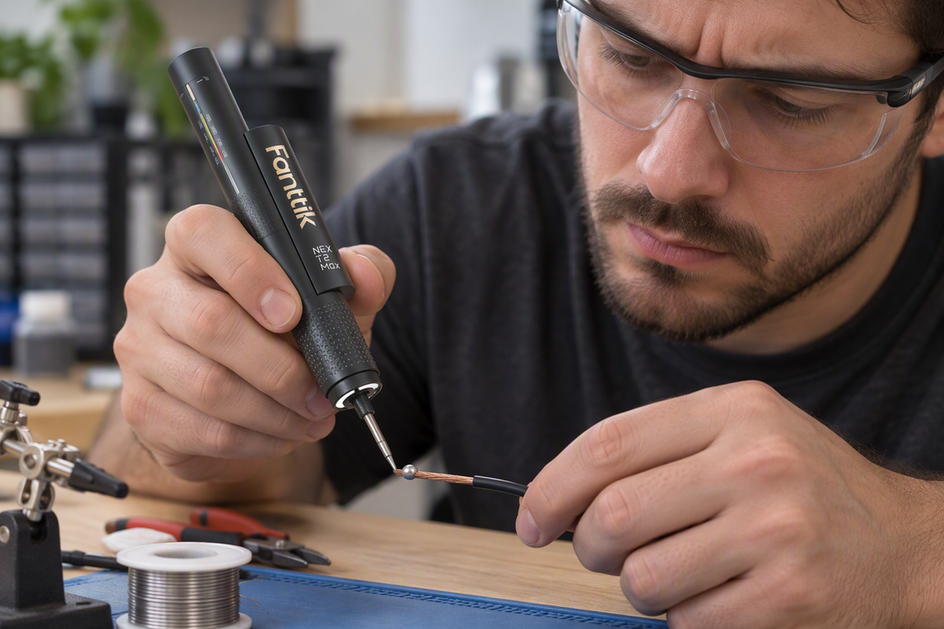
For precision work where even a small over-torque can strip a screw, the Fanttik E2 MAX Precision Electric Screwdriver is engineered with a low-inertia motor. This reduces the energy required to overcome startup resistance, making it ideal for delicate electronics like smartphones or laptops.

Maintaining Peak Performance: A Prosumer Checklist
To ensure your high-torque tools deliver their engineered performance, we recommend the following technical maintenance routine:
- Terminal Hygiene: Every 3 months, inspect battery and tool contacts for "micro-arcing" marks or oxidation. Use a plastic-safe electrical contact cleaner.
- Thermal Management: In cold weather, keep batteries in an insulated bag or a heated cabin until use. A battery at 70°F has significantly lower internal resistance than one at 30°F.
- Load Testing: If a tool consistently stalls, test the battery with a dedicated load tester. Look for a voltage drop that exceeds 15% of the nominal voltage during the first 2 seconds of load.
- Synergy Check: Remember that high-draw tools like the Fanttik Slim V10 Apex Cordless Car Vacuum rely on high-C-rate cells. Using a generic, low-capacity replacement battery will increase the system's total internal resistance and lead to premature thermal shutdown.
Engineering Reliability into Every Start
The "Impact of Internal Resistance" is a topic that separates the casual user from the professional. By understanding that power is a function of both the battery's chemical state and the tool's mechanical condition, you can troubleshoot issues before they lead to downtime.
At the core of our design philosophy is the belief that trust is earned when a tool works exactly as expected, especially when the conditions are at their worst. Whether it's the precision of an E2 MAX or the ruggedness required for a cold-weather startup, managing the "credibility math" of internal resistance is how we engineer gear for a cordless world.
Disclaimer: This article is for informational purposes only. Electrical and mechanical repairs should be performed by qualified individuals. Always refer to your tool's specific manual for safety guidelines and warranty requirements.
References
- Lithium-ion battery - Wikipedia
- Brushless DC electric motor - Wikipedia
- The 2026 Modern Essential Gear Industry Report - Fanttik
- Battery Council International (BCI) Technical Manual
- Internal Resistance: The Hidden Key to Performance - Gerchamp
- Why Do Power Banks Perform Differently in Cold Weather? - Swiftnis
Continue reading
 Troubleshooting BMS Shutdowns During Peak Torque Demands
Covers BMS protection logic, cold weather impacts on battery resistance, and how dull accessories cause power cuts in...
Troubleshooting BMS Shutdowns During Peak Torque Demands
Covers BMS protection logic, cold weather impacts on battery resistance, and how dull accessories cause power cuts in...
 Maintaining High-Torque Motors Against Outdoor Dust Abrasion
A guide to maintaining high-torque outdoor motors against dust, covering seal inspection, grease selection, and current monitoring for...
Maintaining High-Torque Motors Against Outdoor Dust Abrasion
A guide to maintaining high-torque outdoor motors against dust, covering seal inspection, grease selection, and current monitoring for...


Leave a comment
This site is protected by hCaptcha and the hCaptcha Privacy Policy and Terms of Service apply.