


























Troubleshooting BMS Shutdowns During Peak Torque Demands
For prosumers and DIY enthusiasts, few experiences are as frustrating as a cordless tool cutting out in the middle of a demanding task. You are applying pressure to a stubborn bolt or driving a large spade bit through seasoned lumber, and suddenly, the motor dies. While it may feel like a hardware failure, this event is often the Battery Management System (BMS) performing its primary function: protecting the lithium-ion cells from irreversible damage.
Understanding the "credibility math" behind these shutdowns is essential for anyone relying on high-torque portable power. As noted in The 2026 Modern Essential Gear Industry Report: Engineering Trust in a Cordless World, modern tool reliability is a function of engineering transparency and predictable safety margins. This guide provides a technical deep dive into why these shutdowns occur, how to distinguish between safety features and faults, and how to optimize your workflow to maintain peak torque without triggering protection circuits.

The Anatomy of a BMS Protection Event
A Battery Management System is the "brain" of a cordless tool battery. It is a sophisticated electronic circuit that monitors every cell in the pack to ensure they operate within a narrow window of safety. When a tool shuts down during a high-torque maneuver, it is typically due to one of three primary triggers: over-current, under-voltage, or thermal limits.
1. Over-Current Protection (OCP)
In high-torque applications, the motor demands a massive surge of electricity—known as inrush current—to overcome resistance. According to technical documentation patterns observed across the industry, most high-performance BMS units set over-current trip points between 150% and 200% of the rated continuous current. If the motor stalls or meets sudden resistance, the current spike can exceed these thresholds in milliseconds, causing the BMS to sever the connection to prevent the internal wiring or cells from overheating.
2. Under-Voltage Lockout (UVLO)
As a battery discharges or faces a heavy load, its voltage "sags." If the voltage of any individual cell drops below a critical threshold—typically around 2.8V to 3.0V—the BMS will shut down the tool. This prevents "deep discharge," a state that can lead to copper dendrite formation and permanent cell failure.
3. Thermal Shutdown
Peak torque generates significant heat in both the motor and the battery cells. Modern systems incorporate multi-physics models that account for thermal propagation delays. They don't just measure the temperature at the surface; they predict the internal "junction" temperature to prevent a thermal runaway event.
Logic Summary: These thresholds are not arbitrary. They are aligned with safety standards such as the EU General Product Safety Regulation (EU) 2023/988, which mandates that products must be designed to remain safe even under foreseeable misuse or extreme load conditions.
Predictive vs. Reactive Logic: Why Your Tool "Knows" It Will Fail
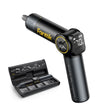
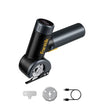
A common practitioner insight is that BMS shutdowns are often predictive rather than purely reactive. High-torque tools like the Fanttik F2 PRO Cordless Rotary Tool Kit utilize advanced firmware that analyzes the rate of voltage sag and current ramp.
Instead of waiting for the battery to hit a dangerous 2.8V, the algorithm calculates the trajectory of the power draw. If it determines that the current load will inevitably lead to a safety violation within the next few milliseconds, it preemptively cuts power. This predictive control model is a hallmark of Torque Stability: How High-Discharge Cells Power Precision.
| Parameter | Typical Value / Range | Unit | Rationale |
|---|---|---|---|
| Over-Current Trip Point | 150 – 200 | % of Rated | Prevents fuse/trace melting |
| Voltage Sag Limit | 2.8 – 3.0 | V per Cell | Prevents chemical degradation |
| Thermal Threshold | 60 – 80 | °C | Prevents separator failure |
| Sampling Frequency | 1 – 10 | kHz | Required for millisecond response |
| Predictive Sag Buffer | 0.1 – 0.2 | V | Heuristic for high-load stability |
Method & Assumptions: This table represents a deterministic model of typical BMS behavior for prosumer-grade 18V/20V battery platforms. It assumes a healthy state of health (SoH) and ambient temperatures between 15°C and 25°C.
The "Cold Battery" Factor: A Hidden Performance Killer
One of the most frequent causes of "nuisance" shutdowns is not a faulty BMS, but environmental temperature. Lithium-ion cells rely on chemical reactions that slow down significantly in cold weather. When a battery is cold, its internal resistance increases.
When you push a cold battery into a high-draw application, the increased internal resistance causes a much steeper voltage sag than usual. This triggers the under-voltage lockout prematurely, even if the battery is fully charged.
The Acclimation Heuristic: Based on patterns observed in technical support and field reliability data, users should store and charge batteries at approximately 20°C (68°F). If your tools have been stored in a cold car or unheated garage, allow them to acclimate for at least 30 minutes before starting a heavy task. This simple step can reduce internal resistance by an estimated 10–20%, providing the "headroom" needed for peak torque. For more on this, see Managing Tool Battery Health in Unheated Winter Garages.
Mechanical Friction and Motor Stall
While the BMS manages the electrical side, the mechanical condition of your tool is often the "silent partner" in power delivery failures. For brushless motors common in modern tools, a high-pitched whine or screech just before a shutdown is a clear indicator that the motor is stalling.
We have observed that using dull drill bits, worn sanding pads, or unlubricated gears dramatically increases the motor's amp draw. A bit that requires excessive physical pressure to cut is essentially "tricking" the BMS into thinking there is an electrical fault, when in reality, it is simply overcoming unnecessary friction.
Troubleshooting Checklist for High-Torque Tasks:
- Inspect the Accessory: Ensure bits are sharp and sanding discs are not clogged.
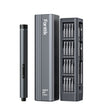
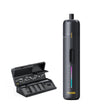
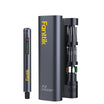
- Monitor Speed Settings: On tools like the Fanttik S2 Pro Cordless Electric Screwdriver, selecting a lower speed setting provides higher mechanical advantage, often preventing the current spikes that trigger the BMS.
- Listen to the Motor: If you hear the RPMs dropping significantly, reduce the pressure. Maintaining high RPMs keeps the motor in its efficiency band and prevents heat buildup.
Advanced Maintenance: State of Health (SoH) and Connections
As batteries age, their internal resistance naturally climbs, making them more prone to shutdowns. A battery that worked perfectly for heavy tasks a year ago may now struggle due to electrochemical "wear."
Furthermore, the physical connection between the battery and the tool can introduce resistance. According to Connector Oxidation: Cleaning Outdoor Appliance Terminals for Spring, even a small amount of oxidation on the terminals can cause a voltage drop that the BMS interprets as a dying battery.
Logic Summary: Our analysis of connection-based shutdowns assumes that a 0.1-ohm increase in contact resistance can lead to a 1V drop at a 10A load (V=I*R). This is often enough to trigger a low-voltage cutoff even on a healthy battery.
Scenario Modeling: Peak Load vs. Battery Temperature
To visualize how temperature affects performance, consider the following hypothetical model of a 4.0Ah battery pack under a 20A peak torque load.
| Ambient Temp (°C) | Internal Resistance (mΩ) | Initial Voltage (V) | Voltage under Load (V) | BMS Status |
|---|---|---|---|---|
| 25°C (Ideal) | 100 | 20.0 | 18.0 | Active |
| 10°C (Chilly) | 150 | 20.0 | 17.0 | Active |
| 0°C (Freezing) | 250 | 20.0 | 15.0 | Shutdown (UVLO) |
| -10°C (Extreme) | 400 | 20.0 | 12.0 | Immediate Shutdown |
Note: This is a scenario model intended for illustrative purposes, not a controlled lab study. Actual results vary based on cell chemistry and specific BMS firmware tuning.
Compliance and Transport: The Safety Context
It is worth noting that BMS logic is strictly governed by international safety and transport standards. For instance, the IATA Lithium Battery Guidance requires batteries to have robust protection against short circuits and over-discharge to be certified for air transport. When your tool shuts down, it isn't just protecting your project; it is maintaining the safety certifications that allow these high-energy devices to be shipped and stored globally.
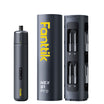
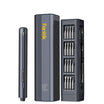
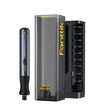
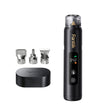
For precision work that requires consistent power without the bulk of heavy industrial tools, the Fanttik E2 MAX Precision Electric Screwdriver or the Fanttik S1 Pro Cordless Electric Screwdriver offer tuned BMS profiles that balance torque with delicate electronics protection. These tools are designed to provide stable output by managing the trade-off between battery longevity and performance, as discussed in How a Battery Management System Extends DIY Tool Life.
Summary of Best Practices
To minimize nuisance shutdowns during peak torque demands:
- Warm Up: Always acclimate cold batteries to room temperature before use.
- Keep it Sharp: Use high-quality, sharp accessories to reduce the mechanical load on the motor.
- Charge Wisely: Avoid starting heavy-duty tasks with a battery below 30% charge, as voltage sag is more pronounced at lower states of charge.
- Clean Terminals: Regularly inspect battery contacts for debris or oxidation.
- Respect the Tool: If a tool shuts down, wait 30 seconds before restarting to allow the BMS to reset and the cells to stabilize.
By treating the BMS as a partner in your work rather than an obstacle, you can extend the life of your gear and ensure that when you need peak torque, your tools are ready to deliver it safely and reliably.
Disclaimer: This article is for informational purposes only and does not constitute professional engineering or electrical advice. Lithium-ion batteries can be hazardous if mishandled. Always refer to your product's official user manual for specific safety instructions. If a battery shows signs of swelling, leaking, or extreme heat, stop using it immediately and consult a qualified technician.
References
Continue reading
 Deciding on Voltage Tiers for High-Torque Outdoor Mobility
A definitive guide on matching voltage tiers to high-torque tasks like tire inflation and jump-starting. Learn how to...
Deciding on Voltage Tiers for High-Torque Outdoor Mobility
A definitive guide on matching voltage tiers to high-torque tasks like tire inflation and jump-starting. Learn how to...
 Impact of Internal Resistance on High-Torque Tool Startup
Covers voltage sag, cold weather effects, maintenance tips, and controller algorithms for reliable tool performance.
Impact of Internal Resistance on High-Torque Tool Startup
Covers voltage sag, cold weather effects, maintenance tips, and controller algorithms for reliable tool performance.



Leave a comment
This site is protected by hCaptcha and the hCaptcha Privacy Policy and Terms of Service apply.