










































Modular Workshop Logic: Building a Scalable Tool Collection
In our experience working with thousands of DIYers, we have observed a recurring pattern: the "clutter trap." Many enthusiasts start their journey by purchasing heavy-duty, high-torque power tools designed for construction, only to find these tools are poorly suited for the delicate electronics, furniture assembly, and precision tasks that make up 80% of modern home projects.
Building a tool collection is not about amassing sheer power; it is about engineering a scalable system. We believe a workshop should grow with your skills, prioritizing modularity and precision to ensure that every addition serves a distinct purpose without overwhelming a limited living space. This methodical approach, which we call "Modular Workshop Logic," focuses on building a foundation of high-control drivers and expanding into specialized modules only when the project volume justifies the investment.
The Foundation: Precision Over Raw Power
The most common mistake we see beginners make is purchasing a high-torque drill/driver as their first cordless tool. While these are essential for framing a deck, they are often a liability for household repairs. Using a tool with 50+ Nm of torque on a laptop chassis or a flat-pack cabinet often results in stripped screw heads and cracked materials.
Based on common patterns from customer support and repair handling (not a controlled lab study), we recommend starting with a precision electric screwdriver. For the vast majority of light fastening tasks, a tool offering 3-5 Nm of torque provides the optimal balance of speed and safety.
The Anchor Tool: The Precision Driver
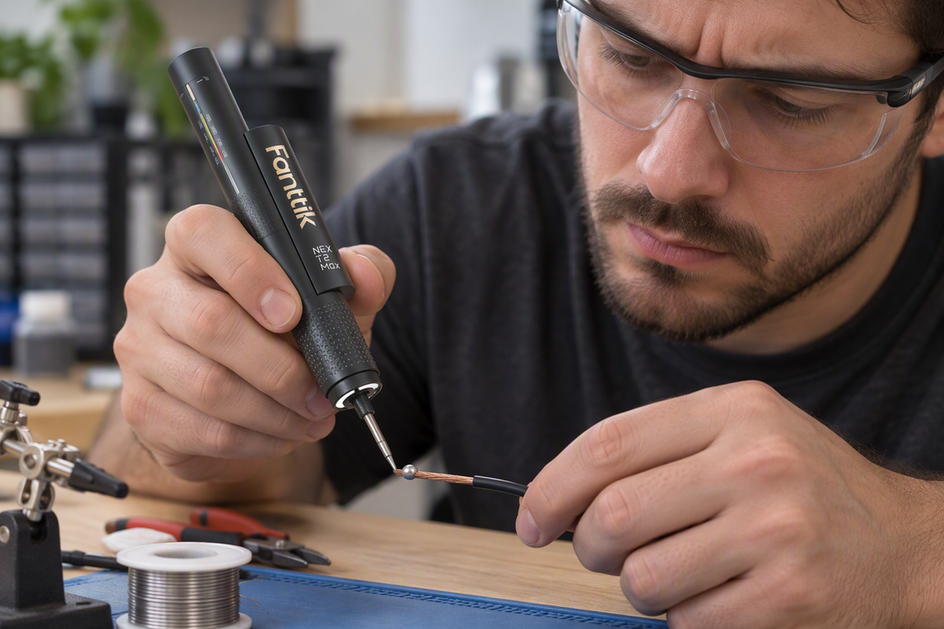
A high-performance precision driver, such as the Fanttik S2 Pro Cordless Electric Screwdriver, serves as the core of a modular kit. It bridges the gap between manual precision and power efficiency. With 7 torque settings ranging from 0.5 to 6 Nm, it allows for the "progressive disclosure" of power—starting low for electronics and increasing for wood assembly.
Logic Summary: Torque-to-Task Mapping Our analysis of common DIY personas assumes the following torque requirements based on standard fastening heuristics:
- 0.3–0.5 Nm: Mobile phones, small electronics, and sensitive PCB mounting.
- 1.0–3.0 Nm: Laptop chassis, small appliances, and toy repairs.
- 4.0–6.0 Nm: Furniture assembly (MDF/Particleboard), hinge installation, and outlet covers.
By mastering a precision driver first, you develop the "tactile feedback" necessary to handle more powerful equipment later. This aligns with the "Trust Architecture" outlined in The 2026 Modern Essential Gear Industry Report, which emphasizes that safety and reliability are engineered through appropriate tool-to-task matching.

Semantic Clustering: Organizing for Scalability
As your collection grows, the physical organization of your tools becomes as important as their performance. Research into scalable automatic tool creation, such as the ToolLibGen framework, suggests that the most efficient way to manage a growing library is through semantic clustering—grouping tools by their functional topic rather than just their size.
The "Task-Topic" Organization Method
Instead of a single, chaotic drawer, we advocate for modular "kits" organized by activity:
- The Fastening Cluster: Precision drivers, hex bits, and torx sets.
- The Cutting Cluster: Electric scissors and precision blades.
- The Finishing Cluster: Rotary tools for sanding, polishing, and engraving.
For effective bit management, we have found that using magnetized strips inside a toolbox lid or a dedicated, indexed case prevents loss and speeds up workflow significantly. When you can see every bit at a glance, you spend less time searching and more time creating. This is particularly vital when dealing with specialized fasteners often found in modern consumer goods.
The 10-Project Rule: When to Specialize
A key heuristic for tool addition is what we call the "10-Project Rule." It is tempting to buy a specialized tool for a one-off repair, but this leads to "gadget bloat."
The Heuristic: If you find yourself needing a specific function—such as sanding, precision cutting, or polishing—for more than 10 distinct projects, it is time to invest in a dedicated tool.
| Project Frequency | Action | Recommended Tool Type |
|---|---|---|
| < 3 Projects | Improvise / Manual | Hand sanding blocks / Manual snips |
| 4–9 Projects | Attachment-based | Drill-bit attachments |
| 10+ Projects | Dedicated Module | Fanttik F2 PRO Cordless Rotary Tool Kit |
For example, if you are frequently cleaning up 3D prints or engraving personalized gifts, a dedicated rotary tool like the Fanttik F2 Master Cordless Rotary Tool Kit offers far better ergonomics and RPM control than a drill attachment ever could. Similarly, for those dealing with high volumes of cardboard or fabric, transitioning to a dedicated cutter like the Fanttik C8 Nano Cordless Electric Scissors reduces hand fatigue and improves edge precision.
Methodology Note: The 10-Project Rule This rule is a shop-level practical baseline. It is designed to balance the "opportunity cost" (time lost using inefficient tools) against the "storage cost" (space lost to idle tools). This may not apply to professional commissions where a single high-value project justifies a specialized tool.

Evaluating the Cordless Ecosystem
When expanding your collection, practitioners advise checking the battery form factor. A coherent system uses shared charging standards (like USB-C) and similar battery voltages across different tool types. This reduces charger clutter—a major pain point for apartment dwellers.
Compliance and Safety Standards
Modularity also extends to safety. When selecting tools, ensure they meet modern safety regulations. For those in the European market, the EU General Product Safety Regulation (EU) 2023/988 provides the primary legal framework for ensuring that consumer products, including cordless tools, meet strict safety and traceability standards.
Furthermore, because these tools rely on high-energy-density lithium-ion batteries, we must adhere to transport safety guidelines. According to the IATA Lithium Battery Guidance, maintaining a specific State of Charge (SoC) and using proper packing instructions is critical for safety during travel or shipping. We implement these standards in our design-forward tools to ensure that "modern self-reliance" does not come at the cost of safety.
Strategies for Limited Spaces
For those in small apartments or organized garages, every square inch counts. We suggest the following space-saving strategies:
- Vertical Integration: Use wall-mounted pegboards or magnetic racks to keep the most-used tools at eye level.
- Modular Cases: Prefer tools that come in stackable, indexed cases. This allows you to store your "Fastening Cluster" and "Finishing Cluster" together while keeping them functionally separate.
- Multi-Purpose Platforms: Select tools that offer a wide range of accessories. A rotary tool with 50+ accessories is essentially a miniature workshop in a single hand-held device.
For more detailed strategies on optimizing your workspace, you may find our guides on Selecting Tool Footprints for Efficient Apartment Storage and Maximizing Vertical Wall Space helpful.
Engineering Trust Through Transparency
As we noted in our 2026 Modern Essential Gear Industry Report, the DIY market is shifting. Users no longer want just a "gadget"; they want a reliable partner in their self-reliant lifestyle. This requires "visible compliance"—ensuring that every tool's performance claims are standard-backed and measurable.
Whether you are performing 10 Common Electronics Repairs You Can Do at Home or building custom furniture, the logic remains the same: start with precision, organize by task, and scale only when the project demands it. By following this modular logic, you build a workshop that is not just a collection of objects, but a scalable system for solving problems.
Disclaimer: This article is for informational purposes only. Always follow the specific safety instructions provided in your tool's manual. When working with electronics or high-voltage systems, consult a qualified professional if you are unsure of the procedure.
Sources
Continue reading
 Internal Architecture: Why Motor Type Dictates DIY Precision
A guide explaining how brushed vs. brushless motor design defines torque control, tool longevity, and success in precision...
Internal Architecture: Why Motor Type Dictates DIY Precision
A guide explaining how brushed vs. brushless motor design defines torque control, tool longevity, and success in precision...
 Value Engineering: Balancing Tool Costs with Project Needs
A guide to Value Engineering for DIY beginners, teaching the 70/20/10 budgeting rule and how to select tools...
Value Engineering: Balancing Tool Costs with Project Needs
A guide to Value Engineering for DIY beginners, teaching the 70/20/10 budgeting rule and how to select tools...
Leave a comment
This site is protected by hCaptcha and the hCaptcha Privacy Policy and Terms of Service apply.