





































Quick Take: Choosing Your Inflation Strategy
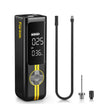
For most solo adventurers and daily drivers, the single-point inflator is the most practical choice due to its low setup friction and precision. However, for group leaders or those running large tires (35"+), a multi-hose (4-way) system significantly improves efficiency by eliminating compressor "idle time."
- Single-Point: Best for precision, solo use, and limited storage.
- Multi-Hose: Best for group recoveries and thermal management; requires a high-output compressor (ideally ≥6–10 CFM) to see significant time gains.
The Evolution of Trailside Air Management
For off-road and overlanding enthusiasts, tire pressure management is a fundamental pillar of traction and vehicle preservation. Lowering tire pressure (airing down) increases the "contact patch," distributing weight to improve flotation on soft substrates like sand. However, the transition back to highway-safe pressures—the "air up" process—is often the most tedious part of the journey.
Traditionally, the single-point inflator has been the standard. Yet, as group expeditions become more common and tire sizes increase (often exceeding 35 or 37 inches), the demand for speed has popularized multi-hose systems. These 4-way manifolds allow a single compressor to service all four tires simultaneously.
Choosing between these approaches involves understanding the interplay between compressor output, thermal management, and logistical friction. According to the Auto Care Factbook (used here to contextualize the growth in specialized aftermarket demand), the surge in specialized vehicle use has made efficient recovery gear a priority for modern enthusiasts.
Single-Point Inflation: The Versatile Standard
The single-point inflator remains the baseline because of its low "friction to use." Based on common patterns observed in customer support and trailside workshops, a single-point unit is almost always faster for a "top-up" or for adjusting a single tire.
Advantages of the Single-Point Approach
- Minimal Setup Time: Pull the unit out, connect to power, and start. No hoses to untangle.
- Precision and Control: Managing one tire at a time allows for specific weight distribution needs (e.g., higher PSI in the rear for a loaded bed).
- Portability: Compact units are ideal for solo travelers with limited storage.
The primary drawback is "idle time"—the period where the compressor is running against a closed valve while you move the hose between tires.
Expert Heuristic: Our assessment of "setup friction" assumes a standard storage configuration. Multi-hose kits typically require 3–5 minutes of additional organizational effort compared to a single integrated portable unit.
Multi-Hose Systems: Efficiency Through Simultaneous Flow
Multi-hose systems connect all tires to a central manifold, creating a single pressurized circuit.
The "Idle Time" Breakthrough
The primary advantage isn't just speed; it's the elimination of the "start-stop" cycle. When a compressor cycles against a closed chuck during tire changes, it experiences pressure spikes. Continuous flow via a manifold reduces motor heat buildup, which can extend the unit's lifespan in high-demand scenarios.
The Equalization Factor
Because all tires are linked, they naturally seek equilibrium. This ensures a balanced footprint across the axle, which is critical for highway handling and even tire wear.
Modeling Note (Scenario Recovery): This model is a heuristic simulation based on the air volume of a standard 35" tire and the removal of "operator walking time" (estimated at 45 seconds per tire change).
Parameter Value Unit Rationale Tire Size 35 Inches Standard enthusiast size Starting Pressure 15 PSI Typical trail pressure Target Pressure 35 PSI Highway safety pressure Compressor Output 6.5 CFM High-tier portable unit (e.g., dual-motor) Est. Time Saving 40–50% % Includes logistics + simultaneous flow Boundary Condition: This model assumes similar tire volumes. Mixing a 37-inch truck tire with a 28-inch ATV tire on the same manifold negates these benefits due to volume differentials.
The Technical Bottleneck: CFM and Thermal Duty Cycles
A multi-hose system is only as effective as the compressor driving it. Pairing a low-volume compressor with a 4-way kit is a common configuration mistake.
Understanding CFM Requirements
CFM (Cubic Feet per Minute) measures air volume. To effectively inflate four large tires simultaneously without the process feeling "sluggish," you need a high-CFM unit.
- Heuristic Threshold: While any compressor works, a system typically requires ≥6 CFM to outperform a single-point setup significantly, with 10–12 CFM (often found in hard-mounted dual-compressor setups) being the "gold standard" for 4-way systems.
- Thermal Safety: The IATA Lithium Battery Guidance (referenced for battery-powered inflator safety) highlights that high-output devices generate immense heat. When running a multi-hose system, the "Duty Cycle" becomes critical because the compressor runs for a longer continuous duration.
Practical Decision Framework
| Feature | Single-Point Inflator | Multi-Hose (4-Way) System |
|---|---|---|
| Best For | Solo travelers, daily drivers | Large groups, 35"+ tires |
| Setup Complexity | Low (plug and play) | High (routing and manifold prep) |
| Precision | High (individual control) | Medium (equalized) |
| Equipment Cost | Lower | Higher (requires high-CFM compressor) |
| Storage Space | Minimal | Significant (bulky hose bundles) |
Advanced Hybrid Strategies
Experienced overlanders often adopt a "Bulk-to-Fine-Tune" method:
- The Bulk Fill: Use the 4-way system to bring all tires from 15 PSI to ~32 PSI. This maximizes simultaneous flow and minimizes heat soak.
- The Fine-Tune: Disconnect the manifold and use a single lead to bring each tire to its exact specified PSI, accounting for slight manifold variances.
Common Pitfalls
- Unequal Hose Lengths: In DIY setups, unequal lengths create pressure differentials; air follows the path of least resistance.
- Neglecting the Valve Core: Standard Schrader valves are a bottleneck. "Apex" style high-flow valves are a recommended modification for those seeking ultimate speed.
- Environmental Extremes: As noted in the 2026 Modern Essential Gear Industry Report (a brand-specific whitepaper on engineering compliance), air hoses can become brittle in extreme cold. Ensure your kit uses high-quality rubber or hybrid polymers rather than cheap PVC.
Safety and Maintenance
Regularly inspect hoses for abrasions, especially near fittings. Moisture buildup inside the manifold can lead to internal corrosion or damage to vehicle pressure sensors (TPMS). For battery-powered units, store them in temperature-controlled environments to prevent the cell degradation described in industry thermal safety standards.
Final Verdict
For the solo adventurer valuing simplicity, the single-point inflator remains the most practical tool. For the group leader or the rig with oversized tires, the multi-hose system is a transformative upgrade—provided your compressor has the CFM to back it up.
Disclaimer: This article is for informational purposes. Off-roading involves inherent risks. Always consult your vehicle's manual and tire manufacturer guidelines. Improper inflation can lead to tire failure or loss of control.
Sources
- Auto Care Factbook: Industry indicators for aftermarket accessory trends.
- IATA Lithium Battery Guidance: Safety standards for thermal management in portable electronics.
- 2026 Modern Essential Gear Industry Report (Fanttik): Engineering whitepaper regarding cordless gear durability and environmental compliance.
- ISO Standards Catalogue: General references for quality management and safety.
Continue reading
 Bead Seating Physics: Why High Flow is Vital for Trail Repairs
Covers the 400% rule for valve cores, the importance of bead lubrication, and the hardware constraints of portable...
Bead Seating Physics: Why High Flow is Vital for Trail Repairs
Covers the 400% rule for valve cores, the importance of bead lubrication, and the hardware constraints of portable...
 Floatation vs. Digging: Matching PSI to Terrain Soil Density
Covers soil shear strength, moisture content, thermal pressure creep, and reliable re-inflation methods for overlanders.
Floatation vs. Digging: Matching PSI to Terrain Soil Density
Covers soil shear strength, moisture content, thermal pressure creep, and reliable re-inflation methods for overlanders.
Leave a comment
This site is protected by hCaptcha and the hCaptcha Privacy Policy and Terms of Service apply.