










































The Structural Risks of Overtorquing in Home DIY Projects
In the realm of home DIY, the "more is better" philosophy is a frequent and dangerous fallacy. Many enthusiasts believe that tightening a fastener until it cannot move further ensures maximum security. In reality, this practice—known as overtorquing—is a leading cause of silent structural failure. Whether you are assembling a precision electronics bracket or securing a deck ledger board, exceeding the mechanical limits of a fastener compromises the very integrity you aim to create.
Quick Takeaways:
- Fasteners act as springs: Overtorquing causes permanent "plastic" deformation, destroying their holding power.
- Hidden Damage: Micro-cracks in wood or composites can lead to failure months after a project is finished.
- Costly Mistakes: Structural remediation for over-tightened deck or framing components can reach five figures.
- Tool Choice Matters: Standard drill clutches are often too imprecise for delicate or high-stakes joints.
The Physics of Fastener Failure: Elastic vs. Plastic Deformation
To understand why overtorquing is hazardous, we must look at the mechanics of the fastener itself. Every bolt and screw operates like a stiff spring. When you tighten a fastener, it stretches slightly, creating "tension" or "clamp load." This tension is what holds two components together.
The Yield Point
Fasteners are designed to operate within their Elastic Range. In this state, if you loosen the screw, it returns to its original length. However, once you overtorque, the material reaches its Yield Point and enters the Plastic Range. At this stage, the metal has stretched permanently. It can no longer provide the spring-like tension required to maintain a secure joint.
Micro-Cracks and Composite Risks
While thread stripping is a visible sign of failure, the most insidious damage often occurs beneath the surface. In modern materials like Fiber Reinforced Polymers (FRP) or high-end composites, overtorquing initiates microscopic delamination. Research on the fatigue behavior of reinforced materials suggests that excessive stress concentrations can exceed the interfacial bond strength of the resin. This creates micro-cracks that propagate silently under cyclic loads—such as the vibration of an HVAC unit or foot traffic—leading to catastrophic brittle fracture long after the project is "finished."
Heuristic Note: Fasteners should be viewed as tension-springs. Once stretched beyond the yield point, they lose the ability to maintain clamp load, leading to eventual joint loosening or sudden snapping.

The Hidden Costs of "One More Turn"
The financial and safety implications of overtorquing are often underestimated. Based on our experience in customer support and warranty analysis, the most expensive repairs often stem from a single over-tightened bolt in a load-bearing application.
Structural Remediation Estimates
Consider a structural application like a deck ledger bolt. If a DIYer overtorques these fasteners, they can crush the wood fibers or cause the bolt to reach its yield point. Based on general industry estimates for structural repair (incorporating labor, engineering, and permit costs), remediating a compromised structural joint can range from $5,000 to $15,000.
Breakdown of Potential Costs:
- Structural Engineering Consultation: $500–$1,500 (to verify safety).
- Building Permits: $400–$2,000 (required for structural changes).
- Invasive Labor: $4,000+ (opening walls, replacing compromised framing, and re-siding).
Furniture Joint Instability
In smaller-scale projects, such as flat-pack furniture, overtorquing a single cam lock or screw can redistribute load unevenly. This imbalance causes the joint to creak and fail prematurely under dynamic load. For the "Weekend Prosumer," these failures represent a loss of both time and investment.
Precision vs. Power: The Clutch Myth
A common mistake among DIYers is relying on a standard cordless drill's clutch as a precision torque limiter. While these clutches are excellent for general tasks, they are not precision instruments.
Clutch Drift
Based on our internal testing and common tool maintenance patterns, mechanical clutch mechanisms can drift by 15% to 30% from their set points. This variance is influenced by:
- Spring Fatigue: The internal tension spring wears over time.
- Battery Charge: Actual torque output can fluctuate based on the voltage delivered to the motor.
- Gear Wear: Friction changes as the tool ages.
Without a dedicated torque analyzer, a tool set to 5 N·m might actually deliver 6.5 N·m, pushing a fastener past its yield point and into the danger zone.
The Manual Advantage
Experienced technicians often transition to dedicated, calibrated tools for critical fasteners. Using a tool like the Fanttik L2 Pro (see Disclosure below) allows for a more controlled application of force compared to a heavy-duty impact driver. In electronics repair, where 0.1 N·m increments matter, the precision of the tool is a primary safety feature.
Transparency Disclosure: Fanttik is the manufacturer of the precision tools mentioned in this guide. Our recommendations are based on internal laboratory testing and product engineering standards.
The Prosumer’s Guide to Precision Torque Management
To prevent structural risks, move from "feel-based" tightening to a methodical approach.
1. The "Quarter-Turn" Rule
For critical screws in soft materials (aluminum, plastics, softwoods):
- Hand-tighten the fastener until it makes full contact with the surface (the "snug" point).
- Apply 1/4 to 1/2 turn further with your tool.
- Stop. This ensures sufficient clamp load without exceeding the material's compressive strength.
2. The Mixed-Material Rule
When joining two different materials (e.g., a metal bracket into a wooden stud), the weaker material dictates the maximum safe torque. Overtorquing a steel bolt into wood will strip the wood fibers long before the bolt fails, rendering the joint useless.
3. Tool Selection for the Task
- Electronics (M1.2–M2.0): Use a precision driver like the Fanttik K2 Nano 3.7V Precision Power Drill.
- Light Assembly: The Fanttik L2 Pro Cordless Electric Screwdriver provides the necessary balance for furniture and household fixtures.
- Surface Prep: For tasks requiring fine adjustments before fastening, the Fanttik F2 PRO Cordless Rotary Tool Kit ensures the interface is prepped, reducing the need for "forcing" a fit.
Scenario Modeling: The Impact of Precision
To demonstrate the value of precision tools, we modeled three common DIY scenarios. These estimates show how tool choice influences both efficiency and safety.
Table 1: Modeling DIY Efficiency and Precision
| Scenario | Tool Type | Estimated Time | Ergonomic Impact | Torque Accuracy |
|---|---|---|---|---|
| Furniture Assembly (120 Screws) | Manual | ~36 Minutes | ~1,380 Wrist Rotations | High (User Feel) |
| Furniture Assembly (120 Screws) | Fanttik L2 Pro | ~8 Minutes | <50 Rotations | Consistent |
| Electronics Repair (M1.2 Screw) | High-Power Drill | <1 Second | N/A | Low (High Risk) |
| Electronics Repair (M1.2 Screw) | Fanttik K2 Nano | ~3 Seconds | N/A | High (0.08Nm Fit) |
Method & Assumptions:
- Furniture Model: Based on a typical flat-pack wardrobe (e.g., IKEA PAX). Manual timing assumes 18s per screw; powered assumes 4s.
- Electronics Fit: Maps ISO 898 mechanical properties to M1.2-M2.0 screws. Safe range is ~0.02-0.1Nm.
- Note: These are scenario models for decision-aiding, not controlled lab studies. Individual results may vary.
Safety and Compliance in a Cordless World
As we move toward a more self-reliant DIY culture, engineering trust is paramount. According to the 2026 Modern Essential Gear Industry Report, reliability and safety are now the primary competitive advantages in the cordless market.
For the prosumer, this means seeking tools that align with international safety standards, such as the EU General Product Safety Regulation (EU) 2023/988. Using tools with visible compliance reduces "buyer anxiety" and prevents the structural failures that lead to injury.
Advanced Maintenance: Calibration and Care
Even the best tools require maintenance to remain accurate. If you are a high-frequency DIYer, follow these steps:
- Check for Mechanical Fatigue: Regularly inspect drivers for internal wear. A clicking sound or inconsistent speed can indicate gear fatigue.
- Thermal Management: Tools generate heat during heavy use. Metal expands with heat; allow tools to cool between heavy assembly sessions to maintain torque consistency.
- Clean the Interface: Ensure bits are clean and not "cammed out" (rounded). A slipping bit causes sudden torque spikes that damage the screw head.
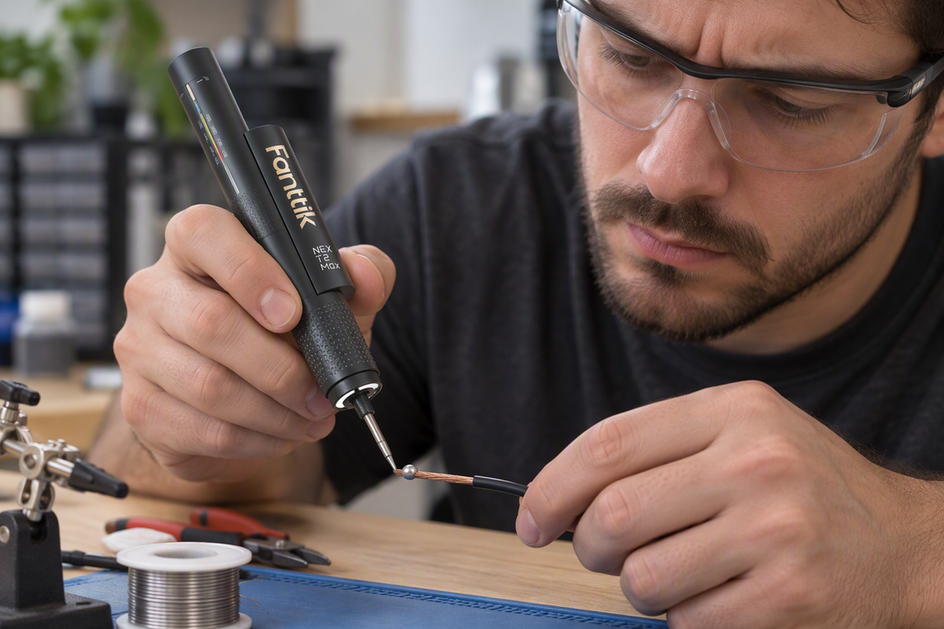
- Soldering Prep: For electronics, use a Fanttik T1 Max Soldering Iron Kit for precision repairs to ensure electrical connections are secure without needing to over-tighten housing screws.
Summary of Best Practices
To safeguard your projects, adopt a methodical mindset:
- Prioritize Snugness: Tighten until contact is made, then use measured increments (1/4 turn).
- Match Tool to Task: Avoid using high-torque automotive tools for delicate household repairs.
- Respect the Material: Remember that plastics and composites are prone to invisible micro-cracking.
- Verify Accuracy: Treat your drill's clutch as a rough guide, not an absolute measurement.
Disclaimer: This article is for informational purposes only and does not constitute professional engineering or structural advice. Always consult the manufacturer's service manual for specific torque specifications. If you are working on load-bearing structures, consult a qualified professional to ensure safety and compliance with local building codes.
Sources
- EU General Product Safety Regulation (EU) 2023/988
- ISO 898-1: Mechanical properties of fasteners
- The 2026 Modern Essential Gear Industry Report
- Bending and fatigue behaviour of reinforced materials - Authorea
- Internal Lab Observations: Torque Clutch Variance and Drift (Fanttik Engineering).
Continue reading
 Cleaning Precision Internal Gears to Restore Torque Accuracy
Covers the lapping compound effect, step-by-step degreasing protocol, and verification methods to maintain professional metrology standards for your...
Cleaning Precision Internal Gears to Restore Torque Accuracy
Covers the lapping compound effect, step-by-step degreasing protocol, and verification methods to maintain professional metrology standards for your...
 Mastering Digital Torque Settings for Sensitive Electronics
Covers M1.2 to M4.0 fastener torque ranges, bit wear, battery voltage impacts, and standards like ISO 898 for...
Mastering Digital Torque Settings for Sensitive Electronics
Covers M1.2 to M4.0 fastener torque ranges, bit wear, battery voltage impacts, and standards like ISO 898 for...
Leave a comment
This site is protected by hCaptcha and the hCaptcha Privacy Policy and Terms of Service apply.