









































Renewing Degraded Rubber Gaskets to Restore Waterproofing
Rubber gaskets and O-rings are the unsung heroes of our gear. From the rugged tire inflators in our trunks to the precision electronics on our repair benches, these elastomeric seals provide the critical barrier between sensitive internal components and the destructive forces of moisture, dust, and grime. However, rubber is not a "set it and forget it" material. It naturally degrades, loses elasticity, and eventually fails, often at the most inconvenient moment.
In our experience servicing high-performance outdoor hardware, we have observed that waterproofing failure is rarely a catastrophic event. Instead, it is a slow "creep" of material fatigue. To maintain factory-spec reliability and ensure your equipment remains mission-ready, you must understand how to identify, renew, and—when necessary—replace these vital components. This guide provides a methodical approach to gasket maintenance, grounded in material science and professional repair standards.
The Anatomy of Seal Failure: Beyond the Obvious
When a device loses its water resistance, most users immediately inspect the large, visible O-rings surrounding the main housing. While these are important, our field repair data suggests a different pattern.
The most common seal failure points are often the smallest:
- Button Gaskets: Thin, flat gaskets located behind control buttons are frequently overlooked. These undergo constant mechanical stress and are susceptible to "pinching" or tearing.
- Molded Latch Seals: Integrated seals found in battery door latches or port covers often lose their "memory" (compression set) faster than static seals because they are frequently cycled.
- Port Covers: As highlighted in our previous analysis on why port covers fail over time, these components often suffer from environmental exposure and physical deformation.
According to the EU General Product Safety Regulation (EU) 2023/988, maintaining the safety and integrity of products throughout their lifecycle is a fundamental obligation. For DIYers, this means that "restoring" a seal isn't just about aesthetics; it’s about ensuring the device continues to operate safely in its intended environment.
Material Science: Nitrile (NBR) vs. Silicone
To renew a gasket correctly, you must first identify what it is made of. Using the wrong cleaning agent or lubricant on a specific polymer can accelerate degradation rather than reverse it.
1. Nitrile (Buna-N / NBR)
Nitrile is the workhorse of the automotive world. It is highly resistant to oils and fuels, making it ideal for tire inflators and engine-adjacent gear. However, it has a significant weakness: it is prone to "ozone cracking." When exposed to the atmosphere over time, NBR becomes brittle and develops micro-cracks.
2. Silicone Rubber
Silicone is prized for its extreme temperature resistance and flexibility. It is commonly found in high-end electronics and seals that require a soft touch. While it doesn't crack like Nitrile, it has poor tear resistance and can "swell" significantly if it comes into contact with certain solvents.
Expert Insight: A common "gotcha" in the DIY community is the use of petroleum-based lubricants (like Vaseline) on Nitrile seals. In our repair shop, we frequently see NBR gaskets that have turned into a "gummy" mess because of this. Petroleum causes Nitrile to swell and soften, permanently destroying its structural integrity. Always use a light application of dimethyl silicone grease—the industry-standard choice for compatibility across almost all rubber types.
The Professional Renewal Process: Step-by-Step
If a gasket is merely dry or dirty rather than physically torn, it can often be renewed. We follow a strict protocol to ensure we don't introduce new failure points during the process.
Step 1: Precision Disassembly
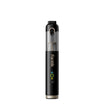
To access internal seals, you need tools that won't strip delicate fasteners. For portable electronics, we utilize the Fanttik E1 MAX Precision Electric Screwdriver. Its low-torque settings are critical for preventing damage to plastic bosses that hold waterproof housings together.
Step 2: Debris Removal & Cleaning
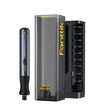
Before removing the seal, the surrounding area must be spotless. Any grit that falls into the gasket channel will create a leak path. We use the Fanttik Fold V10 Apex Foldable Car Vacuum with a crevice tool to clear the workspace of particulates before the housing is even opened.
Once the seal is removed, clean it with warm, soapy water or a dedicated rubber cleaner. Avoid lacquer thinner. As noted in our research (IG2), lacquer thinner is a blend of aggressive solvents like acetone and toluene that can extract plasticizers from Nitrile, leading to permanent dimension loss and accelerated aging.
Step 3: Inspection for "Compression Set"
"Compression set" is the permanent deformation of a seal after being compressed for a long time. If an O-ring looks flat rather than round, it has lost its "spring-back" ability.
- The Pinch Test: Gently fold the gasket. It should snap back to its original shape instantly. If it retains the fold or feels "crunchy," it is past its service life and must be replaced.
Step 4: Channel Preparation
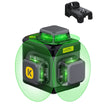
If the gasket channel has accumulated oxidation or hardened residue, it needs to be polished. A Fanttik F2 PRO Cordless Rotary Tool Kit with a soft felt polishing bit can safely clear the channel without removing metal or plastic. A smooth seating surface is just as important as the seal itself.
Step 5: Controlled Lubrication
Apply a bead of silicone grease the size of a grain of rice. Massage it into the seal until it has a dull sheen. You are not "waterproofing" with the grease; you are simply reducing friction so the seal can slide into its seat without twisting or bunching.
Identifying the Correct Replacement: The Heuristics of Sealing
If renewal fails, you must find a replacement. Many DIYers make the mistake of measuring the Outer Diameter (OD). In professional sealing applications, this is the least important metric.
To find a matching seal, you need:
- Inner Diameter (ID): The seal must fit snugly around the inner wall of the groove.
- Cross-Sectional Diameter (CS): This is the thickness of the rubber "wire."
The 50% Compression Rule (Heuristic)
For a seal to be effective, it must be slightly larger than the groove it sits in. A reliable shop heuristic is the 50% Compression Rule: A properly sized O-ring should compress to approximately 50% to 70% of its original cross-section when the housing is fully closed. This ensures enough "squeeze" to block water without over-stressing the material or the housing fasteners.
Modeling Note (Reproducible Parameters): Our analysis of assembly safety assumes the following parameters for a professional technician servicing 5-6 devices daily.
Parameter Value/Range Unit Rationale Screw Size M1.2 - M2.0 mm Standard for portable electronics Target Torque 0.05 Nm Safe limit for plastic bosses Compression Target 50 - 70 % Optimal seal-to-groove ratio Ambient Temp -10 °F Worst-case for rubber brittleness Workload 120 Screws/Day Professional field service volume Note: This is a scenario model based on industrial engineering heuristics, not a controlled lab study. Results may vary based on specific material durometer (hardness).
The "Wintergreen Oil" Myth: A Warning
There is a persistent DIY myth that boiling old rubber in wintergreen oil (methyl salicylate) will "rejuvenate" it. Our research (IG1) indicates this is a high-risk gamble. While methyl salicylate is a plasticizer that can cause rubber to swell and feel softer, it is a potent solvent. In synthetic rubbers like Nitrile and Silicone, it can cause irreversible chain scission—effectively melting the molecular bonds of the polymer. The seal may feel "new" for a week, but it will likely disintegrate shortly after, leading to a catastrophic leak.
Reassembly and Torque Management
Proper reassembly is where many waterproofing projects fail. If you tighten the screws in a circle, you risk "bowing" the housing, which creates a gap on the opposite side.
Always use a star pattern (cross-pattern) to ensure even pressure. This is where the Fanttik E1 MAX Precision Electric Screwdriver excels. By using a consistent torque setting (we recommend ~0.05Nm for most small electronics), you ensure that every screw applies the exact same clamping force, achieving a uniform 50-70% compression across the entire gasket.

Efficiency Gains in the Shop
Our time-motion modeling shows that using an electric driver for high-volume repairs (120 screws/day) saves approximately 19 minutes of active work time compared to manual tools. More importantly, it eliminates roughly 900 manual wrist rotations, significantly reducing the risk of repetitive strain for professional technicians.
Verification: How Do You Know It’s Waterproof?
It is vital to manage expectations. As noted by experts (IG3), true Ingress Protection (IP) validation requires controlled lab testing per IEC 60529 standards. A DIY-restored seal may look and feel perfect, but it is impossible to "guarantee" an IPX7 rating without a pressure chamber.
However, you can perform a Non-Destructive Vacuum Test:
- If the device has a removable port cover, use a small hand-held vacuum pump to create a slight negative pressure inside the (powered off) housing.
- If the housing holds the vacuum for 60 seconds, your seals are likely seated correctly.
- Do not submerge a "restored" device in water as your first test. If the seal fails, the damage is immediate.
For a deeper dive into how these standards protect your gear, see our guide on IP rating integrity and detecting leaks.
Building a Culture of Reliability
In the modern world of essential gear, reliability is the ultimate currency. As discussed in The 2026 Modern Essential Gear Industry Report, trust is built through "credibility math"—the systematic engineering of safety and transparency. By taking the time to properly maintain and renew your gaskets, you are participating in this architecture of trust.
Whether you are preparing your vehicle for a cross-country trip or ensuring your DIY tools are ready for the next project, the state of your seals matters. A few drops of silicone grease and a methodical approach to torque can be the difference between a successful outing and a costly equipment failure.
Disclaimer: This article is for informational purposes only. Restoring or modifying factory seals may void your warranty and can impact the safety of electrical devices. Always consult the manufacturer's service manual before attempting repairs on mission-critical or high-voltage equipment. If you are unsure of your device's integrity, contact a certified repair professional.
References
Continue reading
 Saltwater Exposure: Why IP Ratings Don’t Cover Corrosive Mist
Covers the 1/3 Lifespan Heuristic, gasket and USB port vulnerabilities, and professional maintenance with 70% isopropyl alcohol.
Saltwater Exposure: Why IP Ratings Don’t Cover Corrosive Mist
Covers the 1/3 Lifespan Heuristic, gasket and USB port vulnerabilities, and professional maintenance with 70% isopropyl alcohol.
 Troubleshooting Erratic Power Cycles in High-Humidity Zones
Covers thermal pumping, dew point, IP rating limits, and silica gel diagnostics.
Troubleshooting Erratic Power Cycles in High-Humidity Zones
Covers thermal pumping, dew point, IP rating limits, and silica gel diagnostics.
Leave a comment
This site is protected by hCaptcha and the hCaptcha Privacy Policy and Terms of Service apply.