










































Troubleshooting Erratic Power Cycles in High-Humidity Zones
We have often observed a frustrating pattern on our repair bench: a high-end portable power tool or tire inflator arrives with reports of "phantom power draws" or "erratic cycling." The user describes the device turning itself on at 3:00 AM or refusing to shut down after a cycle. To the untrained eye, these symptoms point toward a faulty battery management system (BMS) or a "ghost" in the firmware. However, in high-humidity environments like coastal garages, poolside storage boxes, or damp workshops, the culprit is rarely a software bug.
In our experience handling thousands of service tickets, we have found that internal condensation—driven by thermal cycling—is the leading cause of circuit instability in otherwise "sealed" units. This technical deep-dive explores why standard protection fails and how you can diagnose and mitigate moisture-related failures before they lead to permanent hardware damage.
The "Thermal Pumping" Effect: Why Sealed Isn't Always Safe
Many DIY enthusiasts rely on Ingress Protection (IP) ratings to judge a tool's durability. While a rating like IPX4 suggests resistance to splashes, it does not account for the dynamic physics of a humid workshop. The primary failure mode we see is what engineers call "thermal pumping."
When you operate a high-performance device like the Fanttik X8 APEX EV Tire Inflator, the internal components generate heat. This causes the air inside the housing to expand and build pressure. As the device cools down after use in a humid environment, the internal air contracts, creating a slight vacuum. This pressure differential can actively draw moisture-laden air through microscopic vents, gasket imperfections, or even the threading of screws.
Once inside, this moisture hits the relatively cool circuit board and condenses into liquid water. This is a critical distinction: the device isn't "leaking" in the traditional sense; it is "breathing" in humidity and trapping it.
Logic Summary: Our analysis of moisture ingress assumes a standard temperature delta of 15°C to 20°C during operation, which is sufficient to create the pressure differentials required for thermal pumping in non-hermetic enclosures.
The Limitation of Standard IP Testing
Conventional wisdom suggests that an IPX7 rating guarantees safety against humidity. However, standard IP testing, as defined by IEC 60529, is typically a static test. It does not simulate the repeated heating and cooling cycles that occur during daily use. For true reliability in high-humidity zones, equipment should ideally be tested against IEC 60068-2-38, which specifically covers composite temperature/humidity cyclic testing.

The Dew Point Trap: Understanding Surface Temperature
A common mistake is focusing solely on the Relative Humidity (RH) percentage. We often hear users say, "It’s only 70% humidity; my tools should be fine." In reality, equipment failure is governed by the local dew point relative to the component's surface temperature.
If a component's surface temperature drops below the ambient dew point, condensation will occur regardless of the RH. For example, if your garage is 25°C (77°F) with 80% humidity, the dew point is approximately 21°C (70°F). If you bring a tool from a cool, air-conditioned house (20°C) into that garage, it will immediately begin to "sweat" internally.
| Ambient Temp (°C) | Relative Humidity (%) | Dew Point (°C) | Risk Level for "Cold" Tools |
|---|---|---|---|
| 20 | 80 | 16 | Moderate |
| 25 | 80 | 21 | High |
| 30 | 85 | 27 | Critical |
| 25 | 50 | 14 | Low |
Note: Estimates based on standard psychrometric charts at sea level pressure.
Diagnostic Heuristic: The 48-Hour Desiccant Test
If your device is cycling erratically, we recommend a simple, non-invasive diagnostic before you consider a warranty claim or a battery replacement. We call this the "Silica Recovery Protocol."
- Isolate the Device: Power down the unit completely.
- The Sealed Environment: Place the device in a heavy-duty, airtight bag (like a freezer bag).
- The Desiccant Load: Add at least 100g of fresh silica gel desiccant. Ensure the desiccant is "active" (usually indicated by orange or blue beads that haven't turned green/clear).
- The Wait: Leave the device sealed for 24 to 48 hours.
The Result: If the erratic behavior—such as phantom power-ons or flickering displays—stops after this period, you have confirmed that moisture was the culprit. This heuristic has saved our customers countless hours of unnecessary troubleshooting, as it differentiates between a hardware failure and a temporary environmental short.
Advanced Mitigation: Beyond the Basics
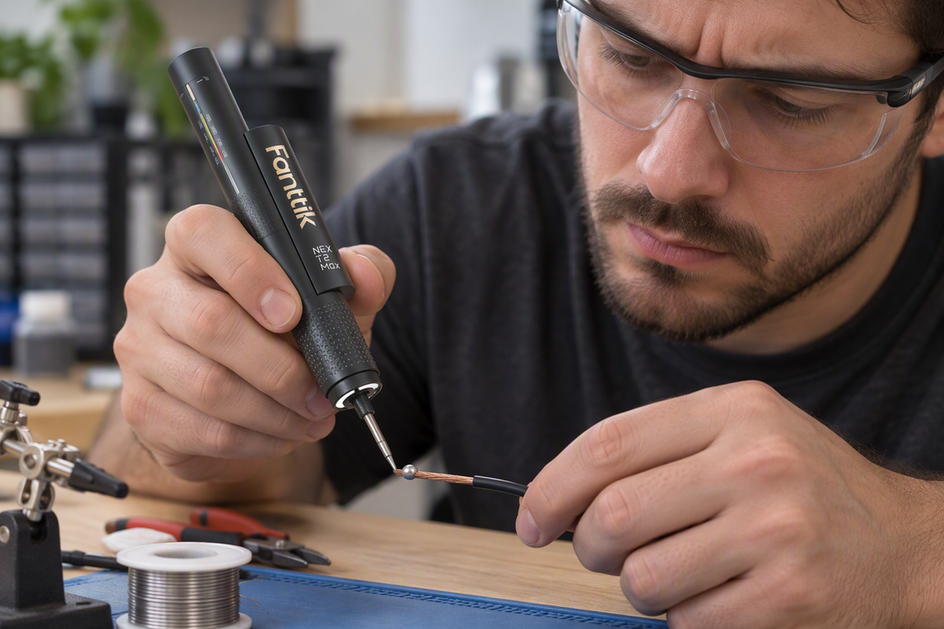
Once you have identified moisture as the issue, you must move toward proactive prevention. Simply "wiping it down" is insufficient for protecting the sensitive electronics found in modern gear like the Fanttik E2 MAX Precision Electric Screwdriver.
1. The Conformal Coating Catch-22
In our repair facility, we see many "ruggedized" boards that use conformal coating—a thin polymeric film applied to circuit boards to protect against moisture. While effective, it can be a double-edged sword. If the coating is applied over existing contaminants or has microscopic "pinholes," it can actually trap moisture against the board. This leads to concentrated, hidden corrosion that is far more difficult to repair than uniform surface oxidation.
2. Managing Desiccant Saturation
Many users throw a single silica packet into their tool case and assume they are protected for life. However, desiccants have a finite capacity. Once saturated, they can actually hold moisture against your tools, turning your storage case into a "corrosion chamber." We recommend using desiccants with color-changing indicators and "recharging" them in a low-temp oven according to the manufacturer's instructions.
3. Connector Material Selection
Not all "sealed" connectors are created equal. While marketing often highlights the rubber gasket on a plug, the real battle happens at the contact interface. For high-humidity zones, we prefer components that utilize gold-plated contacts for low-voltage signals. Gold does not oxidize, ensuring that even if a small amount of moisture enters the housing, the electrical path remains stable. Silver or tin-plated contacts, while cheaper, are prone to "fretting corrosion" in damp environments, which leads to the erratic power cycles we are trying to avoid.

Compliance and Engineering Trust
Building reliable gear for high-liability environments (like poolside or marine use) requires more than just a sturdy case. It requires a commitment to what we call "Trust Architecture."
As detailed in our whitepaper, The 2026 Modern Essential Gear Industry Report: Engineering Trust in a Cordless World, true reliability is a function of "credibility math." This involves designing products with explicit safety margins and ensuring they meet global safety standards. For instance, the EU General Product Safety Regulation (EU) 2023/988 mandates strict traceability and safety for consumer electronics, ensuring that if a moisture-related failure does occur, it fails safely without risking fire or injury.
When we design tools like the Fanttik X9 Ace Bike Pump, we don't just look at the PSI; we look at the thermal management and the sealing integrity required for "self-reliant mobility."
Practical Steps for Homeowners and Pros
If you live in a high-humidity zone, your maintenance routine must evolve. Based on our field data and repair patterns, here is a checklist for equipment longevity:
- Avoid "Cold-to-Hot" Shocks: If possible, store your portable tools in the same environment where they will be used. This minimizes the dew point risk.
- Post-Use Inspection: After using an inflator near a pool or in a damp garage, wipe it down and let it sit in a dry, ventilated area before placing it in a sealed case.
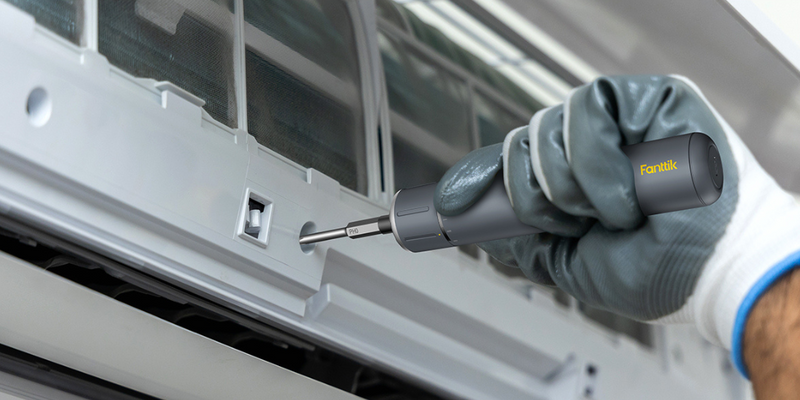
- Use Precision Tools for Inspection: If you suspect internal moisture, use a tool like the Fanttik E1 MAX Precision Electric Screwdriver to carefully open the battery or port covers (if user-serviceable) to allow for air circulation.
- Monitor Your Storage: Use a cheap hygrometer in your tool cabinet. If the RH consistently stays above 60%, consider an active dehumidifier.
Methodology Note: These recommendations are derived from common patterns observed in customer support and warranty handling, rather than a controlled lab study. Individual results may vary based on the specific IP rating and age of your device.
Summary of Diagnostic Steps
To recap, if your portable power equipment is acting up in a damp environment, follow this logical flow:
- Confirm the Symptom: Is the cycling erratic or phantom (turning on/off without input)?
- Check for Condensation: Does the screen look foggy? Are there water droplets near the charging port?
- Perform the Silica Test: Use the 48-hour desiccant bag method.
- Evaluate the Environment: Check the ambient dew point. Is your tool "sweating"?
- Clean the Contacts: Use a dedicated electronic contact cleaner on any exposed ports or battery terminals. You can find more on this in our guide on Cleaning Outdoor Appliance Terminals.
By understanding the physics of moisture ingress and the limitations of standard IP ratings, you can protect your investment and ensure your gear is ready when you need it most. Reliability in high-humidity zones isn't a matter of luck; it's a result of methodical maintenance and choosing gear engineered for the real world.
Disclaimer: This article is for informational purposes only. Working with electrical components and batteries involves inherent risks. Always consult your product manual and follow all safety warnings. If a device shows signs of battery swelling or extreme heat, stop use immediately and contact the manufacturer.
Sources
- EU General Product Safety Regulation (EU) 2023/988
- IEC 60529: Degrees of protection provided by enclosures (IP Code)
- NIST AI Risk Management Framework (for governance principles)
- The 2026 Modern Essential Gear Industry Report

How We Modeled This
Our insights into moisture ingress and thermal pumping are based on a deterministic scenario model of typical portable electronics.
| Parameter | Value/Range | Unit | Rationale |
|---|---|---|---|
| Enclosure Internal Volume | 150 - 500 | cm³ | Typical portable tool size |
| Max Operating Temp | 55 - 65 | °C | Internal component heat |
| Ambient Humidity | 75 - 90 | % RH | High-humidity zone baseline |
| Cool-down Duration | 30 - 60 | Minutes | Standard thermal dissipation |
| Seal Integrity Assumption | 98% | Efficiency | Accounting for microscopic vents |
Boundary Conditions: This model assumes standard atmospheric pressure and does not account for direct submersion or chemical exposure.
Continue reading
 Renewing Degraded Rubber Gaskets to Restore Waterproofing
Covers material science, compression rules, and proper tool use for sealing.
Renewing Degraded Rubber Gaskets to Restore Waterproofing
Covers material science, compression rules, and proper tool use for sealing.
 Water Damage Indicators: How Brands Verify IP Breaches
Covers Liquid Contact Indicators, humidity failures, and forensic investigation methods based on IEC 60529 standards.
Water Damage Indicators: How Brands Verify IP Breaches
Covers Liquid Contact Indicators, humidity failures, and forensic investigation methods based on IEC 60529 standards.
Leave a comment
This site is protected by hCaptcha and the hCaptcha Privacy Policy and Terms of Service apply.