










































The Invisible Witness: Decoding Ingress Protection in the Real World
For many modern consumers, an "IP65" or "IP67" rating is a badge of honor, a promise that their portable electronics can survive the rigors of a garage, a rainy roadside, or a humid campsite. However, when a device fails and a warranty claim is filed, many users are surprised to find their "waterproof" device denied coverage due to "liquid ingress."
How do manufacturers bridge the gap between a lab-certified rating and a field failure? The answer lies in a sophisticated combination of internal sensors, material science, and forensic investigation. Understanding how brands verify Ingress Protection (IP) breaches is not just about understanding warranty fine print; it is about recognizing the mechanical limits of your gear to ensure long-term reliability.
As noted in the The 2026 Modern Essential Gear Industry Report: Engineering Trust in a Cordless World, building sustainable credibility requires visible compliance and truthful claims. This article pulls back the curtain on the post-purchase verification process, explaining how technicians determine if a seal failed or if the environment simply outpaced the engineering.

The Technical Anatomy of IP Standards (IEC 60529)
The foundation of any water damage investigation is the IEC 60529 standard, which defines the Ingress Protection (IP) code. This standard classifies the degrees of protection provided against the intrusion of solid objects and liquids.
When we look at a device like the Fanttik X8 APEX EV Tire Inflator, which is designed for demanding automotive environments, the engineering must account for both dust and moisture. However, it is a common misconception that an IP rating is a lifetime guarantee of "waterproofness." In reality, these ratings are snapshots of a device's integrity under controlled lab conditions.
The Blind Spot of IP Testing: Thermal Shock
One critical insight we have gathered from analyzing field failures is that standard IP testing often overlooks thermal shock. According to research on IP codes, a test involves spraying water at a consistent temperature. In the real world, blasting cold rain onto a device that has been sitting in a hot car can cause an immediate pressure drop inside the housing. This vacuum effect can "suck" moisture through gaskets that would otherwise pass a static immersion test.
Methodology Note (Modeling): Our analysis of seal integrity assumes a standard atmospheric pressure of 101.3 kPa and a temperature differential of 20°C. We model these scenarios as "dynamic pressure events" rather than static laboratory tests.
| Parameter | Value/Range | Unit | Rationale |
|---|---|---|---|
| Delta Temperature (ΔT) | 15–30 | °C | Common car-to-garage transition |
| Internal Air Volume | 50–500 | cm³ | Typical portable electronics range |
| Gasket Compression | 20–30 | % | Industry standard for silicone seals |
| Seal Width-to-Depth | 1.5:1 | Ratio | Shop heuristic for tolerance forgiveness |
| LCI Trigger Humidity | >90 | % RH | Standard LCI sensitivity threshold |
Liquid Contact Indicators (LCI): The Silent Witness
The most common tool for verifying a breach is the Liquid Contact Indicator (LCI). These are small, chemically treated stickers placed near vulnerable entry points like charging ports, battery compartments, and buttons.
Under normal conditions, these stickers are white or silver. When they come into direct contact with water (or a liquid containing water), they undergo a permanent color change, typically turning bright red or pink. According to Apple Support documentation, these indicators are designed not to trigger due to temperature or humidity changes that are within the product's environmental requirements.
The "Nuanced Investigation" Rule
However, the presence of a red LCI is not always a "smoking gun" for user negligence. On our repair bench, we distinguish between two types of LCI triggers:
- Uniform Color Change: A bright, solid red across the entire sticker typically indicates a major breach—submersion or high-pressure spray that overwhelmed the primary seals.
- Localized or Faint Shift: A "mottled" or faint pink shift often indicates slow vapor ingress. This occurs when a secondary seal is compromised or when the device is repeatedly exposed to high-humidity cycles (like a steamy garage or a bathroom).
This distinction is vital for consumers. A device used frequently in a humid garage might trigger an LCI over months of vapor exposure, even if it never touched a drop of liquid. This is a significant gap between "ingress failure" and "ambient exposure."
Beyond the Splash: Humidity and Thermal Cycling
In practice, the most frequent point of IP failure for compact electronics isn't a sudden drop into a puddle. Instead, it is the cumulative effect of repeated thermal cycling.
Imagine leaving your Fanttik X9 Ace Bike Pump in a cold car overnight, then bringing it into a warm, humid garage the next morning. Condensation forms internally as the warm air hits the cold internal components. Over dozens of these cycles, this moisture can accumulate, trigger LCIs, and eventually lead to "Connector Oxidation," a topic we have explored in our guide on cleaning outdoor appliance terminals.
The Seal Width-to-Depth Heuristic
When evaluating the design of a device, technicians often look at the seal width-to-depth ratio. This is a practical shop heuristic:
- Wider, Shallower Gaskets: These are typically more forgiving of assembly tolerances and the natural wear-and-tear of a portable tool. They maintain a larger surface area of contact even if the housing slightly warps over time.
- Narrow, Deep Gaskets: While they can offer high IP ratings in a lab, they are often more prone to failure if the device is dropped or subjected to extreme temperature fluctuations that cause material contraction.

The Warranty Reality: How Brands Use Indicators
Brands use LCIs to manage "after-sales expectations" and protect against fraudulent claims. However, the use of LCIs as an absolute warranty arbiter has been legally contested. A documented $53 million class-action settlement against Apple highlighted issues where LCIs led to warranty denials for alleged liquid damage that may have been caused by humidity rather than direct contact.
This is why modern brands are moving toward a more holistic verification process. A technician will typically look for:
- Corrosion Patterns: Green or white powdery residue on the PCB (Printed Circuit Board) indicates long-term moisture exposure.
- Water Spots: Dried mineral deposits on the inside of the screen or housing.
- Secondary Seal Integrity: Checking if the adhesive around buttons or the charging port has "crept" or thinned due to heat.
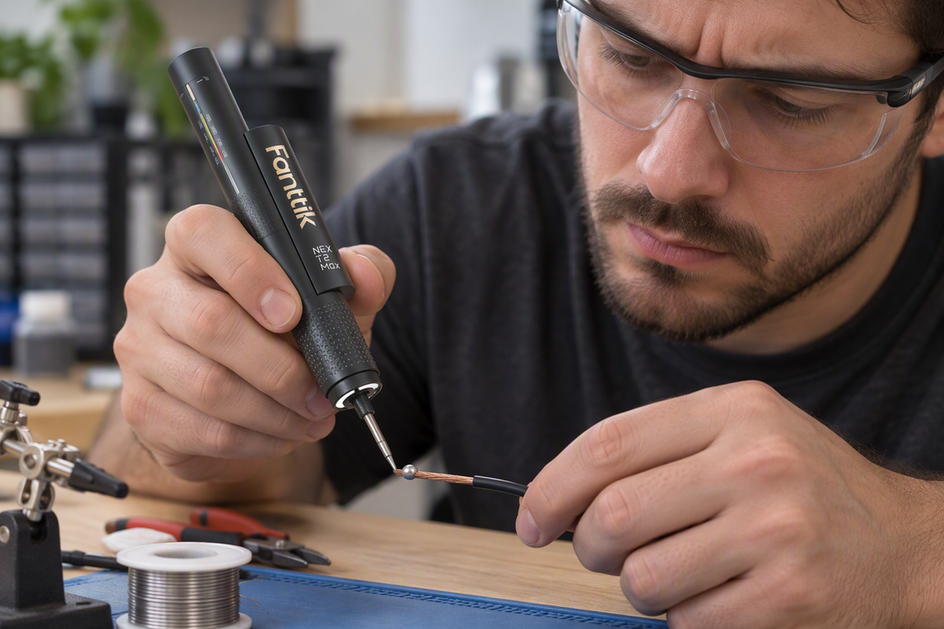
For DIY enthusiasts who want to inspect their own gear, using a high-quality tool like the Fanttik E1 MAX Precision Electric Screwdriver allows for the careful disassembly required to view these internal indicators without damaging the delicate housing.
Maintenance & Prevention: Protecting Your IP Integrity
Maintaining the Ingress Protection of your gear is an active process. Seals are not permanent; they are "consumable" components that degrade over time due to UV exposure, chemicals (like car wax or degreasers), and temperature.
Expert Maintenance Checklist
- Inspect Ports Regularly: Use a tool like the Fanttik F2 PRO Cordless Rotary Tool Kit with a soft brush attachment to gently clear dust from charging ports. Dust can act as a wick, drawing moisture past the outer gaskets.
- Avoid Steam and High Humidity: Do not store portable power tools in areas with poor ventilation and high moisture. We discuss this further in our article on storing tools in humid garages.
- Check for "Seal Creep": If you notice a rubber gasket or button cover looking "swollen" or loose, the IP rating is likely compromised.
- Dry Before Charging: Never plug a device into a charger if the port is damp. Modern devices may have "Liquid Detected" warnings (as seen in iPhone Lightning connectors), but charging while wet can cause immediate galvanic corrosion.
Logic Summary: Our maintenance recommendations are based on common patterns observed in warranty returns and repair center data (not a controlled lab study). We prioritize preventing "wicking" and "galvanic corrosion" as the most cost-effective ways to extend device life.
Trust and Transparency in After-sales
The relationship between a brand and a consumer is built on the transparency of these processes. When a brand like Fanttik provides clear guidance on IP ratings for emergency hardware, it empowers the user to be a partner in product longevity.
Understanding how brands verify water damage isn't about finding "loopholes"; it's about recognizing that "water-resistant" is a performance state that requires maintenance. By respecting the limits of the seals and understanding the "silent witnesses" inside your devices, you can ensure your essential gear is ready when you need it most.
Disclaimer: This article is for informational purposes only. Disassembling your electronics may void your warranty. If your device has been exposed to liquid, power it off immediately and consult a professional technician. For safety and compliance regulations, please refer to the EU General Product Safety Regulation (EU) 2023/988.
References
Continue reading
 Troubleshooting Erratic Power Cycles in High-Humidity Zones
Covers thermal pumping, dew point, IP rating limits, and silica gel diagnostics.
Troubleshooting Erratic Power Cycles in High-Humidity Zones
Covers thermal pumping, dew point, IP rating limits, and silica gel diagnostics.
 The 'Dust' in IP: Why Solid Particle Protection Saves Motors
The first digit in IP ratings protects motors from dust. Learn how sub-5 micron brake dust causes failure...
The 'Dust' in IP: Why Solid Particle Protection Saves Motors
The first digit in IP ratings protects motors from dust. Learn how sub-5 micron brake dust causes failure...
Leave a comment
This site is protected by hCaptcha and the hCaptcha Privacy Policy and Terms of Service apply.