

































When to Renew Your Garage Wiring for Prosumer-Grade Power Tools
The transition from a casual hobbyist to a dedicated prosumer is often marked by the arrival of high-performance tools. You might start with a precision electric screwdriver for electronics and eventually find your workbench populated with high-draw rotary tools, soldering stations, and rapid battery chargers. However, while your tool collection evolves, the infrastructure hidden behind your garage walls often remains stuck in the past.
In many older homes, the garage was wired as an afterthought—typically a single 15-amp circuit shared with the outdoor lights and the refrigerator in the mudroom. When you introduce prosumer-grade gear, this "legacy" wiring becomes a bottleneck that compromises both tool performance and household safety. Renewing your garage wiring is not just about convenience; it is about engineering a "Trust Architecture" for your workspace, as highlighted in The 2026 Modern Essential Gear Industry Report: Engineering Trust in a Cordless World.
This guide examines the technical indicators that your current electrical system is overmatched and provides a methodical framework for upgrading to a professional-standard power distribution system.

Identifying the Signs of Electrical Fatigue
Before you tear open the drywall, you must recognize the symptoms of a system under stress. Electrical fatigue is rarely silent; it manifests through specific mechanical and visual cues that we often observe in high-frequency workshop environments.
1. The Nuisance Trip Pattern
If your circuit breaker trips every time your air compressor kicks in while you are using a rotary tool, your system is at its limit. While a breaker is designed to protect the wire from overheating, frequent tripping indicates that your "inrush current"—the surge of power required to start a motor—is exceeding the breaker's rating.
2. Visual "Brownouts" (Flickering Lights)
Do the LED shop lights dim for a split second when you engage a miter saw? This is a sign of voltage sag. It means the tool is pulling so much current that the voltage across the rest of the circuit drops. Over time, this instability can damage the sensitive electronics found in modern cordless tool chargers and precision instruments.
3. Heat Generation at the Outlet
Based on patterns we see in workshop audits, a common but dangerous sign is an outlet that feels warm to the touch after use. This often stems from "back-stab" connections—where wires are pushed into spring-loaded holes rather than secured under screws. These connections have high resistance, which creates heat under the heavy loads required by prosumer tools.
Logic Summary: These observations are based on common electrical troubleshooting patterns in residential workshops and align with general safety principles found in the EU General Product Safety Regulation (EU) 2023/988. They are heuristics for identifying risk, not a substitute for a professional inspection.
The Cumulative Load of the "Cordless Revolution"
There is a common misconception that switching to cordless tools reduces the load on your garage wiring. In reality, the "charging station" often becomes the most significant continuous load in a modern workshop.
A single rapid charger for a high-capacity battery can draw between 4 and 6 amps. If you are a prosumer managing a fleet of batteries, charging four batteries simultaneously can pull 16–24 amps. On a standard 15-amp residential circuit, this will trip the breaker mid-project, potentially leaving you with dead batteries when you need them most.
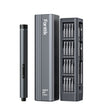
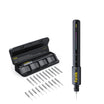
To manage this, we recommend dedicating a 20-amp circuit solely for battery charging and light-duty precision tools. This ensures that your Fanttik E1 MAX Precision Electric Screwdriver and other essential gear are always ready without competing for power with heavy machinery.
Modeling the Workshop Load
To understand your needs, we have modeled a typical prosumer "Heavy Use" scenario. This model assumes simultaneous operation of charging and active tool use.
| Tool Category | Typical Draw (Amps) | Duty Cycle | Rationale |
|---|---|---|---|
| Rapid Battery Charger (x2) | 8–12A | Continuous | Based on fast-charge specs |
| Dust Collector | 8–10A | Intermittent | High inrush on startup |
| Fanttik T1 Max Soldering Iron Kit | 1–2A | Variable | Precision heating element |
| LED Shop Lighting | 1–3A | Continuous | Total fixture wattage |
| Total Potential Load | 18–27A | N/A | Exceeds standard 15A/20A circuits |
Method & Assumptions: This is a deterministic scenario model for a 2-car garage workshop. It assumes the 80% rule (not loading a circuit beyond 80% of its rated capacity for continuous loads) as per common electrical engineering heuristics.
Voltage Drop: The Silent Tool Killer
One of the most overlooked factors in garage wiring is the length of the wire run. Most garages are located at the far end of the house relative to the main electrical panel. As electricity travels through a wire, it encounters resistance, which causes the voltage to drop.
Experienced workshop builders have found that voltage drop over runs exceeding 50 feet causes cordless tool chargers to overheat and fail prematurely. While the National Institute of Standards and Technology (NIST) Handbook 44 focuses on weights and measures, the principle of accuracy and stability in power delivery is universal.
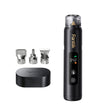
For any run over 50 feet, we recommend using 12-gauge wire instead of the standard 14-gauge. The thicker copper in 12-gauge wire has lower resistance, which maintains the 120V signal even under heavy load. If your run exceeds 100 feet, upgrading to 10-gauge wire for a 20-amp circuit is a proactive step to ensure your Fanttik F2 PRO Cordless Rotary Tool Kit receives the stable voltage required for its high-speed motor.

Hardware Standards: Beyond the Big Box Store
When you renew your wiring, the components you choose are just as important as the wire gauge. For a prosumer-grade workshop, "residential grade" outlets are often insufficient.
Industrial-Grade Receptacles
We suggest using industrial-grade or "spec-grade" receptacles. These are built with heavy-duty brass power contacts and, crucially, screw terminals. Unlike the "back-stab" outlets found in mass-market housing, screw terminals provide a high-torque, heat-resistant connection that can withstand the constant plug/unplug cycles of a busy shop.
The GFCI Dilemma
The National Electrical Code (NEC) generally requires GFCI (Ground Fault Circuit Interrupter) protection for all garage outlets. However, prosumer power tools with large motors can cause "nuisance tripping" due to high inrush currents. To mitigate this, look for "equipment-rated" GFCIs or dedicated circuits for stationary tools (like a large cabinet saw), which may fall under specific NEC exceptions depending on your local jurisdiction.
Precision Fastening for Electrical Safety
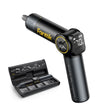
When installing these high-grade outlets, precision matters. Using a tool like the Fanttik S2 Pro Cordless Electric Screwdriver allows you to apply consistent torque to outlet mounting screws, ensuring that the receptacle is seated firmly in the box. A loose outlet can move when you plug in a tool, eventually fatiguing the wire connections behind it.
Compliance and Global Standards
As a prosumer, your workspace should reflect the standards of the tools you use. Global manufacturing relies on rigorous safety marks to ensure reliability. For example, when evaluating the safety of your workshop's electrical devices, you should look for certifications aligned with IEC Standards for electrical safety.
Furthermore, if you store a significant number of lithium-ion batteries in your garage, you should be aware of the storage and transport guidelines provided by the IATA Lithium Battery Guidance. While these are primarily for air transport, the thermal management principles they outline—such as maintaining a 30% State of Charge (SoC) for long-term storage—are vital for preventing garage fires in battery-dense environments.
The Subpanel Solution: When a Single Circuit Isn't Enough
If your load calculation shows that you are regularly exceeding 20 amps, the most professional solution is to install a subpanel in the garage.
A subpanel acts as a localized distribution hub. Instead of running multiple individual wires back to the main house panel, you run one large "feeder" cable to the garage subpanel. This allows you to:
- Create dedicated circuits for lighting, charging, and heavy machinery.
- Easily shut off power to the entire shop for maintenance.
- Minimize voltage drop by keeping the branch circuit runs short.
Logic Note: Installing a subpanel is a significant project that often requires a permit. We recommend consulting a licensed electrician to ensure your main panel has the available capacity. If your main service is already at its limit, adding a garage subpanel could trigger a costly utility upgrade.
Summary Checklist for Electrical Renewal
Renewing your garage wiring is a strategic investment in your productivity and safety. By moving away from legacy residential wiring and toward a prosumer-standard infrastructure, you ensure that your tools perform at their peak and your home remains protected.
- Audit the Load: Calculate the total amperage of your chargers and tools running simultaneously.
- Upsize the Wire: Use 12-gauge wire for all 20-amp circuits, especially for runs over 50 feet.
- Upgrade the Outlets: Replace residential "back-stab" outlets with industrial-grade screw-terminal receptacles.
- Dedicate the Charging Station: Create a specific circuit for battery chargers to prevent mid-project trips.
- Verify Compliance: Ensure all work meets local codes and incorporates GFCI protection where required.
Building a workshop is about more than just the tools on the bench; it is about the power that brings them to life. By prioritizing technical accuracy and safety in your electrical infrastructure, you build a foundation of trust that allows you to focus on the craft, not the circuit breaker.
Disclaimer: This article is for informational purposes only and does not constitute professional electrical or legal advice. Always consult with a licensed electrician and adhere to local building codes before performing electrical work.
References
Continue reading
 Grounding Logic: Protecting Precision Tools from Power Surges
Covers UL 1449 surge protectors, bootleg ground dangers, voltage sag impacts, and NEC/EU compliance for modern workshops.
Grounding Logic: Protecting Precision Tools from Power Surges
Covers UL 1449 surge protectors, bootleg ground dangers, voltage sag impacts, and NEC/EU compliance for modern workshops.
 Safe Power Protocols for Charging High-Discharge Shop Batteries
A safety framework for charging high-discharge workshop batteries. Learn cooling phases, circuit load rules, and cleaning protocols for...
Safe Power Protocols for Charging High-Discharge Shop Batteries
A safety framework for charging high-discharge workshop batteries. Learn cooling phases, circuit load rules, and cleaning protocols for...



Leave a comment
This site is protected by hCaptcha and the hCaptcha Privacy Policy and Terms of Service apply.