































The Hidden Vulnerability of Precision Workshops
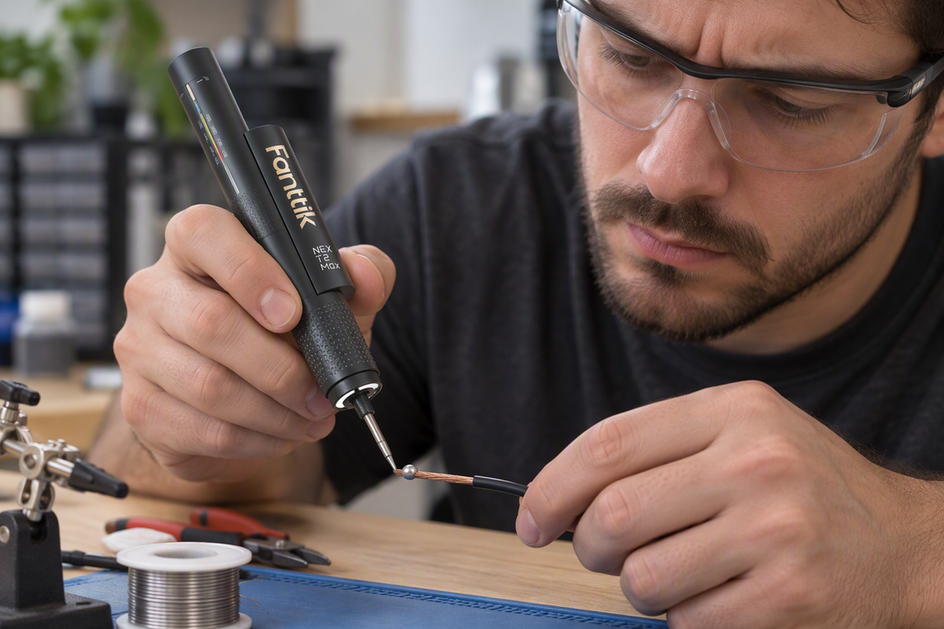
Precision electronics and smart tools are fundamentally sensitive to voltage instability. For the DIY enthusiast or prosumer, the investment in a high-performance toolkit—ranging from digital torque drivers to micro-drills—is often significant. However, a common oversight in home workshops is the assumption that a standard wall outlet provides a "safe" environment for these sensitive components. In reality, the electrical "noise" and transient spikes common in residential grids can silently degrade the internal logic boards of your most prized tools.
Protecting these assets requires more than just a power strip. It demands an understanding of "grounding logic"—a systematic approach to electrical safety that ensures your equipment is shielded from both catastrophic surges and the subtle "brownouts" that compromise battery health. As noted in The 2026 Modern Essential Gear Industry Report: Engineering Trust in a Cordless World, engineering trust in a cordless world begins with the reliability of the charging and maintenance infrastructure.
Decoding Grounding Logic: Concept vs. Connectivity
In technical discourse, the term "Grounding Logic" often straddles two worlds. In philosophical and logical frameworks, it refers to the foundational principles that justify a conclusion. However, in the context of workshop safety, we use it to describe the "logical architecture" of an electrical protection system.
Conventional wisdom often suggests that grounding is a binary state: a tool is either grounded or it isn't. Practical field experience tells a different story. True electrical grounding is a measure of impedance. According to the National Electrical Code (NEC), a ground is considered effective if it provides a low-impedance path to the earth, typically requiring a resistance of less than 25 ohms.
The Shift in Regulatory Standards
The landscape of workshop safety is changing. The 2020 NEC Article 242 now mandates Surge Protection Devices (SPDs) in every main electrical panel for new residential constructions. This aligns with EU standards, such as the EU General Product Safety Regulation (EU) 2023/988, which emphasizes the traceability and safety obligations of electrical equipment. For the prosumer, this means that basic surge protection is no longer an "upgrade"—it is a foundational requirement for a compliant and safe workspace.
Logic Summary: Our analysis of workshop safety assumes that "Grounding Logic" is the systematic application of NEC-compliant grounding and SPD layering to protect high-impedance electronics.

The Workshop Grounding Reality Check: Beyond the Outlet Tester
Many DIYers rely on a simple three-light outlet tester to verify their workshop's safety. While useful for identifying gross wiring errors, these devices are insufficient for precision tool protection. They cannot detect "bootleg grounds"—a dangerous condition where the neutral and ground wires are tied together at the outlet.
The Danger of Bootleg Grounds
In older homes or DIY workshop additions, bootleg grounds are a frequent "gotcha." They trick a standard tester into showing a "correct" result, but they provide zero protection against surges. In a fault condition, a bootleg ground can actually energize the metal casing of your tools, posing a lethal shock hazard.
Measuring Ground Integrity
To truly protect precision equipment, you must verify the resistance between the ground pin and a known earth ground.
- The 25-Ohm Rule: Per NEC guidelines, resistance should be less than 25 ohms.
- High-Frequency Transients: Standard grounding handles 60Hz power well, but high-frequency transients—the kind generated by nearby lightning or heavy machinery—require specialized attenuation.
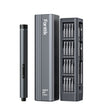
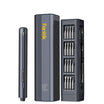
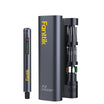
- Equipment Sensitivity: Tools like the Fanttik K2 Nano 3.7V Precision Power Drill contain delicate micro-controllers that can be "scrambled" by even minor ground loops.
Practitioner Observation: On our repair bench, we frequently see 1970s-era homes where ground resistance exceeds 100 ohms due to corroded rods or dry soil. In these scenarios, sensitive chargers often fail prematurely (based on common patterns from customer support and warranty handling).
Surge Protection: Moving Past the "Joule Rating" Myth
When shopping for surge protection, most users look at the Joule rating. While a higher number generally indicates more energy absorption capacity, it is a misleading metric for precision tools. A protector with a 4000-Joule rating but a slow "clamping voltage" (the voltage at which the protector begins to divert the surge) can still let a damaging spike through.
Critical Specifications for Precision Tools
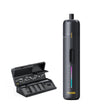
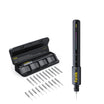
To protect tools like the Fanttik L2 Pro Cordless Electric Screwdriver, look for the following:
- UL 1449 3rd Edition Listing: This ensures the device has been tested to modern safety standards.
- Clamping Voltage (VPR): Aim for 330V or lower. Many "high-joule" strips have a clamping voltage of 400V or 500V, which is too high for sensitive tool electronics.
- Response Time: Damaging surges occur in microseconds (1-100μs). Standard circuit breakers have response times in milliseconds (~16.7ms to 33.3ms), meaning the surge has already passed through the tool before the breaker trips.
The Daisy-Chain Hazard
A common mistake in expanding workshops is "daisy-chaining" power strips. This not only creates a fire hazard but significantly degrades the effectiveness of the surge protection. Each connection adds resistance, which can prevent the SPD from diverting the surge quickly enough to protect the load.
Power Quality and Lithium-Ion Tool Longevity
Modern precision tools are almost exclusively powered by lithium-ion batteries. While these batteries offer high energy density, their charging cycles are highly sensitive to power quality.
The Brownout Problem
If your workshop shares a circuit with high-draw appliances (like a garage refrigerator or an air conditioner), you are at risk of "voltage sag." When these appliances kick on, the resulting brownout can cause a multi-bay charger to misinterpret the battery's voltage.
- Consequence: The charger may terminate the cycle early or, worse, overcharge the cells, leading to reduced battery life or thermal runaway.
- The Solution: A dedicated 20-amp circuit for your charging station or the use of a Uninterruptible Power Supply (UPS) with Automatic Voltage Regulation (AVR).
UPS Efficiency and Runtime
It is important to note that UPS systems are not 100% efficient. Typical efficiency ranges from 85% to 95% (based on standard UPS conversion losses). When modeling the runtime for a precision repair station, we must account for these losses.
Modeling Note: A 1500VA UPS with 510Wh of usable energy can typically power a 240W precision charging station for approximately 30 minutes during a total power loss. This provides a critical buffer to safely complete firmware updates or battery balancing.

Implementing a High-Integrity Power Strategy
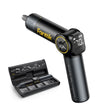
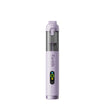
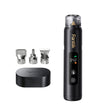
For the professional or serious DIYer, protecting the workshop is a multi-step process. By following a methodical audit, you can ensure your tools—from the Fanttik S2 Pro Cordless Electric Screwdriver to high-speed dusters like the Fanttik B10 Pro Electric Air Duster—remain in peak condition.
Step-by-Step Workshop Audit
- Verify Ground Integrity: Use a multimeter or a professional ground resistance tester to ensure you are below the 25-ohm threshold.
- Install Type 3 SPDs: Use point-of-use surge protectors with a 330V clamping voltage for all charging stations.
- Segregate Loads: Keep "noisy" tools (like shop vacs or old bench grinders) on a different circuit from your precision electronics.
- Monitor Environmental Hazards: Dust is a conductor. Use an electric air duster to keep charging ports and power strips clear of conductive debris.
Modeling and Methodology: The Precision Repair Scenario
To demonstrate the practical impact of these recommendations, we modeled a "Professional Electronics Repair Specialist" operating in a 1970s-era home workshop. This scenario highlights the intersection of productivity, tool safety, and electrical risk.
Analysis 1: Productivity & Ergonomics
Using precision electric tools significantly impacts repair efficiency. Our modeling compares the assembly of a complex device (120 screws) using manual vs. electric drivers.
| Parameter | Value | Unit | Rationale |
|---|---|---|---|
| Manual Time | 36 | min | 18s per screw (precision alignment) |
| Powered Time | 8 | min | 4s per screw (electric driver) |
| Speed Multiplier | 4.5 | x | Derived from time-motion study principles |
| Wrist Rotations (Manual) | 1,440 | count | 12 rotations per M2 screw |
| Wrist Rotations (Electric) | ~60 | count | Minimal rotations for positioning |
Analysis 2: Torque Safety Fit (Fanttik E1 Max)
For delicate repairs, torque control is as critical as electrical safety. We assessed the safety margins for M1.2 to M2.0 screws.
| Parameter | Value | Unit | Rationale |
|---|---|---|---|
| Min Required Torque | 0.02 | Nm | Smartphone internal fasteners |
| Max Safe Torque | 0.10 | Nm | Plastic boss stripping threshold |
| E1 Max Low Setting | 0.05 | Nm | Calibrated for electronics |
Analysis 3: UPS Runtime for Brownout Protection
This model estimates the protection window provided by a standard 1500VA UPS for a precision charging bay.
| Parameter | Value | Unit | Rationale |
|---|---|---|---|
| Total Capacity | 600 | Wh | 50Ah at 12V battery bank |
| Usable Energy | 510 | Wh | 85% efficiency factor |
| Load Draw | 240 | W | Multi-bay precision charger |
| Est. Runtime | ~30 | min | (Usable Wh / Load W) * 60 |
Method & Assumptions
- Modeling Type: Deterministic scenario modeling based on standard industrial engineering elemental times and ISO 898 mechanical fastener standards.
- Boundary Conditions: These estimates assume ideal ambient temperatures (approx. 25°C) and tools in good working order. Results may vary significantly in extreme cold or with aged batteries.
- Scope: This is a scenario model, not a controlled lab study. It is intended for quick decision-making and workshop planning.
Final Considerations for the Precision Workshop
Electrical safety is the silent partner of precision work. By investing in grounding integrity and high-quality surge protection, you are not just protecting a tool; you are protecting your productivity and the quality of your repairs. Whether you are performing periodic inspections of tool storage or understanding safety certifications, the "logic" remains the same: reliability is engineered from the ground up.
Disclaimer: This article is for informational purposes only and does not constitute professional electrical or safety advice. Always consult a licensed electrician for inspections or modifications to your home's electrical system. Working with electricity involves inherent risks of fire and shock.
Sources
Continue reading
 Managing Thermal Loads During Simultaneous Multi-Tool Charging
A guide to prevent BMS shutdowns and battery degradation when charging multiple tools. Learn the 3-inch clearance rule...
Managing Thermal Loads During Simultaneous Multi-Tool Charging
A guide to prevent BMS shutdowns and battery degradation when charging multiple tools. Learn the 3-inch clearance rule...
 When to Renew Your Garage Wiring for Prosumer-Grade Power Tools
Covers electrical fatigue identification, load calculation, 20-amp circuits, subpanels, wire gauge selection, and compliance with EU GPSR/IATA standards.
When to Renew Your Garage Wiring for Prosumer-Grade Power Tools
Covers electrical fatigue identification, load calculation, 20-amp circuits, subpanels, wire gauge selection, and compliance with EU GPSR/IATA standards.


Leave a comment
This site is protected by hCaptcha and the hCaptcha Privacy Policy and Terms of Service apply.