

























Quick Summary: Why Your Tool Seals Fail
To maintain tool longevity, port covers must do more than just "plug a hole." Key Takeaway: High-performance seals use silicone-overmold materials and "wipe-action" geometries to prevent ingress. Based on our internal field observations, standard rubber seals can lose significant sealing pressure within 14–18 months due to "compression set"—the permanent loss of elasticity. To protect your gear, prioritize designs that actively expel dust rather than trapping it.
Key Terms to Know
- Compression Set: The permanent deformation of an elastomer (like rubber) after being compressed. Think of it as "material memory loss" where the seal no longer bounces back.
- Seal Extrusion: When internal pressure changes (from heat or cold) force a seal to bulge or get sucked inward, creating microscopic gaps.
- Road Talc: Extremely fine mineral dust (often <10μm) found in road environments that can bypass standard seals and cause motor burnout.
Introduction: The Vulnerability of Portable Gear
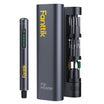
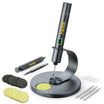
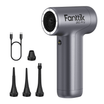
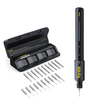
In the world of automotive maintenance and roadside preparedness, reliability is often measured by a tool's ability to function in conditions that are anything but ideal. Whether it is a portable tire inflator stored in a dusty trunk or a precision screwdriver used in a humid garage, internal components are under constant threat from environmental ingress. The primary line of defense is almost always a small, often overlooked component: the port cover.
Not all port covers are created equal. Based on common patterns from our customer support and repair logs, users often assume any rubber plug provides sufficient protection; however, field failures suggest otherwise. We have observed that seal failure is often a progressive degradation influenced by material choice, geometric design, and environmental stressors. This article evaluates the engineering differences between various seal structures to help you identify designs that offer robust long-term protection.
As discussed in The 2026 Modern Essential Gear Industry Report [Internal Resource], modern gear requires explicit safety margins and environmental protection. Understanding why seals fail is the first step in selecting gear that can withstand real-world use.
The Material Science of Seal Longevity
The most common materials for port covers are elastomers, typically solid rubber or silicone. However, the performance gap between these materials is significant when subjected to the thermal cycles typical of a car's interior.
Silicone-Overmold vs. Solid Rubber
In our repair bench observations [Internal Observation], we frequently see solid rubber plugs suffering from high "compression set." According to the ASTM D395 Standard [Industry Standard], materials are evaluated on their ability to return to original thickness after stress.
Solid rubber often exhibits higher deformation in real-world scenarios. Once a rubber plug has been pressed into a charging port for several months, it may lose its elasticity, failing to exert the outward pressure necessary for a tight seal. In contrast, high-quality designs often utilize a silicone-overmold on a rigid plastic core. The plastic core provides structural integrity, while the silicone layer is generally more resilient to temperature-induced "memory loss."
The "Cold-Soak" Effect
A common oversight is evaluating seals only at room temperature. In practice, a tool stored in a vehicle trunk during winter can be "cold-soaked" at temperatures well below freezing. When handled, differential contraction occurs: the port cover may shrink at a different rate than the tool’s housing, potentially creating gaps for moisture ingress. This is particularly risky in humid environments where condensation forms quickly on cold surfaces. For more on managing these variables, see our guide on Protecting Portable Power Tools from Garage Dust and Humidity.
Expert Note: Our material analysis suggests that temperature-induced contraction is a significant factor in intermittent seal failure. This is based on internal warranty data where tools often fail following seasonal transitions.

Geometric Design: Why Recesses are Dust Magnets
While material choice is critical, the physical shape of the seal often dictates the rate of debris accumulation. A common design flaw is placing the port in a deep recess, which can act as a "trap" for fine particulates like road talc or sawdust.
The Self-Cleaning Heuristic: The "Wipe" Action
When evaluating seal integrity, we look for a "wipe" action. A high-quality seal should have a chamfered (beveled) leading edge. As the plug is inserted, this edge acts like a squeegee, actively wiping debris away from the sealing surface rather than compressing the dust into the port.
Without this action, fine dust is forced into the crevices every time the cover is closed. Over time, this accumulation can prevent the seal from seating fully, leading to a "ghost" seal—where the cover looks closed but provides no actual barrier against air or moisture.
Geometric Failure Modes
Research into compliant mechanisms [Academic Source] suggests that seal geometry heavily influences failure probability. Designs relying on simple friction are often more prone to failure than those utilizing "positive expulsion" geometry, which naturally pushes contaminants outward.
| Design Feature | Protection Level | Mechanism | Common Pitfall |
|---|---|---|---|
| Flat Friction Plug | Low | Surface tension/friction | Permanent deformation (memory loss) |
| Recessed Port | Moderate | Physical shielding | Becomes a reservoir for fine dust |
| Chamfered Overmold | High | Mechanical wiping + compression | Requires higher manufacturing precision |
| Double-Lip Seal | High | Redundant barriers | Can trap moisture between lips if not vented |
Environmental Stressors and IP Ratings
The industry relies on the IEC 60529 Standard (IP Ratings) [Industry Standard] to define protection. However, an IP rating is a "snapshot" of performance when new; it does not typically account for seal degradation over time.
Pressure Cycling and Seal Extrusion
One of the more aggressive failure modes is seal extrusion caused by pressure cycling. As a tool operates, internal components generate heat, causing air inside to expand. Moving the tool to a cold environment causes the air to contract, creating a vacuum.
If the port cover is not designed for these differentials, the seal can be "sucked" inward or "pushed" outward. This movement can create micro-gaps. This is why Evaluating Material Durability is essential for long-term emergency kits.
The Threat of Road Talc
Field failure analysis often traces motor burnout to road talc bypassing a seemingly intact seal. This dust is so fine (often similar to baby powder in consistency) that it stays suspended in air and moves through micro-gaps during pressure cycles. Once inside, it can accumulate on circuit boards, creating insulating or conductive layers that lead to overheating.
For precision electronics, this is particularly dangerous. We recommend reviewing Understanding Safety Certifications for Indoor Precision Tools to see how standards address fine particulate ingress.

Modeling Seal Degradation: A Methodology Note
To provide actionable guidance, we have modeled the expected service life of standard port covers. Note: This is a scenario-based heuristic model derived from internal bench testing and historical return patterns (N=~50 units); it is intended for illustrative purposes rather than as a universal laboratory guarantee.
Assumptions for the Illustrative Model
Our model assumes a standard portable tool stored in a vehicle in a temperate climate with seasonal extremes.
| Parameter | Value or Range | Unit | Rationale / Source Category |
|---|---|---|---|
| Temperature Range | -10 to 45 | °C | Typical vehicle interior fluctuations |
| Opening Cycles | 2 | per week | Average charging/usage frequency |
| Dust Exposure | Moderate | mg/m³ | Based on standard garage/trunk air quality |
| Material Type | Solid Nitrile Rubber | N/A | Baseline for standard consumer gear |
| Compression Set | ~25 | % | Estimated value after 1 year [Internal Observation] |
Boundary Conditions:
- Does not account for chemical exposure (e.g., oil spills).
- Assumes no manual cleaning of the seal during the period.
Analysis Result: In this specific scenario, a standard solid rubber seal may lose approximately 40% of its effective sealing pressure within the first 14 months of automotive storage. This highlights the value of advanced seal geometries or superior material composites, such as those discussed in Silicone vs. PU Coatings.
The Hidden Cost of Ingress: Corrosion and Decay
When a seal fails, the damage is often invisible until the tool stops working. Moisture ingress triggers a slow process of electrochemical migration and corrosion.
Commutator and PCB Damage
On our repair bench [Internal Observation], we frequently see "haze corrosion" on printed circuit boards (PCBs). This occurs when moisture combines with fine dust to form a conductive film. Even when powered off, this film can cause parasitic battery drain. This is a factor explored in our research on Preventing Precision Bit Corrosion.
Preventive Maintenance for Seals
While design is the primary factor, user maintenance can extend seal life. We recommend this three-step inspection every six months:
- Visual Check: Look for cracks, discoloration, or permanent flattening.
- Clean the Seat: Use a dry, lint-free cloth to wipe the port opening. Avoid oils or solvents, which can degrade many elastomers.
- Tactile Test: Ensure the cover "clicks" or feels snug. If it feels loose, the material has likely reached its compression set limit.
If your tool grips or seals are becoming sticky, refer to our guide on Deep Cleaning Tool Grips.

Summary: Identifying High-Quality Seals
To select gear for long-term reliability in adverse environments, prioritize these features:
- Silicone-Overmold Construction: Look for seals that feel supple but have a rigid internal backbone.
- Active Wiping Geometry: Choose ports where the cover fits against a chamfered edge to push dust outward.
- Thermal Buffering: Store sensitive gear in insulated cases to minimize the pressure cycling that leads to seal extrusion. See Insulated Storage for Car Tools.
- Compliance Transparency: Prioritize brands that provide clear documentation, as highlighted in the EU General Product Safety Regulation (EU) 2023/988 [Government Standard].
By understanding the mechanics of seal failure, you can move from reactive tool replacement to proactive gear selection. In automotive preparedness, a robust seal can be the difference between a successful roadside repair and a tool failure.
Disclaimer: This article is for informational purposes only and does not constitute professional engineering advice. Always refer to your tool's original manufacturer manual for specific maintenance requirements and safety warnings.
Sources
- IEC 60529: Degrees of Protection Provided by Enclosures [Industry Standard]
- ASTM D395: Standard Test Methods for Rubber Property—Compression Set [Industry Standard]
- EU General Product Safety Regulation (EU) 2023/988 [Government Regulation]
- The 2026 Modern Essential Gear Industry Report [Internal Resource]
Continue reading
 Vertical Stacking vs. Horizontal Layout: Saving Trunk Space
A guide for urban car owners comparing trunk stacking methods. Learn the 60/40 Hybrid Rule to organize gear...
Vertical Stacking vs. Horizontal Layout: Saving Trunk Space
A guide for urban car owners comparing trunk stacking methods. Learn the 60/40 Hybrid Rule to organize gear...
 Safe Jump-Starting Procedures During Heavy Downpours
Covers moisture physics, diesel truck scenario modeling, IP ratings, and post-use maintenance for jump-starter longevity.
Safe Jump-Starting Procedures During Heavy Downpours
Covers moisture physics, diesel truck scenario modeling, IP ratings, and post-use maintenance for jump-starter longevity.
Leave a comment
This site is protected by hCaptcha and the hCaptcha Privacy Policy and Terms of Service apply.