































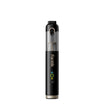










Yes, one cordless handheld vacuum can handle routine dry pickups at home and in your car. It needs tools that reach your tight spots, plus a runtime and dust cup that fit a normal cleaning session. It is a spot-cleaning tool, though, not a replacement for a full-size vacuum.
To choose, list the messes you actually clean in both places. Then match each one to an attachment, a runtime, and a bin size. A single headline number, such as peak suction, can't do that matching for you.

Can One Cordless Handheld Handle Both Home and Auto?
For everyday pickups, yes. Consumer Reports notes that handhelds work well for surface and spot cleaning, hard-to-reach spots, and cleaning out a car. It also notes they lack the power and capacity of full-size vacuums, and that split drives the whole decision.
A shared handheld fits when three things line up. First, its documented tools physically reach the places you clean, whether you choose a cordless car vacuum or a household model for seat gaps, door pockets, and sofa corners. Second, its stated runtime at the setting you plan to use covers your combined session. Third, its dust cup holds what you pick up in that session, or you're fine with one stop to empty it.

Put the home jobs and the car jobs on one list. A vacuum that suits kitchen crumbs still has to reach under a car seat. A vacuum that fits in a glove box still has to deal with the entry rug. Judge the tool against the full list, not the easiest job on it.
A handheld is not a fit as your only vacuum when large rooms, wall-to-wall carpet, or long, intensive sessions are central to your home routine. In that case, buy the handheld as a second tool for the car and quick spills. Keep a full-size machine for the main work.
Match Debris, Surfaces, and Reach to the Right Attachments
Start with where the mess is, not with the spec sheet. Each recurring job needs a tool that reaches it and some proof that the vacuum picks up that debris on that surface.
| Recurring task or access need | Attachment and evidence to look for |
|---|---|
| Seat gaps, seat rails, sofa corners | Crevice tool long and slim enough to reach the gap |
| Car seats and fabric upholstery | Small brush documented for upholstery |
| Carpet, floor mats, ground-in grit | Carpet-grit brush plus pickup results on carpet |
| Loose debris on hard floors, dash, or trunk | Bare-floor pickup results, not peak suction alone |
An attachment in the box tells you where the vacuum can reach, not how well it cleans there. The tool roles above follow standard crevice and brush uses. Cleaning performance is a separate question, and so is accessory count.
For performance, look for results on your surfaces. Consumer Reports' handheld testing rates debris pickup on carpet, bare floors, and crevices separately. It also rates runtime on a single charge, loudness, and pet hair pickup. Strong bare-floor results don't tell you about carpet, so weigh the rows that match your list.
Test reach with the attachment mounted. Picture the actual gap: the space between the seat and the center console, or the strip behind a couch cushion. Seat rails and dash vents need a slim nozzle and careful technique, and our guide on how to vacuum tight car spaces covers both. If sand and crumbs pack deep into your seat seams, our dry-first crumb removal routine shows what nozzle shape that job calls for.
Compare Runtime, Capacity, Filtration, and Handling
Once the tools match your jobs, compare these ownership details one at a time. Each answers a different question, so a strong number in one can't make up for a weak one in another.
Runtime and Dust Cup Capacity
Runtime is listed at a specific power setting, so read the figure for the mode you will actually use. A low-mode number won't hold at max power. Battery capacity in mAh isn't runtime either. For planning, Good Housekeeping's handheld testers prefer run times of 20 minutes or more for their biggest jobs. Here's an illustrative case: if your car pass plus a kitchen pickup take about 15 minutes on high, you need a runtime listed for high mode that covers at least that long.
Dust cup size works the same way. Estimate what one session collects, like floor mat grit plus entryway dirt. If the cup would fill before you finish, plan for a stop to empty it or choose a larger cup.
Filtration and Filter Maintenance
Filters matter for ownership as much as for cleaning. Filters trap dirt and particles and need periodic cleaning or replacement, so filter care is a recurring chore you're signing up for.
Before you buy, find three details in the model's manual or product page: the filter type, whether you wash or replace it, and how often. If the filter needs replacing, confirm you can buy replacements for that exact model. A filter label describes the filter itself. It doesn't tell you whether all the air in the machine passes through it.
Weight, Balance, and Reach
Judge the vacuum as you'll actually hold it, with the crevice tool or brush attached. A bare-unit weight doesn't show how front-heavy the vacuum gets with a long nozzle on. It also doesn't show how your wrist feels reaching under a driver's seat or up to a ceiling corner at home. There's no universal weight limit here, so fit comes down to your grip and your hardest reach. If you buy online, try that reach during the return window.
Then run your full task list against each candidate: tool reach, runtime at your setting, cup size, and filter upkeep. If broad or intensive home cleaning sits at the center of that list, keep a larger primary vacuum and let the handheld handle the rest.
FAQs
Can a handheld vacuum pick up pet hair from car seats and upholstery?
It can, but treat pet hair as its own test. Independent handheld testing rates pet hair pickup separately from general debris, so check for that result specifically. Also look for a documented brush or powered attachment meant for upholstery or pet hair. A crevice tool alone doesn't show that a vacuum will lift hair out of fabric.
Is a handheld vacuum OK for renovation or sanding dust?
Not by default. For renovation dust covered by EPA's lead-safe renovation rule, the EPA's HEPA vacuum requirements say the vacuum must send all drawn-in air through a HEPA filter with none leaking past it. It also has to be used and maintained as the manufacturer instructs. Unless a handheld's documentation says it meets that design, keep it for routine household and car debris.
Do I still need my own handheld if I use car wash vacuums?
That depends on how often you clean and what you need to reach. A car wash vacuum works for a periodic pass. Your own cordless handheld is ready for spills between visits and for places like seat tracks. Our breakdown of car wash vacuuming versus DIY compares cost, seat-track access, and interior wear to help you pick a routine.
Continue reading
 Detail Sander Buying Guide: Compact Sanding for Corners, Trim, and Furniture
Match each furniture surface to the right sanding approach, sand mixed pieces in a sensible order, and check...
Detail Sander Buying Guide: Compact Sanding for Corners, Trim, and Furniture
Match each furniture surface to the right sanding approach, sand mixed pieces in a sensible order, and check...
 Heat Gun Buying Guide: Temperature Control, Airflow, and Essential DIY Uses
Match a heat gun to your project by checking temperature and airflow controls separately, confirming nozzle fit for...
Heat Gun Buying Guide: Temperature Control, Airflow, and Essential DIY Uses
Match a heat gun to your project by checking temperature and airflow controls separately, confirming nozzle fit for...
Leave a comment
This site is protected by hCaptcha and the hCaptcha Privacy Policy and Terms of Service apply.