








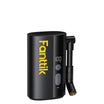
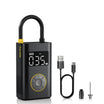
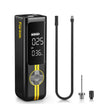

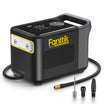
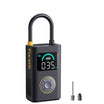
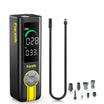
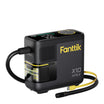










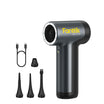

Inflating a road bike tire with a portable pump takes seven quick steps: pick a target pressure within your tire and wheel limits, open the Presta valve, seat the pump head straight, monitor the gauge, stop at your target, and remove the head carefully. Most road tires can accept high pressure, but 100 PSI is only correct when your specific tire and rim documentation allows it. The sequence below works whether you're topping off at home or fixing a flat on the road.
How to Inflate a Road Bike Tire with a Portable Pump
Follow this order every time, whether you're using an electric or manual portable pump. Each step protects the thin Presta stem while getting you to an accurate reading.
- Select your target pressure. Check the tire sidewall range and the wheel or rim maker's limit before touching the valve. Use the lower of the two.
- Remove the valve cap and set it aside where it won't get lost.
- Open the Presta valve by unscrewing the small knurled tip at the top of the stem, then press it briefly to confirm air moves freely.
- Push the pump head on straight, fully seated over the valve, and lock it if your pump has a lever or lock collar. Check for wobble or hissing before you start pumping.
- Set or monitor your target on the pump's gauge or display as you inflate. According to Park Tool's tire and tube guide, keeping the head aligned and watching pressure as you go is the safest way to avoid overinflation or valve stress.
- Stop inflating once you hit your target. If your pump has a documented auto-stop feature, use it, but don't assume every model includes this without checking your specific pump's manual.
- Release and remove the head straight up, without twisting or levering against the stem. Close the Presta tip and replace the valve cap.
That's the full procedure. The next sections explain how to choose your number and what to check before you start.
Is 100 PSI Right for Your Road Bike Tire?
100 PSI is not a universal road-bike target. It's only appropriate when both your tire's printed range and your wheel or rim maker's pressure limit allow it.
Road tire pressure needs vary by tire width, rider and bike weight, riding surface, and rim design. A setup-specific calculator can help you translate those variables into a starting number, and the SILCA pressure calculator uses inputs like measured tire width and system weight rather than one fixed figure. If your tire or wheel documentation caps you below 100 PSI, use that lower number instead. Your pump's maximum rating tells you what it can produce, not what your tire should actually receive.

What to Check Before You Inflate
Before connecting your pump, confirm four things so you're not guessing mid-inflation. Each check gives you a clear go or no-go.
- Pressure range: Find the tire's printed PSI range and the wheel or rim maker's limit. Use the lower number as your ceiling.
- Valve compatibility: Confirm your pump connects to Presta valves directly or through a documented adapter, and that it's rated for the pressure you need.
- Job type: Decide whether you're topping off a partially inflated tire or starting from fully flat. A pump documented for one scenario isn't automatically proven for the other.
- Hardware condition: Look at the tire, rim, and valve stem for visible damage before you connect anything.
If any of these checks fail, don't force the connection. Address the mismatch first.
How to Protect the Presta Valve at High Pressure
Keep the pump head aligned with the stem and pull it straight off when you're done; that's the core protection rule for a Presta valve. A Presta stem is narrower than a Schrader stem, so side-loading or levering against it is more likely to bend or damage it.
If you hear hissing or see the head shift during inflation, stop right away. Release the head, reseat it fully and straight, lock it again, and resume. According to Park Tool's repair guidance, a poor seal at the valve means an unreliable reading, not just a minor inconvenience. An electric portable pump reduces the hand effort needed to reach a high target, but it doesn't remove the need for careful handling. If your adapter or tip has become loose over repeated use, a regular check on inflation tip maintenance can help keep the connection tight and leak-free.
When a Portable Pump Is Not a Fit
Not a fit if:
- Your pump doesn't have documented Presta compatibility or enough rated pressure capability for your selected target.
- Your tire or wheel's specified pressure limits don't support the target you want to reach.
- The tire, rim, or valve stem shows visible damage.
- You need to inflate a completely flat tire and your pump's documentation doesn't cover full-flat use for your tire size.
A pump rated for a fast top-off isn't automatically proven for refilling a fully flat tire from zero. Those are different jobs with different demands on battery life and airflow, and one capability claim doesn't establish the other. If your setup falls into any of these categories, switch to a pump or method with documentation that actually matches the task, rather than pushing forward and hoping it works.

FAQs
What should I do if air hisses around the Presta connection?
Hissing or a head that shifts during inflation means the seal isn't reliable. Stop inflating, release the head, reseat it straight and fully over the valve, lock it again, and resume. Don't keep pumping against a leaking connection, since the reading won't be accurate and repeated movement can stress the valve stem.
Can I use a pump rated to 100 PSI to set a tire to 100 PSI?
Not automatically. A pump's maximum rating tells you what it's capable of producing, not what your tire should receive. Your actual target still comes from your tire and wheel documentation; the lower of those two limits controls, regardless of what your pump can technically reach.
Can a portable pump inflate a completely flat road bike tire?
Only if the pump's documentation specifically covers full-flat inflation for your tire size. A stated top-off time or a "road bike mode" label on a pump doesn't confirm it can refill a tire from zero. If that documentation isn't available for your pump, use a different pump or inflation method for a fully flat tire.
Continue reading
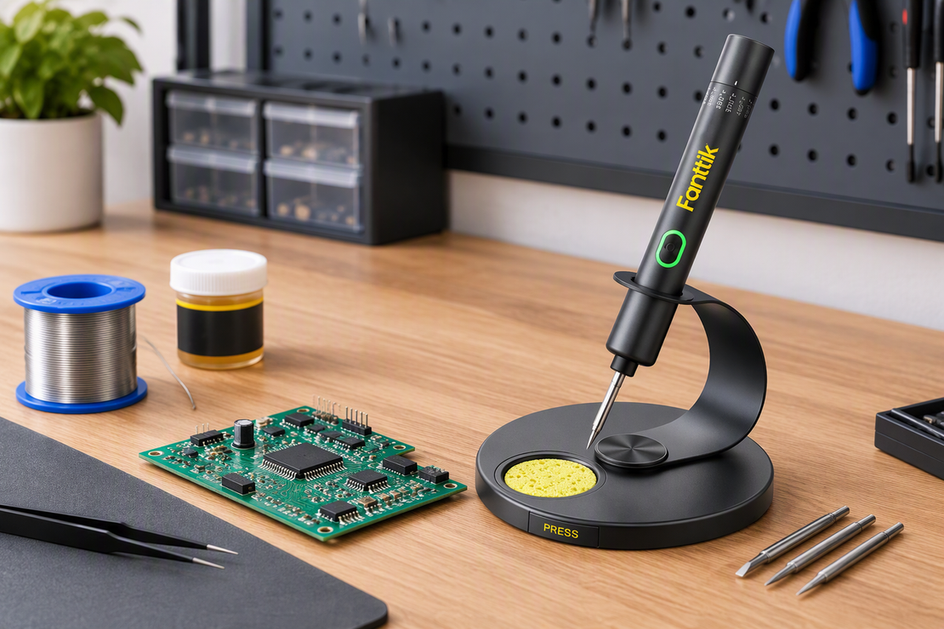 How to Solder on a PCB Without Damaging Components or Lifting Pads
A practical walkthrough of heat control, flux timing, and inspection steps that keep PCB pads intact during through-hole...
Electric Air Duster vs Canned Air: Which Is Better for Routine Dusting?
Learn whether a rechargeable electric air duster or canned air fits your routine dusting needs, how they handle...
How to Solder on a PCB Without Damaging Components or Lifting Pads
A practical walkthrough of heat control, flux timing, and inspection steps that keep PCB pads intact during through-hole...
Electric Air Duster vs Canned Air: Which Is Better for Routine Dusting?
Learn whether a rechargeable electric air duster or canned air fits your routine dusting needs, how they handle...
Leave a comment
This site is protected by hCaptcha and the hCaptcha Privacy Policy and Terms of Service apply.