








































Use a pilot hole where you want the screw threads to grip the material. Use a clearance hole where the screw only needs to pass through a piece without gripping it. Neither one is better, because each does a different job at a different spot in the joint.

In a two-piece wood joint, you can use both: a clearance hole in the top board and a pilot hole in the board below. Size is the part to watch. The numbers in this guide come from one wood-screw table for a size-8 screw, so they show how sizing shifts rather than giving one chart for every job.
Which Hole Should Grip the Screw?
Ask one question at each hole: should the threads bite into this material, or slide past it? If they should bite, drill a pilot hole. If they should slide past, drill a clearance hole.
A pilot hole goes into the receiving material, which is the piece that actually holds the screw. The hole is narrower than the screw's threads, so the threads still have wood to cut into. What it gives you is a guided starting path before fastening with handy screwdrivers. The screw goes in where you aimed it, and the threads still do the holding.

A clearance hole, typically bored out with a standard power drill, goes through a piece the screw only passes through. It's wide enough that the threads don't catch on the walls. The threads leave that piece alone, so the screw head does the work there by pressing the piece down onto the material below.
Use the role of each piece to make the call:
- Screwing into one solid piece, like mounting a bracket's screw into a wooden post: the post receives the threads, so it's the pilot-hole location if you drill one. The bracket already has its own hole.
- Fastening a board onto another board: the top board is the pass-through piece, so it gets the clearance hole. The bottom board receives the threads, so it's the pilot-hole location.
- Threads should grip every layer they touch: skip the clearance hole, since widening a piece removes the material the threads would grip.
Keep this in mind: pilot and clearance holes describe what the hole does, not a drill bit or a special tool. The same drill makes both. Only the bit size and the piece you drill change.
Can One Joint Use Both Hole Types?
Yes. Two boards joined with a wood screw show how both functions fit in one joint, each in its own piece. You don't always need both, though.
DIYData's wood-screw clearance and pilot guidance places the clearance hole in the top piece of timber, the one closest to the screw head. The underlying wood gets a pilot hole, with separate pilot guidance for softwood and hardwood. So in a simple lap joint, like screwing a cleat onto a shelf side, the cleat is drilled for clearance and the shelf side is drilled for the pilot.
The two holes are sized separately and don't match. The clearance hole is the larger of the two, because it has to let the threads through freely. The pilot hole stays smaller so the threads can grip. If you use one bit for both, you end up with a top piece that grips the threads or a bottom piece with nothing for the threads to bite.
"Both" isn't a fixed rule either. The same guidance notes that a drilled pilot hole isn't normally needed for small screws going into softwood. That exception applies only to its own small-screw, softwood condition. Larger screws and hardwood are covered by the pilot-hole values in its table.
Once the holes are drilled, the last step is driving the screw. Choosing the right screwdriver bit for the screw head is the next thing to get right before you drive it home.
Why Hole Size Changes With the Screw and Wood
No single diameter works for every setup. The right hole depends on the screw size, the hole's job, and, for pilot holes, the kind of wood. One row of DIYData's size-8 wood-screw hole-size table shows all three effects at once:
| Size-8 wood screw | Hole diameter in this table |
|---|---|
| Clearance hole | 11/64 inch |
| Pilot hole, softwood | 5/64 inch |
| Pilot hole, hardwood | 3/32 inch |
Read that row as an example from one practical table, not as a standard or a universal spec. Three things stand out.
First, the clearance hole is much larger than either pilot hole. That size gap is the functional difference showing up as numbers: one hole has to let the threads pass, and the other has to leave material for them.
Second, the pilot hole changes with the wood. In this table, the hardwood pilot is 1/64 inch wider than the softwood pilot for the same screw. If you drill the softwood size in hardwood, you've drilled a different hole than the table lists for that wood.
Third, the clearance hole gets only one value. That makes sense, since the threads aren't supposed to grip the top piece at all, so the table doesn't split it by wood type.
A different screw size has its own row in the table, so match the row to your screw before picking a bit. The table covers wood screws in wood only. If you're driving screws into plastic parts, grip works differently. Our guide to preventing plastic thread stripping covers that job.
FAQs
Can a clearance hole stand in for a pilot hole?
No. A clearance hole is made so the threads don't grip, so a screw in a clearance hole alone has nothing holding it in that piece. The receiving material needs either a pilot hole or, where the guidance allows it, no hole at all.
Do I always have to drill a pilot hole?
Not always. The DIYData wood-screw guidance says a drilled pilot hole isn't normally needed for small screws in softwood. Outside that condition, use the pilot value from the table row that matches your screw and wood type.
Does the size-8 table apply to machine screws or metal parts?
No. The values discussed here come from a wood-screw table and list softwood and hardwood only. Other fasteners and materials need sizing guidance written for them.
Which piece should I drill first in a two-board joint?
The pilot and clearance holes each belong to one piece. Drill the clearance hole in the top board, the one under the screw head, and the pilot hole in the board that receives the threads. Keep the bit sizes separate so each hole does its own job.
Continue reading
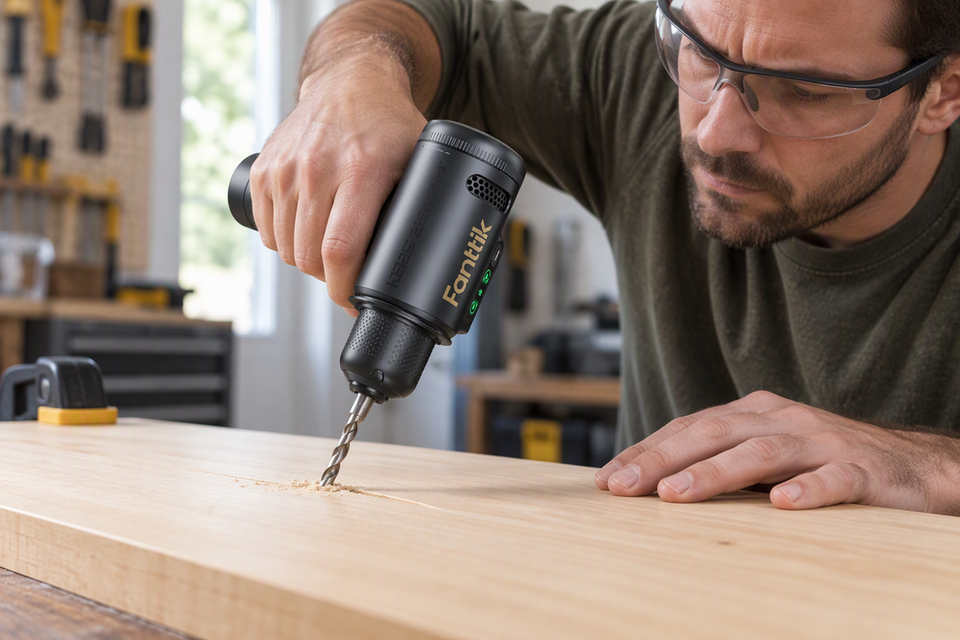 Why Does a Drill Bit Walk Across the Surface?
A plain-language look at why a bit skids off its mark, how a center-punched start or center drill...
Why Does a Drill Bit Walk Across the Surface?
A plain-language look at why a bit skids off its mark, how a center-punched start or center drill...
 Camping Tent Zipper Stuck? What to Check Before Pulling Hard
Pause before forcing a jammed tent door. This guide covers snag and grit checks, REI's field wax tip,...
Camping Tent Zipper Stuck? What to Check Before Pulling Hard
Pause before forcing a jammed tent door. This guide covers snag and grit checks, REI's field wax tip,...
Leave a comment
This site is protected by hCaptcha and the hCaptcha Privacy Policy and Terms of Service apply.