






































No one disc type is right for both metal and plastic. For rotary tool cutting wheels, "diamond," "carbide," and "fiberglass" tell you what a wheel is made of or reinforced with. They don't tell you which workpiece that disc is approved to cut.
To choose, find the wheel whose own packaging or instructions name your material. Then confirm it matches your exact tool on size, mounting, and maximum RPM. If the wheel's paperwork doesn't list your metal or plastic, or you can't confirm fit and speed, don't use that wheel for the job.

Which Cutting Wheel Fits Metal or Plastic?
Pick the wheel whose own instructions list your exact material. The type name on the package tells you what the wheel is built from, but it doesn't approve the wheel for your job.
For Metal
To cut metal, you need a wheel whose documentation names metal. Ideally, it names the specific metal you have. You'll find diamond, carbide, and fiberglass reinforced wheels sold for rotary tools. Still, the construction in the name can't tell you whether a particular disc is rated for steel, aluminum, or another metal. If the instructions limit the wheel to certain metals or set a maximum thickness, those limits mark the edge of the approved job. A wheel marked only for other materials is not a metal-cutting wheel, whatever it's made of.
Here's an illustrative example of how that plays out. You need to shorten a steel bolt and find two discs in your drawer. One package lists metal among its approved materials. The other lists only wood and plastic. The first disc passes the material check and moves on to the tool fit check below. The second is out for this job, even if it looks the same and fits the same mandrel.
For Plastic
Plastic follows the same rule, just more narrowly. "Plastic" covers many different materials. So a wheel described for one plastic, or for plastics in general, may still come with limits on which ones it can handle. Read the insert for any named plastic types or exclusions, and treat that list as the full scope of the approval.
If the instructions don't name your plastic, or a group that clearly includes it, the wheel isn't documented for your task. Don't borrow a rating from the same wheel's metal approval or from another wheel of the same type. Two discs that share a name like "diamond" can still be approved for different jobs.
How to Check a Cutting Wheel Against Your Rotary Tool
Run four separate checks, and use the wheel only if all four pass. One matching spec, like a size that looks right, doesn't prove the others. Before you start, have the wheel's package or insert, your tool's manual, and any mandrel or holder the wheel needs within reach.
- Material use. Read the materials the wheel lists and any limits it states, such as specific metals, plastics, or a maximum thickness. Pass: your workpiece is named and falls within those limits. Stop: it isn't named, or the wheel gives no stated use.
- Dimensions. Note the wheel's stated diameter, thickness, and center hole size if listed. Compare them with any accessory size limits in your tool's manual. Pass: the wheel falls within every limit the manual gives. Stop: the wheel goes past a stated limit, or you can't find the numbers you need to compare.
- Mounting. Find out how the wheel attaches, including the mandrel or holder its instructions call for and that part's shank diameter. Then match that shank to the collet your tool accepts. Collet sizes vary between tools, even within one brand. For example, our F2 Pro uses the standard 1/8-inch collet, while the F2 Master takes 3/32-inch accessories, as our guide to rotary tool collet sizes explains. Pass: your tool's instructions accept that shank and mounting method. Stop: the shank doesn't match, or getting it to fit would take an adapter neither maker approves.
- Maximum RPM. Find the maximum operating speed marked on the wheel or its package. Compare it with the top speed your tool can reach at the setting you plan to use. The same comparison appears in OSHA's abrasive wheel machinery rule for covered workplaces, which requires checking that spindle speed doesn't exceed the wheel's marked maximum before mounting. Pass: the speed you'll run stays at or below the wheel's marked maximum. Stop: the wheel has no speed marking, or you can't confirm your tool stays under it.

The wheel's instructions and your tool's manual both have to allow the job, and a missing answer counts as a stop, not a guess. If you can't confirm compatibility or the RPM limit from those two documents, set the wheel aside. Look for one whose paperwork answers every check.
FAQs
Does a fiberglass reinforced cutting wheel mean it won't break?
No. A fiberglass reinforced label describes how the wheel is built. It isn't a promise that the wheel can't crack or break. No construction type guarantees that. Choose and run the wheel within the material, size, mounting, and speed limits in its instructions and your tool's manual. Those documented limits are what define safe use.
Can one cutting wheel handle both metal and plastic?
Only if that specific wheel's instructions list both materials. A metal approval doesn't carry over to plastic, and a plastic approval doesn't carry over to metal. If you work with both regularly, you may need two different wheels, each documented for its own material.
Can I use rotary tool cutting wheels on an angle grinder or other power tool?
Don't assume they transfer. Rotary tools, grinders, and saws are different tool categories with their own accessories, speeds, and guarding. A wheel made for a rotary tool should only go on another tool if both the wheel's and that tool's instructions explicitly allow it.
Do cutting wheels from different brands work in my rotary tool?
The brand name doesn't decide it. What matters is whether the wheel's mounting method and shank size match what your tool accepts, and whether both sets of instructions allow the pairing. A wheel from another brand can pass or fail on those points just like one from your tool's maker.
Continue reading
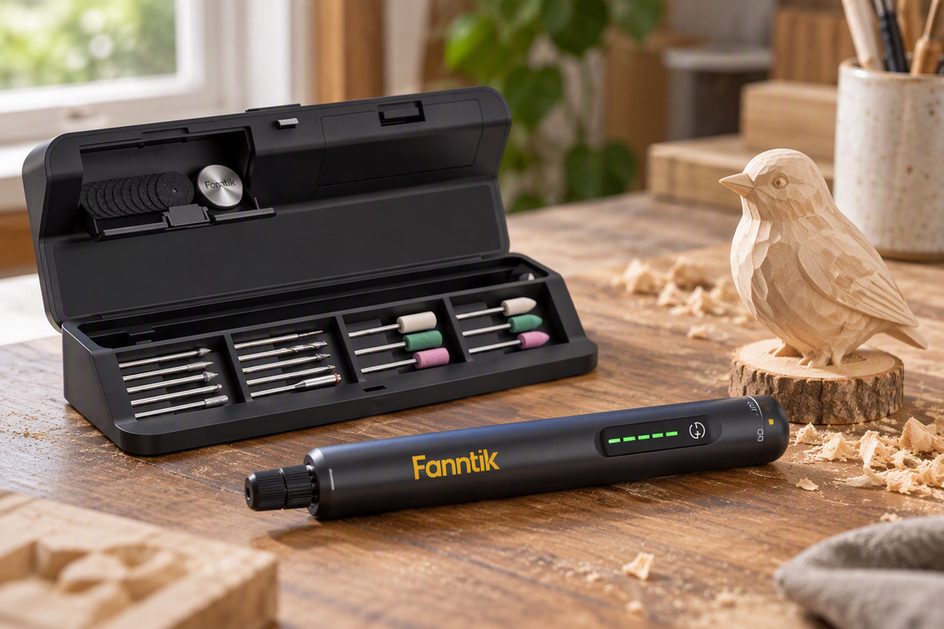 Rotary Tool Buying Guide: RPM Control, Collet Sizes, and Key Accessories
Start with your planned jobs, then compare speed settings, no-load RPM, documented collet size, and accessory fit before...
Rotary Tool Buying Guide: RPM Control, Collet Sizes, and Key Accessories
Start with your planned jobs, then compare speed settings, no-load RPM, documented collet size, and accessory fit before...
 Compact Cordless Drill Buying Guide: Clutch Settings, Chuck Sizes, and Everyday DIY
A task-first guide to compact drills for home DIY: list your jobs, read clutch settings as tool-specific, match...
Compact Cordless Drill Buying Guide: Clutch Settings, Chuck Sizes, and Everyday DIY
A task-first guide to compact drills for home DIY: list your jobs, read clutch settings as tool-specific, match...
Leave a comment
This site is protected by hCaptcha and the hCaptcha Privacy Policy and Terms of Service apply.