











































If a tire looks low or the pressure warning comes on during a road trip, start with a controlled stop somewhere safer. Don't try to check it in traffic. Once you're parked, measure the pressure with a gauge, compare it with your vehicle's recommended cold pressure, and look the tire over for damage.

Add air only when the tire is low but intact. If it's flat, visibly damaged, or won't hold pressure, call roadside assistance or a tire shop.
Where Should You Stop When a Tire Looks Low?
How you stop depends on what the car is doing. A sudden failure calls for a controlled pull-off right away. A warning light with normal handling calls for a safer place to check the tire.
- Sudden failure or blowout: Hold the wheel steady. Don't slam the brakes or yank your foot off the gas, because either move can cost you control. NHTSA says to keep slowing and, once the vehicle has stabilized, pull off where and when it's safe.
- Sudden vibration or a strange ride: For a sudden vibration, ride disturbance, or possible tire damage, USTMA's tire care guide says to slow down gradually and avoid abrupt braking or turning. Pull off when you safely can, then inspect the tire. If you can't find the cause, USTMA advises having the vehicle towed to the nearest vehicle or tire dealer for an inspection.
- Warning light or a low-looking tire, with normal handling: Your goal is a safe place to check the tire. For tire work, AAA points to safer places to stop, such as a parking lot, a side street, or a nearby exit ramp. It treats the highway shoulder as a fallback for when those aren't available.
No distance or speed counts as a safe figure for driving on a low tire. While the car still handles normally, head for the nearest safer spot you can reach. If the steering, ride, or sound changes on the way, treat it as step 1 or 2 and pull off in a controlled way.
What Should You Check Before Adding Air?
Check two things separately: how the tire looks and what it measures. Looks can't tell you the pressure, and a pressure reading can't tell you about damage.
- What the warning means: NHTSA explains that a TPMS warning means at least one tire is significantly underinflated, and you should inspect the tires and check pressure as soon as possible. TPMS is the tire pressure monitoring system. The light tells you pressure is low, not why.
- Visible condition: Walk around and look at each tire for cuts, cracks, bulges, or an obviously flat tire. NHTSA says tires with physical damage like cuts or bulges should no longer be used. If you see this, skip ahead to the help branch below.
- Measured pressure: Use a tire gauge, not your eyes. NHTSA notes that underinflated tires are visually difficult to detect, so a tire can look fine and still be low.
- Your target number: Use the recommended cold pressure on your vehicle's tire information placard or certification label, or in the owner's manual. That's your vehicle's pressure target, in PSI. The number molded into the tire's sidewall is something else.
- A warm-tire reading: After driving, the tire is warm, so your reading isn't a cold reading. NHTSA still says to fill a suspected low tire to the recommended cold pressure. It calls this a temporary fix and says to recheck and adjust once you can get a cold reading. Our guide to hot tire pressure readings explains why that later cold check matters.
When Should You Add Air or Call for Help?
Add air when a gauge shows the tire is low and you see no damage. Get help when the tire is flat, damaged, or keeps losing pressure, because air is not a repair.
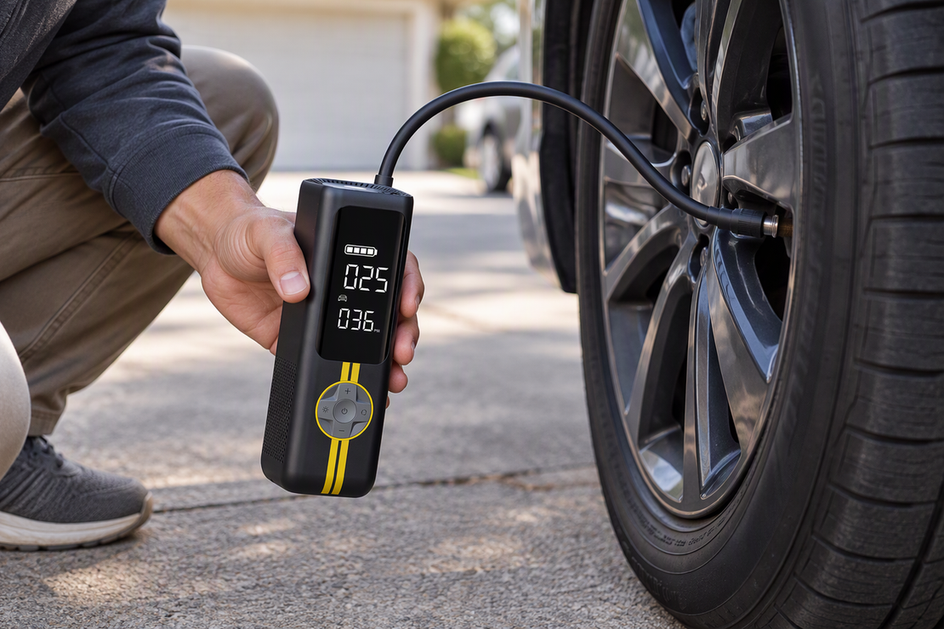
- Low reading, no visible damage: Fill to the recommended cold pressure from your placard or manual. Don't add or subtract an extra amount because the tire is warm. If your inflator has an auto-shutoff, set auto-shutoff to cold PSI so it stops at your vehicle's number. Then plan a recheck once the tire is cold.
- Flat, visibly damaged, or a major failure: Don't count on added air. AAA's guidance on when visible damage calls for assistance sends major tire failures and sidewall damage to roadside assistance. That goes for cuts, cracks, and bulges too.
- Won't hold pressure, or makes noise or vibrates: A tire that drops again after you fill it, or one that hums, thumps, or shakes, needs a tire service professional. NHTSA recommends that evaluation for persistent pressure loss, noise, or vibration. Filling it again and again won't settle it. For more on what can drain a single tire, see why one tire keeps losing air.

Filling the tire brings the pressure back. It doesn't show that the tire is safe for the rest of the trip. Your next move is the cold recheck. If the pressure has dropped again, you're in step 3: go to a tire shop or call for help instead of topping it off and driving on.
FAQs
Can I trust a pressure reading taken right after driving?
It's a warm reading, so it isn't the cold reading your vehicle's target assumes. For a tire you think is underinflated after driving, NHTSA says to fill to the recommended cold pressure anyway. It treats that as temporary and says to recheck and adjust once the tire is cold. Don't guess at a hot-tire correction. Use the placard number now and confirm it later.
The TPMS light went off after I added air. Is the tire fixed?
No. NHTSA says the TPMS symbol turns off once the tires are properly inflated, so the light going out only tells you pressure is back up. It doesn't rule out a slow leak or damage. A cold recheck will show you more. If the pressure drops again, or the light comes back, have a tire professional look at it.
Should I fill my tire to the PSI printed on the sidewall?
No. The sidewall number is the tire's maximum pressure, not the pressure your vehicle needs. NHTSA points drivers to the vehicle's tire information placard or owner's manual for the recommended cold inflation pressure. Fill to that number, even if it's well below the sidewall figure.


Leave a comment
This site is protected by hCaptcha and the hCaptcha Privacy Policy and Terms of Service apply.