































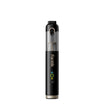






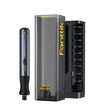




Short answer: buy the E2 Ultra if you want the wider job range — 5 torque gears up to 0.6 N.m, 270 RPM and a rotatable case. Buy the E2 MAX if your work is laptop and PC repair, where 3 gears capped at 0.4 N.m and a rigid aluminum alloy case are the better fit. At $69.97 vs $69.99 (as of writing), price is not the deciding factor.
Quick Answer: E2 MAX vs E2 Ultra at a Glance
Both drivers share the same 50-bit S2 set, the same 800 mAh battery, the same LED lighting, the same power-or-manual working mode and the same pry bar plus tweezer. Everything that actually separates them sits in five rows:
| Spec | Fanttik E2 MAX | Fanttik E2 Ultra |
|---|---|---|
| Torque Modes | 3 Gear — 0.05 / 0.2 / 0.4 N.m | 5 Gear — 0.05 / 0.1 / 0.2 / 0.4 / 0.6 N.m |
| Speed | 220 RPM | 270 RPM |
| Suitable for | PC / Laptop / Precision Repair | Small Appliances / PC / RC Car |
| Storage Type | Aluminum Alloy Magnetic Case | Rotatable Magnetic Case |
| Colorways | No color options | Gray / Red / White |
| S2 Magnetic Bits | 50 | 50 |
| Battery Capacity | 800 mAh | 800 mAh |
| LED Lights | Yes | Yes |
| Tool Type | Electric | Electric |
| Working Mode | Power / Manual | Power / Manual |
| Equipped Tools | 1 Pry Bar & 1 Tweezer | 1 Pry Bar & 1 Tweezer |
| Price (as of writing) | $69.97 | $69.99 |
Read that table once and the pattern is obvious: these are not two different tools, they are two tunings of the same tool. The Ultra spreads its torque range wider and spins faster; the MAX keeps a tighter range and pairs it with a harder case.
The Differences in Detail
1. Torque gears: 3 stops vs 5 stops
This is the single biggest difference. The E2 MAX gives you three settings — 0.05, 0.2 and 0.4 N.m. The E2 Ultra gives you five — 0.05, 0.1, 0.2, 0.4 and 0.6 N.m. Two things follow from that.
First, the ceiling. The Ultra tops out at 0.6 N.m against the MAX's 0.4 N.m. That extra step is what lets Fanttik list the Ultra for small appliances and RC cars, where fasteners bite into thicker plastic housings and self-tapping bosses rather than the thin threaded inserts of a laptop chassis.
Second, the granularity in the middle. The MAX jumps straight from 0.05 to 0.2 N.m; the Ultra adds a 0.1 N.m stop in that gap. If most of your day is spent on small, soft, easily-stripped screws, that intermediate gear is genuinely useful — it lets you step up gently instead of quadrupling torque in one click.
Both models share the same lowest gear at 0.05 N.m, so neither is more delicate than the other at the bottom of the range. If your worry is over-torquing a phone bracket screw, both handle it identically.
2. Speed: 220 RPM vs 270 RPM
The Ultra runs at 270 RPM, roughly 23% faster than the MAX's 220 RPM. On a single screw that is invisible. Across a teardown with dozens of long fasteners — a game console shell, an appliance back panel, an RC chassis — the gap adds up.
The flip side is that a slower driver is easier to feather and stop precisely. For work where you are driving a handful of very short screws and want maximum control over each one, 220 RPM is not a downgrade; it is simply a calmer tool.
3. Intended use: precision repair vs mixed-duty
Fanttik's own spec sheet positions the E2 MAX for PC, laptop and precision repair, and the E2 Ultra for small appliances, PC and RC cars. Notice that PC work appears on both lists — that overlap is the honest part of the comparison. Either driver will open a desktop, reseat an M.2 drive or swap a laptop battery.
The divergence is at the edges. The MAX's list leans further into fine precision work; the Ultra's list leans out toward bulkier, higher-resistance fasteners. If your bench sees only electronics, the MAX covers it. If your bench sees electronics plus a kettle, a vacuum housing or a hobby car, the Ultra's extra gears earn their keep.
4. Storage case: aluminum alloy vs rotatable
The E2 MAX ships in an aluminum alloy magnetic case. The E2 Ultra ships in a rotatable magnetic case. Both are magnetic, so bits stay put when the case is tilted or inverted.
The difference Fanttik actually names is what each case is built around: the MAX's is specified by its material — an aluminum alloy shell — while the Ultra's is specified by how it opens. Fanttik does not publish the Ultra case's material, so treat this as a preference for form factor rather than a durability ranking: pick the metal-shelled MAX case if you like a machined feel in the bag, and the Ultra's rotatable case if quick access to bits on a crowded desk matters more.
5. What is identical — and why that matters
Both drivers carry 50 S2 magnetic bits, an 800 mAh battery, LED lights, power and manual working modes, and one pry bar plus one tweezer in the box. So the usual tie-breakers in a screwdriver comparison — bit coverage, runtime, lighting, teardown accessories — are off the table here. Nobody is buying "more kit" by choosing one over the other.
The manual mode is worth calling out on both. Powered driving loosens or seats the screw, then you switch to hand torque for the final snug or the first crack on a stubborn fastener. That workflow is available on either model.
Which One Should You Buy?
Choose the E2 MAX if… your work is concentrated on computers and precision electronics — laptops, desktops, tablets, small devices. Three gears topping out at 0.4 N.m is the right band for that work, and the case is the aluminum alloy one if you prefer a metal shell. It ships in a single version with no color choice.
Choose the E2 Ultra if… your projects wander past electronics. The 0.6 N.m top gear handles small appliance and RC car fasteners the MAX is not rated for, the extra 0.1 N.m stop gives finer control on delicate screws, and 270 RPM shortens long teardowns. It is also the only one of the two offered in Gray, Red and White.
Still torn? Ask one question: will this tool ever be asked to open something that is not a computer? If yes, take the Ultra — the two-cent price gap is not a reason to accept a lower torque ceiling. If no, the MAX is purpose-built for exactly the work you do.
FAQ
What is the difference between the Fanttik E2 MAX and E2 Ultra?
Five things: torque gears (3 up to 0.4 N.m vs 5 up to 0.6 N.m), speed (220 vs 270 RPM), rated use case (precision/PC repair vs small appliances/PC/RC), storage case (aluminum alloy vs rotatable), and colorways (no color options vs Gray/Red/White). Bit count, battery capacity, LED, working modes and included tools are identical.
Is the E2 Ultra worth the extra money over the E2 MAX?
As of writing they are $69.99 and $69.97 respectively — a two-cent difference, so cost is effectively a wash. The decision should rest entirely on whether you need the Ultra's 0.6 N.m top gear and 270 RPM, or prefer the MAX's aluminum alloy case and its precision-focused gear spread.
Do the E2 MAX and E2 Ultra use the same bits?
Both ship with 50 S2 magnetic bits, so a bit you own for one is the same standard used by the other. If you need to replace or extend a set, see our Fanttik screwdriver replacement bits guide.
Which one is better for laptop repair?
The E2 MAX is explicitly rated for PC, laptop and precision repair. The E2 Ultra also lists PC work, so both are capable — but if laptops are the whole job, the MAX is the model built around it.
Related Guides
- Fanttik E2 MAX Precision Electric Screwdriver — full product page and specs
- Fanttik E2 Ultra Precision Electric Screwdriver — full product page and color options
- Fanttik E1 vs E2 Precision Screwdriver — how the generations compare
- Fanttik E2 Ultra vs S2 Pro — precision repair vs furniture install
- Fanttik E2 Ultra Manual — setup, gear selection and care
- Fanttik User Manual PDF Hub — every manual in one place
Continue reading
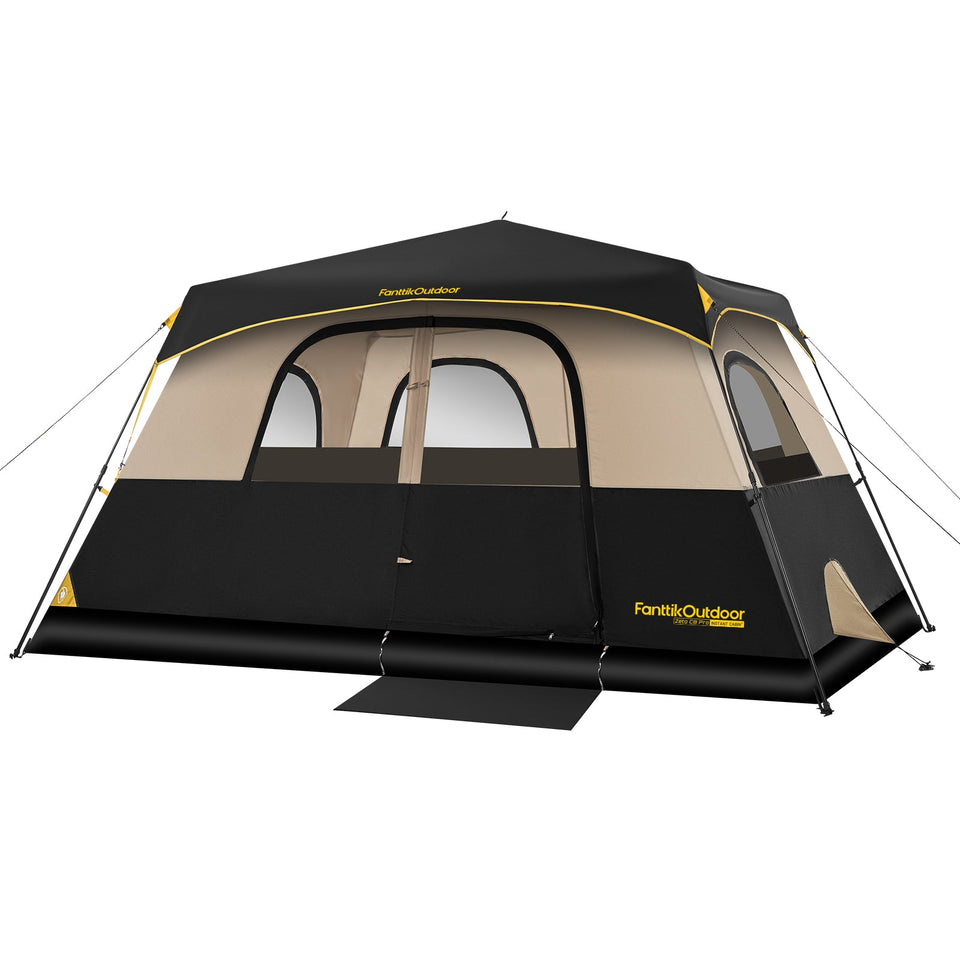 FanttikOutdoor Zeta C8 Pro vs C10 Pro: 8-Person vs 10-Person Instant Tent Comparison
Short answer: buy the FanttikOutdoor Zeta C10 Pro if you regularly camp with more than six people or...
FanttikOutdoor Zeta C8 Pro vs C10 Pro: 8-Person vs 10-Person Instant Tent Comparison
Short answer: buy the FanttikOutdoor Zeta C10 Pro if you regularly camp with more than six people or...
 Fanttik S1 Pro vs S2 Pro: 3 Torque Gears or 7?
Short answer: buy the Fanttik S2 Pro if you want finer control and more reach — 7 torque...
Fanttik S1 Pro vs S2 Pro: 3 Torque Gears or 7?
Short answer: buy the Fanttik S2 Pro if you want finer control and more reach — 7 torque...
Leave a comment
This site is protected by hCaptcha and the hCaptcha Privacy Policy and Terms of Service apply.